Skip to Main Content

Ansys Speos
Real-World Light Simulation

Simulate, validate, and optimize optical performance in real environments using physics-based light modeling and human vision analysis before building physical prototypes.

Predict Optical Performance Before Manufacturing

Ansys Speos is a light simulation software tool that designs and validates optical parts, lighting systems, and sensors. It models how light interacts with lenses, materials, and environments, and simulates human vision and camera sensors to predict illumination, image quality, glare, defects, and system performance before physical prototyping.

  • Ansys product icon
    Human Vision Modeling
  • Check icon outline
    System-level Simulation
  • Check icon outline
    Multiphysics Integration
  • Check icon outline
    GPU Acceleration
  • Check icon outline
    CAD Connectivity
  • Check icon outline
    Virtual Prototyping
  • Check icon outline
    Photorealistic Rendering
  • Check icon outline
    Sensor Simulation

Quick Specs

Ansys Speos utilizes non-sequential raytracing and realistic material models for physics-based optical simulation, modeling light behavior and human vision to deliver accurate virtual prototyping and system-level performance validation.

  • Physics Based Raytracing
  • Optical Part Design
  • Camera Sensor Simulation
  • Straylight Analysis
  • Glare Evaluation
  • Human Vision Modeling
  • CAD Workflow Integration
  • Material Surface Properties
  • Tolerance Defect Analysis

2026 年 3 月

最新功能

透過更易於使用、整合與最佳化的工具,體驗更順暢的光學設計工作流程。Ansys Speos 2026 R1 讓您以前所未有的速度與效率,打造精確的設計。
Speos 2026 R1 User Experience Enhancements
使用者體驗增強功能

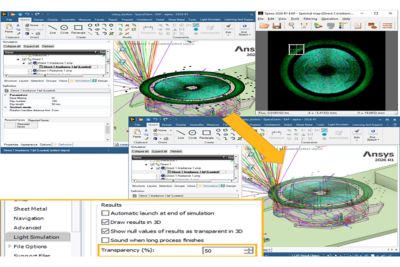
日常作業變得更簡單、更直覺!主要增強功能包括可多重選取的情境選單、簡化光源與感測器存取方式、提升模擬透明度、光線動畫,以及環境光源的參數化太陽方位設定。這些功能的設計考量光學工程師的需求,確保更順暢的工作流程與更清楚的分析結果。
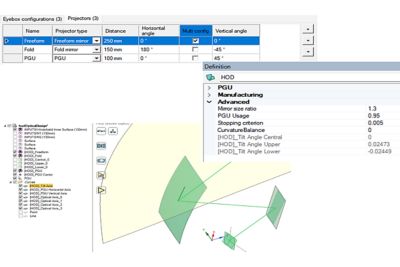
Speos 2026 R1 Optical Part Design
光學零件設計

光學零件設計增強功能提供新的參數,增加設計彈性。設計人員可運用自由曲面元件與造型限制,依據光度目標進行高效率的設計最佳化。
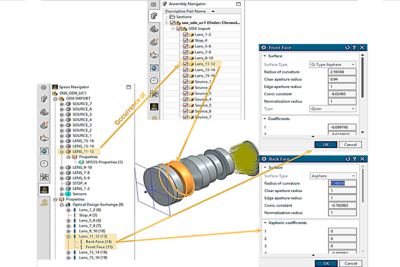
光學鏡頭
光學設計交換 (ODX)

OpticStudio 與 Speos 之間的光學設計資料交換功能,現已於 Siemens NX 推出。此整合可讓資料在 OpticStudio 與 Speos 之間順暢交換,將精確的鏡頭幾何資料傳輸至 CAD 軟體,提高光機設計與雜散光分析的效率。

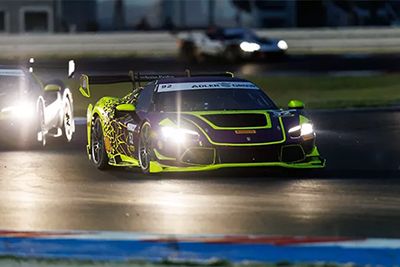
Simulation Accelerates Ferrari’s Intelligent Headlamp Innovation

Virtual optical design improves safety, performance, and development efficiency.

Simulation Accelerates Ferrari’s Intelligent Headlamp Innovation

With advanced optical simulation tools, Ferrari designs and tests intelligent headlamp systems in virtual environments, reducing costs, improving safety, and accelerating development timelines

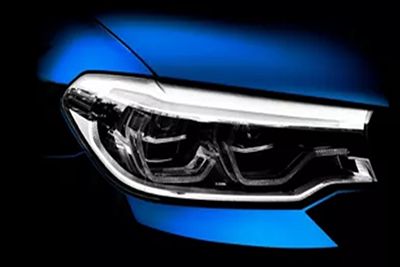
Ferrari partnered with Ansys to develop advanced high-definition headlamp systems using virtual optical simulation. By leveraging tools such as Speos, Zemax OpticStudio, and AVxcelerate Headlamp, engineers can model lighting behavior, test performance in realistic night-driving scenarios, and validate safety requirements without costly physical prototypes. The simulation environment enables rapid iteration, glare analysis, and driver-focused visibility optimization across varying conditions. This digital workflow streamlines development, reduces reliance on weather-dependent testing, and improves system quality. As a result, Ferrari significantly lowered headlamp development costs while enhancing performance, safety, and innovation in both road and racing vehicles.

汽車外觀模擬

自動化感應器開發

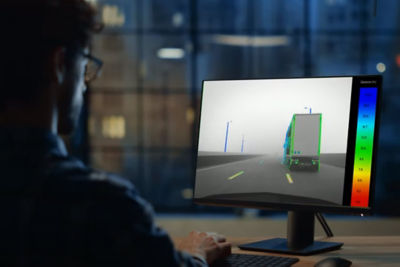
Ansys 提供全方位自動駕駛車輛感應器模擬功能,包括光學雷達、雷達與攝影機的設計及開發。

替代文字

汽車內部

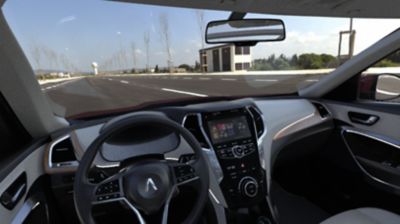
了解 Ansys 模擬如何將車輛內部設計,從舒適度與噪音到人機介面等各方各面,都進行最佳化。

汽車外觀模擬

汽車外部

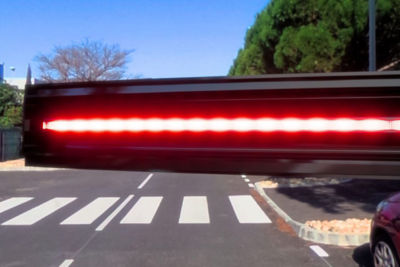
Ansys 模擬能讓您降低阻力、減輕重量,並提升燃油效率與範圍,以將汽車外部最佳化。

Autonomous vehicle simulation

SPEOS CAPABILITIES

Comprehensive Multiphysics Optical Simulation and System Validation

Ansys Speos delivers advanced multiphysics optical design and simulation by integrating optical, structural, and thermal simulations for accurate real-world performance prediction. Its capabilities include precise sensor and perception modeling, optimized illumination system design, realistic material and surface optics, and rapid design exploration. Designers can validate optical drift, efficiency, and detection reliability across cameras, LiDAR, and lighting systems, ensuring robust system-level performance before manufacturing and minimizing physical prototyping.

Physics-Based 3D Light Propagation

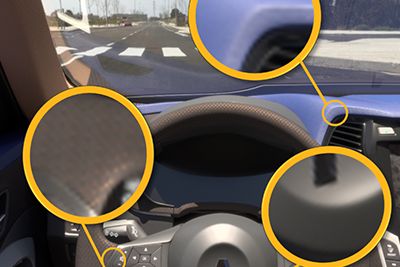
Ansys Speos optical design software uniquely simulates a system’s optical performance and evaluates the final illumination effect, based on human vision.

  • Physics-Based 3D LIight Propagation 
  • Multiphysics Optical-Mechanical Thermal Coupling
  • Measured Material and BSDF Modeling 
  • Sensor and Human Vision Modeling
  • CAD-Integrated System-Level Simulation 
  • Speos Live Preview with Interactive Physics Rendering 
  • Physically Accurate Human Vision with HDR and VR Validation
  • Lightfield Black-Box Optical Subsystem Sharing 
  • Full Lidar Firing Sequence and Raw Time-of-Flight Simulation 
  • Aero-Optical and Gradient-Index (GRIN) Medium Modeling
  • Forward and inverse ray tracing
  • Spectral and wavelength-dependent propagation
  • Reflection, refraction, and scattering modeling
  • Structural deformation mapping to optical surfaces
  • Temperature-dependent material behavior
  • Thermo-optical performance prediction
  • BRDF / BTDF / BSDF material definition
  • Anisotropic and layered surface modeling
  • Spectral and directional scattering accuracy
  • Camera and detector response simulation
  • Human vision and glare evaluation
  • Exposure and perception analysis
  • Native CAD geometry integration
  • Full assembly optical validation
  • Stray light and illumination analysis
  • 1:1 luminance rendering on HDR10 displays
  • Automatic luminance-adaptive visual perception modeling
  • Stereoscopic and VR-HMD visualization
  • Perception-based contrast and visibility evaluation
  • Precomputed optical response storage
  • Secure supplier–OEM optical data exchange
  • Reduced recomputation for repeated assemblies
  • Faster system-level simulation reuse
  • Rotating and scanning lidar sequence definition
  • Raw Time-of-Flight signal simulation
  • Detection probability and range evaluation
  • Weather and environment performance testing
  • Non-homogeneous refractive index distributions
  • Compressible flow optical aberration modeling
  • Environmental distortion of optical paths
  • High-fidelity beam propagation through variable media

SPEOS RESOURCES & EVENTS

Featured Webinars

On Demand Webinar
Speos adaptive headlamp
Driving Innovation in Adaptive Headlamp Design

Discover how Ansys simulation accelerates adaptive headlamp development, reduces physical prototyping, optimizes on-road performance, and streamlines global safety compliance for safer, smarter vehicle lighting.

On Demand Webinar
Speos X Rite material
Advanced Material Strategies with X-Rite AxF in Speos

Join our exclusive webinar, exploring AxF support for more realistic optical simulations through precise material appearance data integration and validation.

On Demand Webinar
Speos stray light
Ansys Optics Live Virtual Deep Dive: Stray Light Analysis

Watch now to explore Ansys Optics advanced stray light analysis using Ansys Zemax OpticStudio and Ansys Speos to identify, diagnose, and mitigate performance-degrading optical artifacts.


Case Studies

Speos Ferrari headlamp development

Ansys Simulation Helps Ferrari Reduce Headlamp Development Costs by 80 Percent

Ansys simulation is helping Ferrari reduce development costs for its headlamps by 80%.

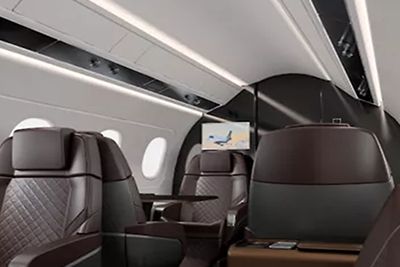
Aircraft illumination Embraer

Optimizing Aircraft Illumination With Ansys Optical and Lighting Simulation Software at Embraer

Leading aircraft manufacturer Embraer used Ansys Speos software to adopt simulation to accelerate product testing and optimize designs.

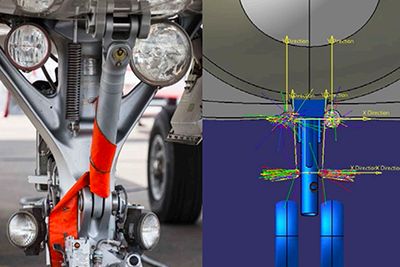
Speos Safran case study

Safran Aerosystems Develops Exterior Aircraft Lighting of the Future with Ansys Speos Optical Simulation

Safran Aerosystems develops exterior aircraft lighting of the future thanks to optical simulation with Ansys Speos

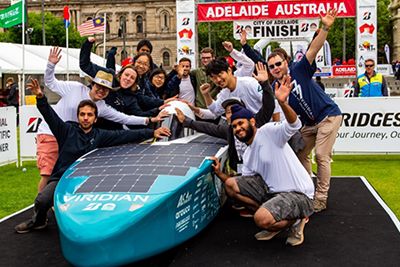
Speos solar racecar design

Design and Optimization of a Reflector for the Headlights of a Solar-Powered Racecar

Simulations allow Blue Sky Solar Racing to quickly arrive at the optical headlamp reflector shape, resulting in the lowest power consumption while validating that the design meets regulations.


White Papers

Speos sustainability

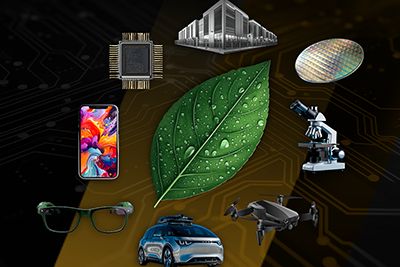
Small Size, Big Impact: Making Miniaturized Optics More Sustainable

Explore how optics simulation enables sustainable miniaturized optical systems by reducing materials, energy use, and waste while optimizing design, production, and lifecycle performance across industries.


Videos

Ansys 軟體產品輔助

對 Ansys 而言,確保所有使用者皆能運用本公司產品非常重要,身心障礙者也不例外。因此,我們致力於遵循美國無障礙委員會 (第 508 條)、Web內容無障礙指南 (WCAG)、與目前自願產品無障礙工具範本 (VPAT) 的格式等各項無障礙要求。