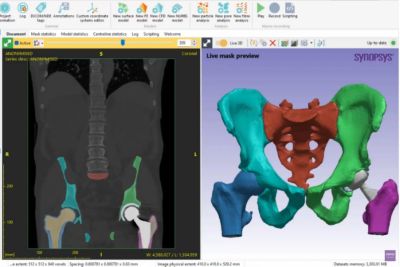
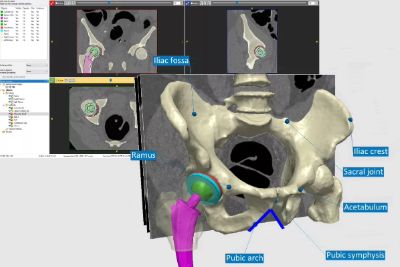
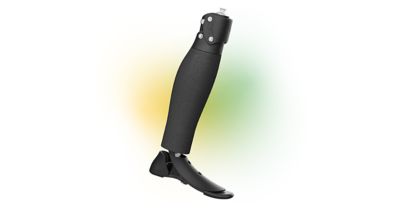
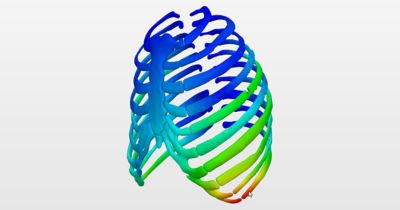
Orthopedic implant manufacturers use in silico technologies to develop innovative and durable implants that conform to patients’ physiology and comply with MRI compatibility and safety requirements.
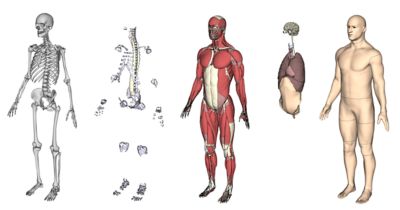
As life expectancy rises and implants are used in younger patients, companies are racing to extend the life of their devices. Innovative replacement therapies are being developed for aging hips, knees, shoulders, and spines, to name a few. Ansys, part of Synopsys, provides the in silico technologies, such as computational modeling and simulation (CM&S), artificial intelligence (AI), and digital twins, that combine multiphysics simulation with models of tissues, materials, patient-specific physiology, surgical procedures, and manufacturing processes.
Though no two patients are alike, simulation enables the design and development of prostheses and implants tuned to a large proportion of the general population or customized to a patient’s specific requirements.
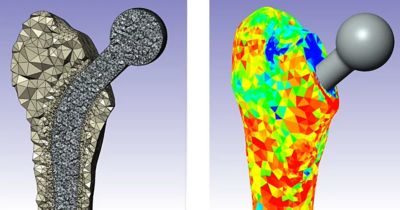
Coupled electro-thermal analysis can evaluate the temperature increase due to MRI interaction with implanted prostheses.
Applying validated computer models of medical devices to hundreds or thousands of virtual patients provides complementary evidence of product performance and safety for a more robust regulatory approval submission.
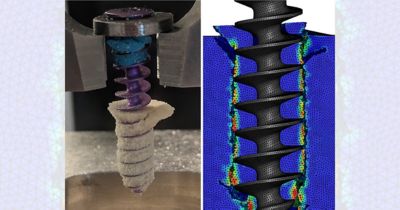
Use simulation to examine the performance of implants under a wide range of loading conditions and in a diverse virtual population to render reliable, durable designs.
Below is a curated list of success stories and thought leadership from our colleagues, customers, and partners around the world using simulation to advance healthcare.
如果您面臨工程挑戰,我們的團隊將隨時為您提供協助。憑藉豐富的經驗和對創新的承諾,我們邀請您與我們聯絡。讓我們共同合作,將您的工程障礙轉化為成長和成功的機會。立即與我們聯絡,開始對話。