Skip to Main Content

Optimizing the Drug Manufacturing Process Through Digital Transformation

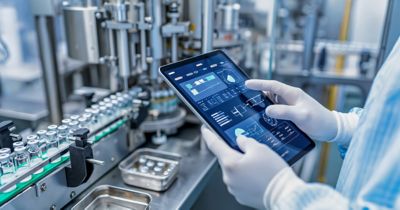
Improving drug manufacturing processes with computer modeling and simulation accelerates healthcare innovations

deploying-sim-for-pharma.png

Digitally Transforming Drug Manufacturing and Drug Delivery

Traditional drug manufacturing and drug delivery process development require considerable time and financial investment. To accelerate innovation and dramatically reduce costs and time to market, in silico approaches are the only viable solution. Applying engineering simulation and mechanistic modeling to identify the best delivery route or to scale up production equipment from lab scale to mass production is crucial to achieve regulatory approval on a sustainable timescale and budget.


Webinars

Learn more about the work that is being done in the Drug Manufcturing space at Ansys.

Success Stories and Thought Leadership

Learn how our collegues, customers, and partners around the world are using simulation to advance cardiovascular medical devices. 

Available E-Books

A lab technician analyzes a specimen

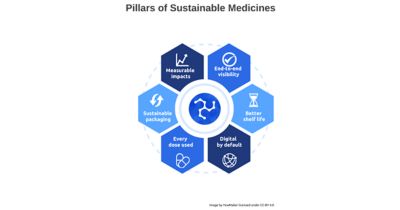
Computer Modeling and Simulation Strengthen Sustainability Efforts in the Pharmaceutical Industry

The global healthcare industry emits more greenhouse gases than all but four countries. That means if the healthcare industry were a country, it would be the fifth largest global emitter of CO2. Because of these numbers, the pharmaceutical industry is under significant pressure to lessen its environmental impact. Investors, employees, and the broader community are pushing the industry to pursue more sustainable processes, generate less waste, and reduce emissions

Automatic Drawings

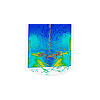
Simulating the Upstream Drug Manufacturing Process

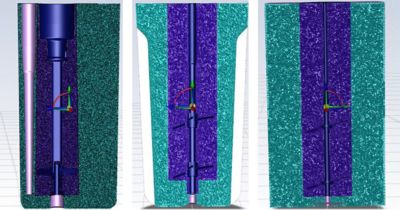
Pharmaceutical production begins with upstream processing. Mixtures and environments must be exact, or expensive resources go to waste and companies lose their competitive advantage to real cases is nowadays possible. The idea of developing methodological and technological approaches toward the definition of personalized digital twins to monitor citizen health status or to predict responses to therapeutic actions has been proven.

deploying-sim-for-pharma.png

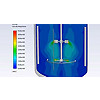
Transforming Downstream Drug Production With Computer Modeling and Simulation

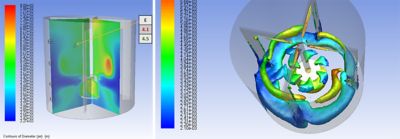
The downstream chemical pharmaceutical and biopharmaceutical production processes consist of several essential steps in which product mixtures are refined, separated, and turned into finished tablets, capsules, and vaccines. As part of scaling up downstream production, drug manufacturers must, identify influential process parameters, improve decision-making regarding equipment selection, satisfy all regulatory requirements and guidelines, and maintain high levels of product quality and productivity under continuously changing process and environmental conditions.

Ansys Advantage Magazine 2024 Issue I: Simulation Transforms Healthcare

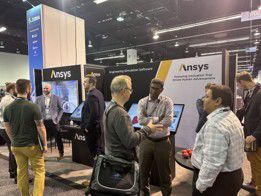
Visit Us at Our Upcoming Events

Making a Change Together

Ansys highlights how advanced simulation technologies—from drug formulation modeling to virtual clinical trial predictions—accelerate pharmaceutical innovation and improve patient outcomes. By reducing development timelines, minimizing reliance on animal studies, and enhancing drug safety and efficacy, Ansys reinforces its commitment to partnering with the pharmaceutical community to advance the next generation of therapeutic solutions.

Industry Leading Speakers

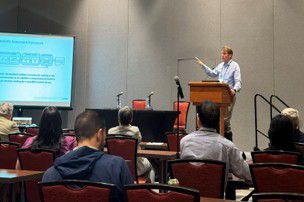
Ansys experts are frequently invited to major pharmaceutical and drug-development conferences, where they share insights on simulation, computational modeling, and advanced analytics. From predicting formulation stability to optimizing drug delivery and supporting emerging modalities, their thought leadership helps shape the future of pharmaceutical innovation and underscores Ansys’ dedication to enabling safer, more effective therapies through close collaboration with industry and research partners.

Mark Palmer presentation AMD 2025
Marc Horner presentation
md-m-west25-booth.jpg

Interested in Other Healthcare Applications?

Visit our healthcare industry page to learn about more healthcare applications that can benefit from modeling and simulation.