Synopsys and Ansys power the future of innovation—connecting silicon to systems.
-
-
Access Free Student Software
Ansys empowers the next generation of engineers
Students get free access to world-class simulation software.
-
Connect with Ansys Now!
Design your future
Connect with Ansys to explore how simulation can power your next breakthrough.
Free Trials
Products & Services
Learn
About
Back
Products & Services
Back
Learn
Ansys empowers the next generation of engineers
Students get free access to world-class simulation software.
Back
About
Design your future
Connect with Ansys to explore how simulation can power your next breakthrough.
Free Trials

Today, thousands of embedded software systems power a range of applications for hand-held devices, smart appliances, vehicles, medical diagnostic equipment, and even missile guidance systems. Undoubtedly, as these systems continue to evolve and grow in sophistication, so too must the advanced tools needed to manage their increasing complexity.
The Ansys Scade One model-based embedded software development platform sits at the apex of these efforts as more modern, more homogeneous, and more in tune with the criteria needed for success, inspired by current programming and modeling environments. The software combines the capabilities of the following tools to deliver a unified user experience for all stages of embedded software development:
- Ansys SCADE Suite model-based development environment for critical embedded software
- Ansys SCADE Display model-based human-machine interface (HMI) design tool
- Ansys SCADE Test embedded software testing environment
- Ansys SCADE LifeCycle embedded software solution
- Ansys SCADE Architect systems and software architecture modeling application
- PyAnsys pythonic access tool for Ansys software
“Ansys Scade One software is the synthesis of what we have learned in years past,” says Aubanel Monnier, senior principal application engineer at Ansys, part of Synopsys. “It’s a complete reboot, leapfrogging over many legacy blocking points as an advanced model-based systems engineering tool for embedded software development.”
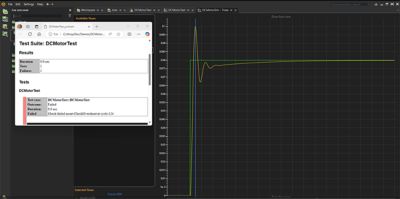
With its open, connected ecosystem, the Ansys Scade One model-based embedded software development platform streamlines embedded software development and integrates seamlessly into model-based systems engineering (MBSE) workflows.
One Software Solution Keeps It Simple
Simplification was the main inspiration for Scade One software. Its development was guided by a few basic principles that make it an obvious choice for developers, namely:
- Its users are free from limitations. Unlike traditional model-based editors, the Scade One editor tool enables users to operate its diagramming function freely. The user is guided but never constrained.
- It enables the joint use of graphical forms (diagrams) or textual forms (classic source code) to build embedded applications.
- It relies on a single language that can be used to design many aspects of embedded software (HMI, controller, or other mission-oriented applications), carry out tests, describe an architecture, or formally specify behavior.
- Its user interface is immersive. The imperative here was to give designs as much space as possible, overlaying information only when it's needed or wanted.
- It offers the services expected from a development environment for conventional programming languages (source code editors) and adapts them to template model-based designs.
Previously, SCADE Suite software and SCADE Display software were often used together. Now, Scade One software combines the features of both solutions in a single semantic framework. This unification is perceptible not just in the design environment that Ansys provides but in the way customers benefit from the capabilities of both.
Inherent in this goal was a move from drawing to programming and a move away from a physical prototype to a state-of-the-art integrated development environment (IDE). “Merging display-oriented concepts with a dataflow-based language in a way that improves over the sum of each party presented an interesting challenge,” says Dr. Bruno Pagano, director of R&D, embedded and safety-critical software.
“In general, an embedded graphical interface contains important parts of logic to manage the user-system interaction,” says Distinguished Engineer Jean-Louis Colaço. “Unifying these two aspects in a single computer language (Swan) and its programming environment gives more flexibility to designers.”
“Ansys Scade One software enables projects and development teams to scale up,” says Pagano. “From a collaborative point of view, it enables heterogeneous teams to work on the same project within the confines of one shared tool. It also enables faster development and validation to deliver instant, precise feedback while eliminating mundane tasks like graphical layout or test writing.”
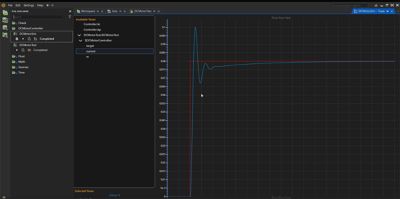
The Scade One platform bridges the gap between model-based design and programming, empowering engineers with both visual modeling and textual coding in a single environment.
Demystifying MBSE for Embedded Systems Development
Historically, SCADE Suite software has had a crucial role in the model-based systems development (MBSE) of reliable embedded software. It is built specifically on products conceived by different teams at different times using different technologies for this purpose.
Now, thanks to Ansys’ open application programming interfaces (APIs), Scade One software can be integrated into Ansys ModelCenter model-based systems engineering software and connected to other MBSE tools as a streamlined alternative. One of the first connections available is a SysML v2 import from the Ansys Systems Architecture Modeler (SAM) capability, Ansys’ web-based SysML v2 editor.
“With the introduction of Ansys Scade One software, our priorities were to stick to fundamentals, beginning with a simple language meant to match the strictest safety constraints, with a power of expression and a representation that is close to what is used to specify embedded systems,” says Monnier. “Dataflow, hierarchical state-machines, and activation domains were also considered.”
Scade One language is designed in a way that lets users combine and blend these high-level constructs at will, leading to simple, understandable models — even for complex algorithms.
The realization of a language server dedicated to Scade One software and its integration into the model editor was the first major technical milestone the product team achieved. It solidified the initial vision of mixing a software development environment with a model-based design tool.
“Ansys Scade One software’s underlying language has been enhanced with new primitives that allow for more sophisticated, safe ways to compute with arrays fundamental to building more complex data structures,” says Colaço. “This improves the design of its classical control functions and opens the way to new applications.”
Get the Right Diff and Merge Tool Support
Diff and merge tools, or tools that assist developers in comparing and merging both files and code, are fundamental in scaling up and imposing properties not frequently found in model-based environments. Using them gives developers the freedom to represent and work with temporarily invalid models and deliver instant visual feedback on the validity of the model, inspired by language servers found in many software IDEs.
Having a diff and merge mechanism at the file format level provides a robust base for collaboration. Higher-level tooling is added to this foundation, such as visual representations or collaborative editing. Scade One software’s increased modularity and parametrization also permit the use of more generic, reusable libraries, which enables long-term cross-program IP strategies.
Anticipated Improvements and What’s Next
It’s also worth mentioning a few of the new domains in which the team expects to see improvements:
- Serialization and deserialization: These processes are crucial to the conversion and conveyance of data, with a positive impact on communication protocol implementations, or the reading and writing of stored data.
- More data-intensive applications: These open the door to heavier digital signal processing or neural networks supporting the analog-to-digital conversions essential to audio, speech, and image processing, as well as radar and telecommunications.
As far as what’s next, the product team at Ansys identified these future developments:
- All relevant safety certifications will be completed, enabling customers to address safety audits within short time constraints.
- Display-related primitives will be integrated directly in the language, targeting a wider set of graphical stacks. These will include simpler, more efficient display applications, easier writing, testing, and maintenance capabilities.
- A wider ecosystem of third-party contributions will be implemented, thanks to its open, comprehensive API.
About Our Subject Matter Experts
Jean-Louis Colaço, Distinguished Engineer
Jean-Louis has worked on SCADE core technologies since 1999, including language design, compiler, formal verification, and other semantic-based tools. He is one of the main authors of the Scade 6 and Swan programming languages. Today, he continues his work on Ansys SCADE software and on the Swan language for the next generation of design tools for critical embedded software.
Aubanel Monnier, Senior Principal Application Engineer
Aubanel has over two decades of experience in model-based development for safety-critical systems. He began his career in 2001 at Esterel Technologies (now part of Synopsys) and played a key role in the development of tools like SCADE Suite software. Today, he leads strategic initiatives for next-generation tools like Scade One software, focusing on usability, innovation, and certification support.
Bruno Pagano, Ph.D., Director, R&D, Embedded and Safety-Critical Software
Bruno joined Esterel Technologies in 2001, where he was scientific director from 2008 to 2016. He collaborated on compiler development and is one of the authors of the Esterel V7, Scade 6, and Swan programming languages. He led the development team for the KCG-certified code generator Scade 6, and since 2017 he has headed the research and development (R&D) teams for the Ansys SCADE product collection and Scade One software.
Jean Bourderionnet, Senior Manager, R&D
Jean leads an R&D team at Ansys, part of Synopsys, driving innovation in embedded software and safety-critical systems. He brings extensive expertise in model-based design, simulation workflows, and automotive standards. He plays a key role in expanding Ansys’ capabilities in functional safety and AUTOSAR-compliant software development.
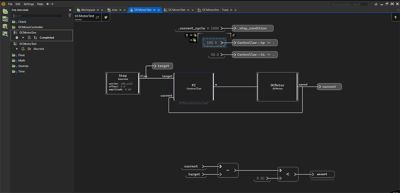
The Scade One platform accelerates development while ensuring reliability, traceability, and certification support.
A Leader in Embedded Software Development
For the foreseeable future, Scade One software will remain at the forefront of embedded software development. Its continued focus on achieving industry certifications, incorporating enhanced display capabilities, and building a vibrant ecosystem of third-party contributions ensures access to a robust, user-friendly development platform.
Interested in learning more? Make sure to see this on-demand webinar: Design, Debug, and Test Your Ansys Scade One Model. And take a moment to visit our Embedded Software Ansys Knowledge page for additional technical blogs featuring Scade One software.

Just for you. We have some additional resources you may enjoy.
“Ansys Scade One software is the synthesis of what we have learned in years past.”
— Aubanel Monnier, senior principal application engineer, Ansys, part of Synopsys




The Advantage Blog
The Ansys Advantage blog, featuring contributions from Ansys and other technology experts, keeps you updated on how Ansys simulation is powering innovation that drives human advancement.