-
-
学生向け無料ソフトウェアにアクセス
Ansysは次世代の技術者を支援します
学生は、世界クラスのシミュレーションソフトウェアに無料でアクセスできます。
-
今すぐAnsysに接続!
未来をデザインする
Ansysに接続して、シミュレーションが次のブレークスルーにどのように貢献できるかを確認してください。
国および地域
無料トライアル
製品およびサービス
リソースとトレーニング
当社について
Back
製品およびサービス

On an unusually sunny and warm spring day in New England, innovators looking for simulation inspiration gathered for Simulation World Boston 2026. Engineers and researchers came together in person, coffee in hand, to share best practices, exciting achievements, and the newest tools to help them accomplish their goals.
For years, Simulation World has provided an opportunity to share success stories, the latest technological opportunities, targeted technical expertise, and more with researchers and engineers who are changing the world around us — and this year’s event in Boston certainly achieved this in spades.
And Simulation World enables more than just connections between colleagues and companies. These events enable leaders from a wealth of different industries to connect and learn from one another, building a diverse community of simulation expertise.
Throughout the event, these multidisciplinary presenters and attendees shared how new and emerging solutions are helping to accelerate us all into the next era of engineering.

An Exciting Trio: Digital Twins, AI, and Automation
From the morning’s keynote and panel presentation to the afternoon’s three tracks on simulation and physics innovation, the future of digital engineering, and simulation in healthcare and life sciences, a common thread emerged: digital twins, artificial intelligence (AI), and automation are transforming the world of engineering.
Larry Williams, distinguished engineer at Synopsys, started the event off with a discussion on the new era of engineering. According to Williams, the forces redefining engineering include increasing system complexity, how AI is reshaping our world, the transformation of today’s industries, and the constant, critical need for engineering expertise.
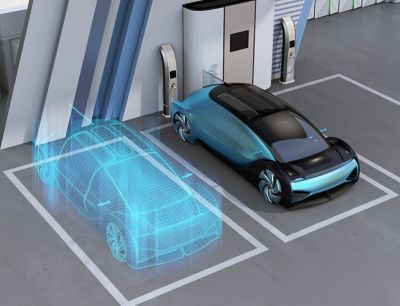
A key part of this transformation are the connected, autonomous, and intelligent systems that are found across industries and range from humanoid robots and robot lawnmowers to autonomous vehicles and intelligent fire trucks. These increasingly complex products can be software-defined and AI-enabled, said Prith Banerjee, senior vice president of innovation at Synopsys, during his talk at the previous Simulation World Minneapolis.
To support this intelligent, autonomous, and integrated future, a few technological solutions are coming to the forefront.
Digital twins, for example, can be embedded in large digital systems and learn from their surroundings to make better, more informed decisions. While digital twins have plenty of applications, a few specific use cases include robotics and in silico pharmaceutical manufacturing. For the latter, presenters at the event discussed the use case of creating a digital twin of a filling machine by combining simulation, AI, and real-time data to better achieve an optimal “golden batch.”
The importance of AI in our new era of engineering cannot be understated. For example, in his presentation at Simulation World Canada, Scott Parent, field chief technical officer (CTO) energy, aerospace, and industrials at Synopsys, shared three important simulation and AI focus areas: data generation, non-parametric optimization, and generative design.
This first focus area, using AI to generate synthetic data, will help close our current data gap. Data is incredibly important as we continue to develop the modern technologies defining this new era. In fact, generating trusted data as well as using this data to make key decisions were common themes throughout the day.
As another application, engineers can use AI to accelerate every step of electronic design automation (EDA), shared Banerjee. AI applications in EDA include machine learning (ML), reinforcement learning, generative AI, large language models (LLMs), and agentic AI.
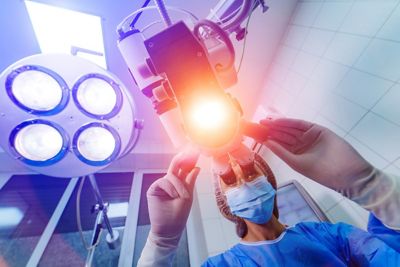
AI can also be used for automation purposes, especially as different applications move cautiously toward partial or full automation. For instance, one presentation discussed how an automated opto-thermal simulation workflow can be a powerful tool for accurately predicting laser safety and treatment effectiveness for eye surgeries and diagnosis purposes.
Another presentation discussed radio frequency and microwave filters, which have a diverse range of shapes and sizes. As a result, automation can help improve all parts of the filter design process.
Simulation World illustrated how simulation is the connecting thread aiding the adoption of these technologies.
How EDA and Simulation Are Forming New Synergies
Engineering is constantly evolving at an ever-increasing rate. To succeed, engineers must adapt and grow as well.
To aid engineers in this process, the combined Synopsys and Ansys company addresses the need for developing increasingly intelligent, connected, and autonomous systems by providing solutions that deeply integrate electronics and physics, fostering innovation from silicon to systems.
For example, Williams and Banerjee highlighted key Synopsys and Ansys products and functionalities, such as AI agents, graphics-processing-unit-accelerated compute solutions, and targeted solutions like Ansys TwinAI AI-powered digital twin software and the Ansys Twin Builder simulation-based digital twin platform.
Offerings like the Ansys GeomAI AI platform for geometry, AnsysGPT technology, the Ansys Engineering Copilot AI-enabled assistant, and the Synopsys.ai Copilot technology will also help engineers innovate while increasing efficiency.
Synergies between products will enable new possibilities, too. For example, engineers can better address complex challenges in photonic integrated circuit design and eliminate manual data transfer between environments via an integration between Synopsys OptoCompiler software and the Ansys Lumerical suite, including Ansys Lumerical FDTD advanced 3D electromagnetic FDTD simulation software.
As another example, the Synopsys VC Functional Safety Manager tool and Ansys medini analyze system-oriented safety analysis software can enable verification from silicon to systems.
Synopsys products will be able to accelerate the design, validation, and verification of everything from silicon to systems, empowering engineers from all industries to drive this new era of engineering.
Looking to the Future of Engineering
As we look ahead, the changing world around us will only continue to evolve. As for how this will happen, “the next era of engineering will be defined before it is built,” says Williams.
For this future to be achieved, however, trust must first be obtained. In fact, fostering trust was another common theme in the day’s sessions. Building trust at all levels must be achieved to succeed in essential applications ranging from analyzing ankle fractures to designing space-based telescopes.
This trust requires a culture change across industries: a concerted effort to show engineers that the results they are generating are validated and reliable.
Here, Synopsys provides a solution that is already trusted by innovators across the globe — with decades of proven results throughout the combined company. Synopsys has delivered breakthroughs in silicon design and Ansys has validated multiphysics at scale for decades.
However, building this trust and fostering a new wave of engineering won’t be achieved by one person, industry, or technology. Accelerating engineering is a group endeavor, and Synopsys’ multiphysics, multi-industry, and open ecosystem approach will help multidisciplinary innovators from across the globe unlock this growth.
Interested in finding out about trusted simulation solutions that pave the way to the art of what’s possible? Contact us and register for an upcoming event, such as the Simulation World Houston 2026 event.

Just for you. We have some additional resources you may enjoy.


The Advantage Blog
The Ansys Advantage blog, featuring contributions from Ansys and other technology experts, keeps you updated on how Ansys simulation is powering innovation that drives human advancement.