Overview
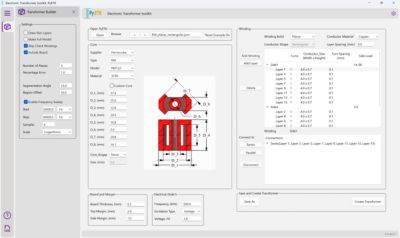
Participants will actively work with the PyETK toolkit to experience how electronic transformer models can be created, parameterized, and solved in minutes using simple tabular inputs.
Attendees will explore automated transformer design workflows, extract key magnetic parameters, and generate transformer‑specific results such as leakage inductance and flux density visualizations. Designed for engineers in power electronics and magnetic component development, this interactive session will equip you with practical skills to accelerate design cycles, improve insight into transformer behavior, and confidently explore innovative transformer concepts using PyETK.
Agenda
The session is divided into two clear parts to support different learning styles:
- Part 1 (1 hour): Presentation, live software demo, and guided hands‑on practice – covering:
- User Interface (UI) Fundamentals
- Managing Data consumed by the UI
- Migration from legacy ETK toolkit to PyETK
- Part 2 (45 minutes):
- Creating models using the backend API
- How to contribute to the project
- Part 2 (15 minutes):
What Attendees Will Learn
- Creating a ready‑to‑solve electronic transformer model in minutes using PyETK and .json files as inputs
- Automating workflows in PyETK to streamline transformer design and evaluation
- Generating transformer‑specific results automatically, including leakage inductance, core and solid loss calculations, and flux density visualizations
- Using PyETK results to gain design insight, reduce risk, and explore innovative transformer concepts with confidence
Who Should Attend
Electrical Engineers, Power Electronics Engineers, Magnetics Design Engineers, Transformer Design Engineer, CAE Managers, Systems Engineers, and R&D Engineers exploring new simulation workflows.