Automated Electrothermal Busbar Workflow with PyAEDT
Automate multiphysics electrothermal analysis for power converter busbars using PyAEDT. Streamline EM, circuit, and thermal simulations into one scalable process.
Synopsys and Ansys power the future of innovation—connecting silicon to systems.
Ansys empowers the next generation of engineers
Students get free access to world-class simulation software.
Design your future
Connect with Ansys to explore how simulation can power your next breakthrough.
Students get free access to world-class simulation software.
Connect with Ansys to explore how simulation can power your next breakthrough.
Automate multiphysics electrothermal analysis for power converter busbars using PyAEDT. Streamline EM, circuit, and thermal simulations into one scalable process.
Venue:
Virtual
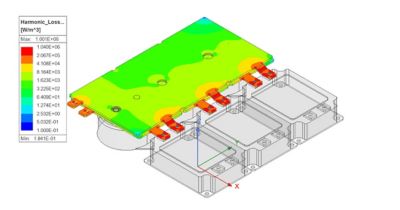
Modern power electronic systems require accurate multiphysics analysis to evaluate both electrical performance and thermal behavior. Busbars and connectors in power converters must be assessed across electromagnetic, circuit, and thermal domains to ensure reliable and efficient operation. Traditional workflows often rely on separate tools and manual data transfer between simulations, resulting in slow, fragmented processes that are difficult to scale. This webinar introduces an automated electrothermal workflow for power converter busbars and connectors, integrating electromagnetic (Ansys Q3D), circuit (Ansys Twin Builder), and thermal (Ansys Icepak) simulations into a single end-to-end process. The workflow supports parasitic extraction, system-level transient analysis, and thermal mapping of power losses in busbars under realistic transient current conditions. Automation is achieved using PyAEDT, which orchestrates model setup, simulation execution, and data transfer within a unified Python environment. This approach improves consistency, reduces manual effort, and enables scalable, repeatable multiphysics analysis for power electronics design.