Skip to Main Content

Ansys TPT Software
Embedded Software Testing Tool

Ansys TPT is a test tool for embedded software and systems, focused on automotive platforms and increasingly used in medical devices, rail, energy, and industrial control.

EMBEDDED SYSTEMS VALIDATION

Ansys TPT Accelerates Testing Across the Development Lifecycle

Ansys TPT software enables engineers to validate embedded software and systems efficiently from early development through full vehicle testing. TPT supports all major automotive technologies, integrates seamlessly into existing workflows, and delivers smart automation for MiL, SiL, PiL, HiL, and vehicle validation—helping you meet ISO 26262 and ASPICE requirements with precision and speed.

  • Check icon outline
    ISO 26262 and ASPICE compliance
  • Check icon outline
    Cloud-ready and CI-capable
  • Check icon outline
    Seamless integration with development workflows
  • Check icon outline
    Increased efficiency through smart automation
  • Check icon outline
    One tool for all test stages
  • Check icon outline
    Easy-to-use interface for non-programmers
tpt-featured-image.jpg

Quick Specs

TPT delivers comprehensive test automation for embedded software across automotive, medical device, rail, energy, and industrial control applications, supporting all major platforms and test methods.

  • MATLAB/Simulink Support
  • AUTOSAR Integration
  • ECU Testing
  • C/C++ Validation
  • MiL Testing
  • SiL Testing
  • PiL Testing
  • HiL Testing
  • Vehicle Testing
  • ISO 26262 Compliance
  • Cloud Testing
  • CI Pipeline Integration

March 2026

What's New

Modeling testing workflows Embedded software
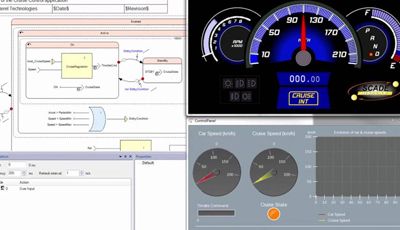
TPT Supports SCADE

Testing SCADE models is integrated into a single workflow in TPT, enabling direct use for test design and execution. It supports simple to complex scenarios, including time-based behavior. Coverage is automatically tracked, showing exercised and missing areas, ensuring transparent, efficient validation for safety-critical systems.

Code Generation Embedded software
TPT Formalize

AI-powered TPT automatically converts natural-language requirements into formal test logic within seconds. This accelerates test design from the very first requirement, combining speed with precise, executable results across the entire testing workflow.

SAM Importer Embedded software
TPT Distributed Cloud Execution

Modern validation is often limited by execution throughput, not test creation. TPT distributes tests across available infrastructure, scales capacity dynamically, and consolidates results automatically. It works across cloud, on‑premise, and hardware setups, enabling faster regression runs and efficient use of existing resources without changing test architectures.


Applications

View All Ansys Applications

COMPREHENSIVE TEST AUTOMATION

Embedded Software Testing Across All Development Stages

Ansys TPT provides a unified testing platform that spans the entire embedded software development lifecycle. From Model-in-the-Loop (MiL) and Software-in-the-Loop (SiL) to Processor-in-the-Loop (PiL), Hardware-in-the-Loop (HiL), and full vehicle validation, TPT enables engineers to create, execute, and manage tests efficiently. With deep integration into MATLAB/Simulink, AUTOSAR, ECU platforms, and C/C++ environments, TPT supports hybrid testing approaches, automatic test generation, precise traceability, and continuous integration—all while maintaining ISO 26262 and ASPICE compliance.

product-page-tpt-hero-image-capabilities.png


Key Features

TPT delivers an all-in-one solution for efficient, compliant, and scalable embedded software testing—seamlessly integrating into existing workflows.

  • Tool Connection
  • Tool Methods
  • Tool Efficiency
  • Tool Process
  • Safety & ISO 26262
  • Cloud & CI
  • Latest Release
  • MATLAB/Simulink model testing and validation
  • AUTOSAR architecture and component testing
  • ECU software and calibration validation
  • C/C++ code testing and coverage analysis
  • Test bench integration across platforms
  • Support for multiple automotive and industrial standards
  • Model-in-the-Loop (MiL) Testing with TPT: Seamless integration into development environments enables automated testing of all executable models (including MATLAB/Simulink, TargetLink for SiL, and ASCET), with reusable test cases across all stages, back-to-back testing capabilities, and automated test case and test frame generation.
  • Software-in-the-Loop (SiL) Testing: Validation of both generated and handwritten code with automated integration, supporting MinGW and Visual Studio compilers, debugging in TPT and IDEs, as well as automated stubbing for unit and integration tests. Execution is scalable across Windows and Linux hosts, CI pipelines, and cloud environments.
  • Processor-in-the-Loop (PiL): Integration with leading debugging and trace platforms such as PLS UDE, Lauterbach Trace32, and iSYSTEM winIDEA enables testing of target-compiled code including ELF and HEX files, with support for both real hardware and simulated environments. This approach reduces hardware dependencies.
  • Hardware-in-the-Loop (HiL): Execution of HiL tests on control PCs or in real time with cycle times below 100 µs, supporting leading platforms such as dSPACE, Vector CANoe, NI VeriStand, RT-LAB, Speedgoat, Concurrent iHawk, MathWorks Simulink Real-Time, and all ASAM XIL-compliant systems. Flexible integration with application and calibration tools (e.g., INCA, CANape), fault simulators, and direct CAN bus communication enables efficient, scalable testing workflows.
  • Vehicle-in-the-Loop (ViL) testing integrates components, control units, and sensors into the final vehicle environment, simulating real-world conditions.
  • Hybrid testing approaches for maximum test reuse
  • Test Object Connection with TPT: High automation and intuitive, pre-configured interfaces enable fast and seamless integration of test objects across supported technologies without manual setup. Flexible configuration options allow precise customization—such as coverage instrumentation—while minimizing effort and maintaining full control.
  • Requirements Traceability and Management with TPT: Automated bidirectional traceability ensures full alignment between requirements and tests, supporting standards such as Automotive SPICE and enabling generation of positive and negative test cases directly from formalized requirements. Seamless integration with tools like Polarion, DOORS, and codeBeamer keeps requirements and testing continuously synchronized, even as changes occur. Dynamic linking and impact analysis provide full transparency, making it easy to track coverage, optimize test effort, and focus on critical requirements.
  • Test Case Creation with TPT: Intuitive, graphical test modeling enables fast and efficient creation of test cases without extensive programming knowledge, providing full transparency during test design. The clear separation of test data and expected values improves maintainability, allowing independent updates and promoting reuse across projects and test phases—from simple open-loop tests to complex closed-loop scenarios.
    • Automated test case generation further increases efficiency by creating test data and complete test cases based on combinatorics, structural coverage methods, equivalence classes, measurement data, and requirements. This enables comprehensive coverage—from code and interfaces to requirements—while reducing manual effort and ensuring scalable, high-quality testing across all stages.
  • Test Execution with TPT: High-performance execution enables fast and scalable testing across MiL, SiL, PiL, HiL, and ViL environments, including cloud and CI pipelines. Test cases can be reused seamlessly across test levels, ensuring consistency and accelerating validation cycles.
    • Advanced execution capabilities such as multicore and cloud-based parallelization significantly reduce runtimes, while back-to-back testing and flexible test management streamline analysis and organization. Parameter variant testing enables efficient validation of complex configurations by automatically executing test cases across multiple parameter sets without increasing maintenance effort.
  • Test Evaluation with TPT: Automated test assessment enables scalable and repeatable validation by defining expected values directly within test cases, across test sets, or conditionally within test phases, as well as supporting back-to-back comparisons. This reduces manual effort, accelerates analysis, and ensures consistent evaluation results across complex projects.
    • Assesslets for Efficient and Scalable Validation: Assesslets decouple expected values from test data and apply them conditionally across all test cases, enabling centralized maintenance and reuse. This significantly reduces effort, improves accuracy, and allows automatic test data generation and evaluation—leading to faster workflows, higher test quality, and rapid feedback cycles.
  • Test Reporting and Analysis with TPT: Consolidated reporting provides a clear, multi-level overview of all test results, including detailed data, calculations, and integrated coverage metrics such as code, requirements, and equivalence class coverage. The Signal Viewer enables precise analysis of all inputs, outputs, and parameters with visual highlighting of complex conditions, while integrated debugging in common automotive IDEs allows efficient root-cause analysis directly in the source code.

TPT establishes a consistent, model-based test process across all ASPICE levels (SWE.4 to SYS.5), covering the full V‑model from virtual to hardware-based testing. It separates test design, execution, and automated assessment, enabling reusable test cases and consistent results across environments. This unified approach improves efficiency, reduces maintenance effort, and ensures reliable validation of embedded systems.

  • ISO 26262-compliant test processes and documentation
  • ASIL-D validation support for safety-critical functions
  • Requirements traceability from specification to test
  • Automated safety analysis and reporting
  • Tool qualification support for ISO 26262
  • Comprehensive coverage metrics for safety validation
  • Scalable cloud execution with parallelized test distribution and efficient resource utilization
  • Integration into CI pipelines (e.g., Jenkins, Azure DevOps) via API and command-line interfaces
  • Automated test execution triggered by code changes within CI workflows to ensure early validation and regression detection
  • Parallel test execution for faster results
  • API and CLI interfaces for seamless integration into automated toolchains and DevOps workflows
  • Enhanced user interface for improved clarity
  • Reduced complexity in test case management
  • New automation capabilities for faster test creation
  • Improved integration with development tools
  • Enhanced reporting and visualization features
  • Performance optimizations for large test suites

Ansys software is accessible

It's vital to Ansys that all users, including those with disabilities, can access our products. As such, we endeavor to follow accessibility requirements based on the US Access Board (Section 508), Web Content Accessibility Guidelines (WCAG), and the current format of the Voluntary Product Accessibility Template (VPAT).