Synopsys and Ansys power the future of innovation—connecting silicon to systems.
-
-
Access Free Student Software
Ansys empowers the next generation of engineers
Students get free access to world-class simulation software.
-
Connect with Ansys Now!
Design your future
Connect with Ansys to explore how simulation can power your next breakthrough.
Free Trials
Products & Services
Learn
About
Back
Products & Services
Back
Learn
Ansys empowers the next generation of engineers
Students get free access to world-class simulation software.
Back
About
Design your future
Connect with Ansys to explore how simulation can power your next breakthrough.
Free Trials

Expect to see many more electric vehicles (EV) on the road in the near future. The drastic price drop of batteries, rise in consumer appetite for more sustainable transportation options, and the availability of an increased number of EV options indicate improvements to the supply and demand for electric cars in recent years. By 2025, experts predict that car shoppers around the world will have the choice of more than 400 EV models, which could push EV sales to between 6 and 11 million units.
This consumer demand for higher fuel efficiency and decreased vehicle emissions has accelerated the development of pure electric and hybrid electric vehicles (HEV). These vehicles depend on advanced electronically controlled systems working together across a wide range of operating conditions to ensure efficient performance, safety, and reliability.
Generally, vehicle electrification is focused on the powertrain driven by electricity and its auxiliary systems such as on-board and off-board charging systems, as well as wireless power transfer. However, vehicle electrification also means electrifying other components of the vehicle such as electronic power-assisted steering, electronic stability programs, electronic traction control, intelligent light systems, smart electromagnetic suspension, all-wheel drive, airbag deployment systems, and more.
Increasing electrical content and complexity coupled with shorter design cycles requires design teams to continually improve their design methods for mechatronic integration.
Read on to learn about the top five design challenges for electric vehicles and power semiconductors, and why a robust design flow can accelerate the growth of hybrid and electric vehicles going forward.
1. Shorter Driving Range and Degrading Batteries
One of the top challenges of vehicle electrification is the limited driving range of lithium-ion batteries. These batteries provide a range of 249 to 311 miles, while most drivers prefer a range of 435 miles or more. Additionally, the battery design is limited by the size and mass of the pack. Increased mass requires more energy for vehicle movement and negatively affects the vehicle’s handling, acceleration, and braking. Beyond providing a limited driving range, all batteries become less efficient over time. While most auto manufacturers guarantee that EV batteries will not degrade below a certain level for around eight years, the lifespan of the car will likely be much longer; in which case, it becomes more likely that the driver will need to replace the battery.
2. Electric Vehicle Charging Infrastructure
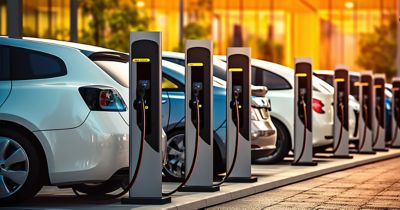
In the future, we are likely to see increased charging infrastructure as well as faster chargers that will make EVs extremely competitive compared to gas vehicles. The current charging infrastructure, however, falls a bit short. The biggest issue is long-distance travel, such ascross-country road trips, where charging stations are not always available along your route. Installing more, and faster, charging stations to create a more robust charging infrastructure takes massive investment. However, daily re-charging in home garages, workplaces, and commercial parking areas, such asretail locations, motorway rest areas, and others, would mean that EV drivers never have to stop at filling stations in their everyday lives.

3. Selection of Power Semiconductors
Power conversion systems are essential for modern EVs. For example, a DC-AC inverter system is used to convert DC from the battery and run an AC induction motor. A combination of AC-DC converters and DC-DC converters along with a power factor corrector (PFC) is used in charging systems. These power conversion systems use silicon-based power semiconductor switches, such as power MOSFETs, to increase efficiency and minimize energy loss. The downside is that silicon power MOSFETs are limited in operating voltage up to 250 volts.
On the other hand, an insulated-gate bipolar transistor (IGBT) can handle operating voltage from 400 volts to 1600 volts. However, IGBTs are not used in high-frequency operations, greater than 30 kHz, due to poor switching performance. Power MOSFETs with better switching performance are used in frequencies above 200 kHz. To overcome these limitations, wide-bandgap devices such as silicon carbide (SiC) and gallium nitride (GaN) must be used. Wide-bandgap devices can operate in high voltage, greater than 1200 volts, and high frequency, greater than 200 kHz, due to the wide energy bandgap. They also operate with less on-state resistance and high thermal conductivity. This improves efficiency by 2%, which is a great deal in EVs.
Since the power density and thermal conductivity of a wide-bandgap device are higher than a silicon device for the same power rating, the size of the device and thermal management system is also smaller. With the higher operating frequency, the size of the passive components is also smaller. SiC diodes are also sometimes recommended for the PFC to make the charger more efficient and reduce the size of the components; but wide-bandgap devices are expensive, and not many manufacturers commercially produce them. Therefore, not many EV manufacturers opt for wide-bandgap devices as it is a premium solution.
4. EV Reliability Is Key
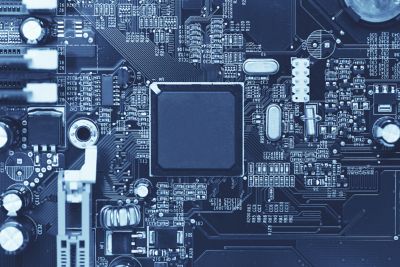
The reliability of powertrain components such as the battery, motor, and power electronics on the road is a key challenge for powertrain design engineers as these components are vulnerable to environmental stresses such as temperature variation and mechanical shocks. Automotive power IC designers take the upmost care in the design and manufacturing of integrated power devices. The design of thermal management systems is vital in determining the efficient and reliable operation of e-powertrain components. Suppliers and original equipment manufacturers (OEMs) need to consider material properties, non-uniform distribution of current, voltage, magnetic flux, and component temperature. The performance of one component can impact the flux distribution in another.
Another big EV challenge related to reliability is how the microcontroller can optimize the power efficiency for different components inside the EV, from high- to low-end designs to ensure long-term design flexibility. Also, on-chip memory solutions need to comply with the AEC-Q100 standard to satisfy the strict operating temperature specifications. The use of 7nm and 10nm parts creates lots of systematic defects and integration challenges that haven’t been debugged yet. These processes still have a lot of maturing to do.
5. Adapting to the Fluctuating Automotive Supply Chain
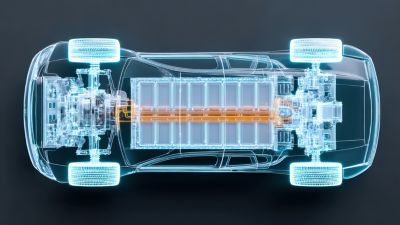
The OEM-supplier relationship varies drastically from gas-powered vehicles to EVs. There are roughly 3,800 fewer parts in an electric motor than an internal combustion engine (ICE). This has many advantages for the manufacturer and eventual car owner, including significant cost reduction and economies of scale because there are fewer suppliers, less maintenance, and an overall reduced cost of ownership. For suppliers, though, there is a clear downside. They are more closely tied to the OEM and are almost forced to rely on the same simulation tools as the OEMs do. This means that integration is more important today than it ever has been before.

Robust Design and Electric Vehicle Design Challenges
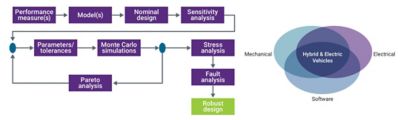
Robust design, a systematic development approach, improves vehicle safety and reliability by ensuring that reliability issues are addressed as an integral part of the design process. Design teams use robust design methodologies to manage and optimize complex system interactions in response to operational and environmental variations, which makes them the perfect fit for the design of hybrid and electric vehicles.
Robust design flow
The primary goal of the robust design is to find the most cost-effective design solution that meets performance, safety, and reliability specifications set by industry and consumer demand. Adopting a comprehensive simulation solution along with a robust design methodology ensures design teams can effectively analyze and verify complex drivetrain systems across a wide range of conditions.
The Ansys Saber platform features powerful design, modeling, and simulation capabilities to analyze and verify system interactions across multiple physical domains. Saber includes a broad collection of models and tools for simulating HEV systems, including:
- Motors, such as analytical and finite element analysis (FEA)-based models
- Power devices, such as IGBTs, MOSFETs, BJTs
- Batteries, ultracapacitors, and charging systems
- Inverters, DC/DC converters, switches, speed controllers, and capacitors
- Mechanical components
Advanced schematic capture, extensive model libraries, powerful model characterization tools, industry standard language support, and state-of-the-art simulation and analysis enable design teams to successfully deliver reliable systems that meet strict performance criteria.
As embedded software content and complexity is increasing in electric vehicles, Saber software combined with Virtualizer and Silver delivers a comprehensive virtual prototyping solution for EVs, enabling exploration of design options, evaluation of tradeoffs, development of embedded software, and multiple layers of verification before any hardware is built. As proven technologies that accelerate software development, integration and test, Virtualizer and Silver enable developers to quickly establish virtual hardware-in-the-loop and software-in-the-loop solutions for electric vehicles.
As the demand for EVs picks up, so will the challenges for design teams. The current EV design challenges — limited driving range, high costs, battery issues, long charging time, and inadequate charging infrastructure along with issues with various power semiconductors and other devices — are difficult, but not impossible to solve. The key lies in increased collaboration from interdisciplinary design teams and robust design tools that allow for extensive modeling and simulation features.
Learn more about how Ansys Saber software can help with your electric vehicle design.


The Advantage Blog
The Ansys Advantage blog, featuring contributions from Ansys and other technology experts, keeps you updated on how Ansys simulation is powering innovation that drives human advancement.