Synopsys and Ansys power the future of innovation—connecting silicon to systems.
-
-
Access Free Student Software
Ansys empowers the next generation of engineers
Students get free access to world-class simulation software.
-
Connect with Ansys Now!
Design your future
Connect with Ansys to explore how simulation can power your next breakthrough.
Free Trials
Products & Services
Learn
About
Back
Products & Services
Back
Learn
Ansys empowers the next generation of engineers
Students get free access to world-class simulation software.
Back
About
Design your future
Connect with Ansys to explore how simulation can power your next breakthrough.
Free Trials
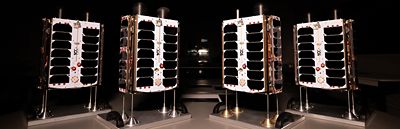
How can we address some of today’s most critical challenges? While the answers to this question often revolve around terrestrial-based solutions, some innovators have turned to space for results.
One of these companies is Plan-S, which is focused on tackling challenges on Earth by designing, building, and operating satellite constellations. The company’s mission is to improve life on Earth via sustainable space technologies.
“Plan-S was founded to make space technologies faster, more accessible, and more impactful,” says Umut Kızılyamaç, a system engineer at the company. “We saw a need for agile, commercially driven solutions in satellite Internet of Things (IoT) and Earth observation, and the company is built to deliver just that.”
As for what types of benefits its space technology provides, Plan-S shares that these advantages can be sorted into three groups:
- Environmental benefits. Plan-S’ Observa Earth observation satellites can be used to monitor environments, such as forests, aquatic biomes, and agricultural lands, resulting in a wide swath of applications. “For example, by analyzing vegetation health via multispectral imagery, we help prevent crop loss, detect illegal deforestation, and monitor drought-prone areas, supporting more sustainable land and resource management,” says Kızılyamaç.
- Economic benefits. Plan-S’ Connecta IoT network helps industries in remote or low-infrastructure areas achieve cost-effective satellite connectivity. This work also facilitates efficient electricity distribution via smart meter connectivity, which enables energy providers to expand services with reduced operational costs and minimized large infrastructure investments.
- Societal benefits. Plan-S’ satellite-based IoT and direct-to-satellite technologies are helpful for maintaining communication pathways during times of natural disaster when terrestrial communication networks fail. At these moments, Plan-S’ technologies can be used by emergency responders to “ensure communities stay connected when it matters most, helping save lives and accelerate recovery efforts,” says Kızılyamaç.
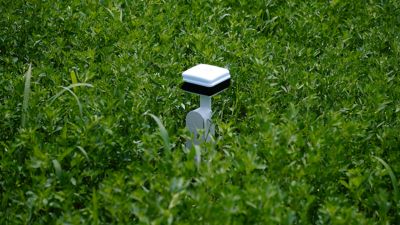
An example of Plan-S’ agriculture monitoring space service
Overcoming Barriers on the Way to the New Space Economy
Plan-S’ mission to improve life on Earth via satellite technology will launch the company into the new space economy (NSE), which predicts an increase in space industry commercialization and private companies helping to advance space exploration. Through its work, Plan-S hopes to make a big impact on the NSE by lowering the barriers to entry for space exploration while also accelerating digital transformation on Earth.
Achieving these goals requires top-of-the-line technology and products that balance optimizing performance and achieving mission requirements, such as satellite constellation coverage and revisit times, with minimizing costs and development periods.
“Additionally, each mission type, whether for connectivity or Earth observation, comes with unique constraints like link budgets, swath width, power limitations, and regulatory boundaries,” says Kızılyamaç. “Another key challenge is managing the interaction between subsystems, such as ensuring sufficient power generation across different orbital planes and beta angles without compromising antenna coverage or thermal balance.”
To surmount these hurdles while paving the way for the NSE, Plan-S relies on Ansys, part of Synopsys, simulation solutions, such as Ansys Systems Tool Kit (STK) digital mission engineering software. “STK software plays a critical role in overcoming these challenges by enabling us to simulate and evaluate a wide range of design variables in an integrated environment,” says Kızılyamaç.
STK software helps the Plan-S team optimize its designs and improve a variety of processes, from the initial design process through operations.
How Digital Engineering Helps Plan-S Achieve In-Orbit Innovation While Making a Real-World Impact
“At Plan-S, our digital engineering strategy focuses on leveraging simulation tools across multiple engineering domains to optimize satellite and constellation design,” says Kızılyamaç. As part of this, the company performs exhaustive thermal, structural, modal, and radiation analyses on the whole design, as well as for specific satellite subsystems, such as antennas, receivers, solar panels, and propulsion systems. This “allows us to easily analyze how a single change in one subsystem impacts the entire system,” says Kızılyamaç. For instance, STK software can be used to study power generation and the resulting effects on subsystems during a specific maneuver, all within one platform.
The combination of these simulation analyses enables the Plan-S team to optimize subsystem interactions while validating mission requirements. As a result, Plan-S not only can quickly identify and remedy potential issues but can “ensure the reliability and performance of satellites in orbit,” says Kızılyamaç. “STK software has been an invaluable tool across multiple mission phases at Plan-S.”
As another example, take mission planning and analysis. Prior to launch, Plan-S uses STK software to simulate the design parameters on a virtual satellite. In this way, the team can plan satellite initial passes, analyze ground station passes, confirm appropriate coverage, and simulate power generation to define operational limits, manage power availability, and ensure a smooth transition from Earth to in-orbit operations. In doing so, Plan-S is able to determine potential satellite configurations that meet its mission goal and then pick a final design via trade-off analyses and available launch schedules.
For a specific use case, consider mission planning for Earth observation and imaging satellites. Here, Plan-S uses STK software to enable “precise determination of timing and attitude angles for image capture, resulting in the successful acquisition of target area images,” says Kızılyamaç. STK software is also used to evaluate imager-to-Sun interactions during eclipse passes or maneuvers and plan overall operations to maximize the imaging area.
Plan-S also applies digital engineering solutions to its work in managing collision risk during satellite operations. Occasionally, the Plan-S team needs to take action to avoid a potential collision caused by a high-risk, close approach. To determine what action to take, Plan-S uses tools, including STK software’s Astrogator capability, to calculate potential maneuvers while coordinating with other parties as needed. By doing so, Kızılyamaç says Plan-S can ensure “that the maneuver minimizes the collision risk without increasing the likelihood of another close approach.”
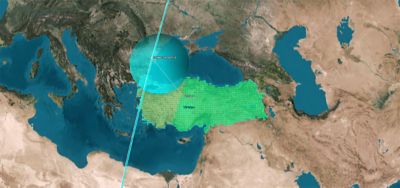

Ansys Systems Tool Kit (STK) digital mission engineering software analysis of the system response time of Plan-S’ current Connecta Internet of Things (IoT) satellite network with its newly added ground stations
These are not the only ways that digital engineering has aided Plan-S’ success. Looking ahead, Plan-S intends to deploy its satellite constellations in new orbital planes, including Sun-synchronous orbit (SSO) and mid-inclination orbits. To achieve this, Plan-S now holds a patent for a design that will help optimize the solar panel tilt angle of its satellites. This is “a design capable of generating sufficient power across all these orbits while not affecting the antenna patterns of six different onboard antennas,” says Kızılyamaç. STK software’s power generation tools helped Plan-S both develop this project and achieve this patent.
Launching Into a New Space Future
When considering the benefits of using Ansys software at Plan-S, Kızılyamaç says, “Ultimately, simulation helps us de-risk the design process, reduce development time, and ensure that the final constellation meets both technical and operational goals.”
These benefits will only continue to help Plan-S excel in the future as it plans to launch nine more satellites in 2025 that will expand the Connecta IoT constellation and begin Observa, its Earth observation constellation.

An image showing a potential energy application of the Connecta IoT network constellation
Each launch brings Plan-S closer to its vision of aiding humanity’s transition to satellite-based solutions as a premier space technology company.
Check out our Simulating Space website to learn more about the companies revolutionizing the space sector with Ansys multiphysics solutions.

Just for you. We have some additional resources you may enjoy.
“STK software plays a critical role in overcoming these challenges by enabling us to simulate and evaluate a wide range of design variables in an integrated environment.”
— Umut Kızılyamaç, system engineer, Plan-S



The Advantage Blog
The Ansys Advantage blog, featuring contributions from Ansys and other technology experts, keeps you updated on how Ansys simulation is powering innovation that drives human advancement.