Synopsys and Ansys power the future of innovation—connecting silicon to systems.
-
-
Access Free Student Software
Ansys empowers the next generation of engineers
Students get free access to world-class simulation software.
-
Connect with Ansys Now!
Design your future
Connect with Ansys to explore how simulation can power your next breakthrough.
Free Trials
Products & Services
Learn
About
Back
Products & Services
Back
Learn
Ansys empowers the next generation of engineers
Students get free access to world-class simulation software.
Back
About
Design your future
Connect with Ansys to explore how simulation can power your next breakthrough.
Free Trials

During the Fourth Industrial Revolution, known as Industry 4.0, industrial processes and manufacturing shifted toward digitization in nearly every market, from agriculture and mining to heavy machinery and building automation systems. Today, this digital transformation is not slowing down. A global industrial robotics survey from McKinsey & Co. revealed that industrial companies are expected to invest 25% of their capital spending on automation from 2022-2027. The survey also found that automation is already being implemented or piloted for popular industrial tasks such as palletization and packaging, material handling, and unloading.
As industrial automation becomes more widely adopted, another revolution is emerging. While Industry 4.0 focused on technology and automation, Industry 5.0 emphasizes human interaction and collaboration with technology. However, despite any nuances, digital solutions, including simulation, digital twins, and other computer-aided engineering (CAE) tools, remain significant contributors.
Let’s explore Industry 5.0 and learn how simulation and digital engineering support it.
Target Industry 5.0 Pillars With Digital Solutions
The European Commission describes Industry 5.0 as more comprehensive than 4.0, highlighting pillars for sustainability, human-centricity, and resilience. The agency suggests a more thoughtful approach to industrialization during Industry 5.0, expanding its focus beyond efficiency and productivity to also look at industry’s contribution to society.
Digital engineering, powered by simulation, supports these pillars in several ways, including the following.
Maximize Digital Threads
Digital threads help companies increase traceability and gain insights throughout the product life cycle. Team members can track a product and its digital assets from conception through design and development into operations and maintenance (O&M). Designers can share models with engineers or experts outside their department and vice versa. This improves the efficiency, reliability, and operation of critical industrial equipment such as CNC or milling machines, conveyors and robotic arms, or forklifts and moving equipment.
Traditionally, engineers incorporate simulation to gain insights during design; inform development; or as a late-stage, post-analysis verification tool. But today, with the advent of advanced embedded sensors, AI/ML integration, and techniques like reduced-order modeling, engineers can create digital threads and digital twins to maximize simulation throughout the product life cycle, including O&M.

Engineers and designers can reduce physical prototyping and support sustainability by improving design with Ansys multiphysics simulation tools, including Ansys Mechanical structural finite element analysis software.
5.0 Pillar: Sustainability / Digital Engineering Benefit: Virtual Prototyping
There are many ways that simulation and digital solutions support sustainability, but one of the most clear and fundamental ways is through virtual prototyping. Virtual prototyping empowers engineers to analyze and improve their design models earlier in the process. This enhances accuracy and often reduces or even eliminates the need for redesigns while decreasing the number of physical prototypes required. Although some level of physical prototyping will likely always be part of the industrial design process for the foreseeable future, virtual prototyping can greatly cut material use, costs, and time compared with traditional methods, leading to a more sustainable process and less waste.
Ansys, part of Synopsys, supports virtual prototyping with a comprehensive open ecosystem of multiphysics simulation tools spanning engineering disciplines from structures and fluids to electronics. In addition, Ansys Connect solutions make digital engineering even easier by linking simulation, data, and resources across an organization into one digital thread, which increases operational efficiency and collaboration. These solutions include simulation process and data management (SPDM), materials management, process integration and design optimization (PIDO), and model-based systems engineering (MBSE). Additional solutions support niche technologies and areas such as digital twins, artificial intelligence and machine learning (AI/ML), additive manufacturing, and cloud computing.
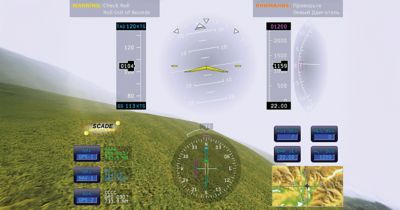
Ansys multiphysics simulation supports software-defined architectures with tools like the Ansys SCADE platform, which simplifies critical control application design and automates verification, qualifiable/certified code generation, and documentation generation.
5.0 Pillar: Human-Centricity / Digital Engineering Benefit: IoT and Cyber-physical Systems
The human-technology connection is a relationship dynamic inherent to digital engineering and simulation workflows across all disciplines, but you can really see the connection shine when working with software-defined architectures.
Ansys multiphysics simulation supports software-defined architectures, including embedded software, sensors, and other network technologies that enable connectivity across cyber-physical systems, Internet of Things (IoT) applications, and digital twins. Such tools include the Ansys SCADE embedded software product collection and Ansys Twin Builder simulation-based digital twin platform.
By integrating Ansys simulation into system design and development, industrial teams can improve accuracy, reduce risks, and collaborate more closely using advanced technologies. For example, sensors and cyber-physical systems — including robots, conveyors, and specific material processes like coating, calendaring, or mixing — can utilize simulation and digital twin technology to enhance operations and enable real-time operator interaction.
The Industry 5.0 drive for human-centricity has led some researchers to explore human cyber-physical systems (HCPS), also referred to as cyber-physical human systems (CPHS), that feature human-in-the-loop (HIL) paradigms.

Ansys Minerva software helps organizations prevent production delays with configurable, role-based dashboards that give all team members access to work statuses, key metrics, assignments, and much more.
5.0 Pillar: Resilience / Digital Engineering Benefit: Predictive Maintenance and Planning
Manufacturers have sought ways to establish more resilient systems after experiencing supply chain issues during COVID-19 shutdowns. In many instances, digitalization has become instrumental in this effort. Some industry executives even deem predictive planning essential for supply chain management and maintain that companies that implemented digitalization before the pandemic fared better than those without it.
Ansys simulation provides predictive insights through tools like Ansys TwinAI AI-powered digital twin software, which combines digital twin technology with AI/ML integration. Ansys hybrid digital twins blend data and physics to support real-time monitoring, predictive maintenance, and performance optimization.
In addition, with configurable, role-based dashboards in data management solutions like Ansys Minerva SPDM software, managers and team members can retrieve the status of works in progress, key metrics, and much more. This helps prevent production delays, regardless of who’s in the office or away from the plant, as well as whether they have prior experience with simulation. Minerva software is also part of the Connect product family of digital engineering enablement solutions, empowering organizations to create digital threads more easily.
In connection, workflow automation empowers predictive planning and democratizes simulation. Workflow automation should not be confused with industrial automation. Industrial automation leverages digital solutions to automate physical workflows, completing tasks and processes traditionally performed by humans, such as palletization and material handling. Workflow automation uses digital solutions to automate digital workflows.
For example, Ansys optiSLang PIDO software enables users to capture their workflow, publish it to the Minerva platform or a dedicated service automation framework (SAF), and build automatically generated applications. This means simulation experts can build optiSLang workflows, capture repeatable processes, and publish them so other team members, including nonexperts in simulation, can use those workflows and run simulations without optimization or simulation expertise.
Achieve the Full Potential of Digital Engineering
With its comprehensive approach, Industry 5.0 offers opportunities to work more efficiently and collaboratively with advanced technologies and automation. At the same time, digital interconnectedness and operational efficiency, including material optimization, help overcome common industry challenges while supporting Industry 5.0 pillars — sustainability, human-centricity, and resilience.
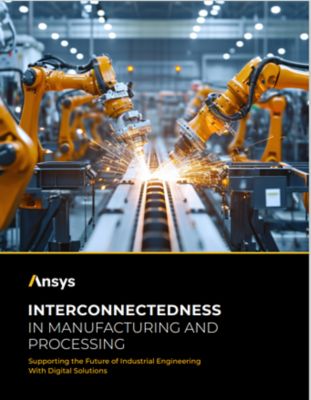
To learn more about Industry 5.0 and how simulation and digital engineering support it, check out the e-book “Interconnectedness in Manufacturing and Processing.”




The Advantage Blog
The Ansys Advantage blog, featuring contributions from Ansys and other technology experts, keeps you updated on how Ansys simulation is powering innovation that drives human advancement.