Shock Wave Dynamics in a CD Nozzle using Ansys Fluent Software
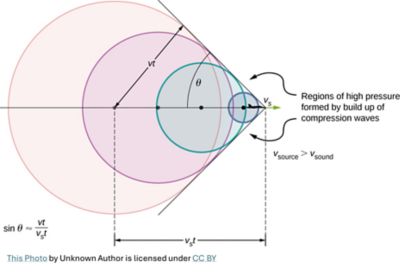
This problem-based learning (PBL) case study investigates the complex flow characteristics that occur within a two-dimensional convergent–divergent nozzle, with a particular emphasis on the formation and behavior of normal shock waves. The central engineering challenge explored in this PBL framework is to determine the critical throat radius that enables choked flow, a condition where the Mach number at the throat reaches unity. In addition, the study examines the resulting exit Mach numbers under both subsonic and supersonic outlet conditions to highlight the contrasting flow regimes. To achieve this, computational fluid dynamics (CFD) simulations are carried out using Ansys Fluent® fluid simulation software, which provides detailed insights into pressure, velocity, and shock structures, thereby reinforcing theoretical understanding through numerical experimentation.
Learning Outcomes
- Understand and explain choking effect on mass flow and identify the throat as the nozzle’s control section.
- Understand and relate backpressure changes to shock movement and predict nozzle regimes from pressure conditions
- Understand the visualization of shocks using simulation and connect isentropic theory with CFD contour plots.
Applicable Courses for Use
- Gas Dynamics
- Propulsion systems
- Compressible Flows
- High Speed Aerodynamics
- Heat and Mass Transfer
- Fluid Mechanics
- CFD
Downloadable Content
- Case study report
- sub-sonic-flow.cas.h5, sub-sonic-flow.dat.h5
- Mach-calc-code.ipynb
Related Resources
Supercritical Airfoils in Ansys Fluent | Education Resources
Conjugate Heat Transfer in Ansys Fluent | Education Resource