Skip to Main Content

What is a Reduced Order Model?

A reduced order model (ROM) is a simplified mathematical representation of a process or physical system derived from a more complex mathematical high-fidelity model (HFM). Engineers use model order reduction when they want to create an accurate simulation of a system while reducing the computational costs or the time needed to obtain answers.

Engineers can solve these computationally efficient ROMs independently or combine them into a system model or digital twin to create complex models that conduct efficient multiphysics or transient simulations. Engineering teams use reduced order models to get information about their products earlier in the design process or they use ROMs to explore and improve systems they put in the field.

In high-fidelity modeling, engineers discretize geometry into unique equations, usually in the form of partial differential equations (PDEs) that represent the behavior of each type of value the larger model solves for. They then specify constraints and loads on the high-fidelity representation and use math to solve for the unknown degrees of freedom. A reduced order model represents a system or process as inputs and outputs mapping. The simplified equations or interpolation methods in the ROM are used to convert those inputs into accurate output values. 

The process of using reduced models has two facets. The first facet, called ROM production (or generation), involves using a variety of reduction techniques to create ROMs from training data. The second step, known as ROM consumption, involves engineers utilizing the ROMs in a simulation. Most modern, higher-order simulation software platforms provide tools to help engineers create reduced order models compatible with the Functional Mock-Up Interface (FMI) standard, which is the industry-defined exchange format. 

The Advantages of Reduced Order Modeling

Engineers have been using reduced order models for some time, originally because of the limited computational resources available to most design teams. Out of necessity, they found ways to produce ROMs that could be practically solved. Even though computational power has increased over time, the advantages of reduced order modeling have also increased, as the approach enables the simulation of ever more complex systems.

Computation resources needed to produce data for simulation, or the resources needed by teams to extract empirical data from the field, can add up. But once a ROM is built, those simplified models can be used in system-level simulations that are fast and lightweight.

Companies developing and maintaining products across industries use reduced order modeling because it:

  • Speeds up product development and improvements
  • Reduces costs across the engineering process
  • Provides useful information earlier in the design process
  • Enables digital twins and hybrid monitoring applications
  • Permits cost-effective training of artificial intelligence (AI) systems
  • Allows for portable numerical models to be shared across the enterprise and with vendors and customers

Common Challenges in Reduced Order Modeling

Even though engineers know how to turn a multiphysics system into a simplified version, doing the conversion can be challenging. While each application is unique, most efforts to create a reduced order model face the following four challenges.

1. Balancing Speedup and Accuracy

Engineers create ROMs to simplify complex problems. However, going from millions of degrees of freedom to a handful of parameters reduces accuracy. If the accuracy is too low, the time and cost savings don’t matter. That is why anyone creating a ROM begins with deciding the needed speed and accuracy of their model. They also need to remember how the needed accuracy increases as the design progresses.

2. Choosing the Proper ROM Methodology

Engineers also need to know the wide range of methodologies available when they plan how they will build their ROMs. The methodology they pick sets the model’s computational complexity and accuracy, along with what type of data they need to train the model.

3. Obtaining Training Information

Some ROMs use well-established algorithms and formulations that calculate output values directly from input parameters. However, many methodologies use mathematics, machine learning, and interpolation methods for model order reduction. The training data can be derived directly from the mathematics used in high-fidelity models employing numerical simulation approaches. This lets engineers collect training information from simulation models like computational fluid dynamics (CFD), finite element analysis, and finite volume analysis.

4. Including Sensor Data

Engineers face a host of challenges when they include sensor data from real-world systems in a ROM. These hybrid situations, often used for digital twins or predictive analytics, take advantage of measured operating conditions to feed ROM inputs and of measured reference behavior (when available) to calibrate and/or enrich the ROM outputs.

Reduced Order Modeling Methods

The most common way to classify order reduction methods is by the source of information used to create the model, followed by the mathematics that utilizes that source information. There are two source types, intrusive and non-intrusive, with multiple mathematical approaches that vary from curve fitting to advanced machine learning and neural networks. In some cases, referred to as hybrid models, the source of data may be from both data and simulation.

Intrusive and Non-Intrusive Methods

Intrusive methods, also known as model-based methods, directly access the equations used in high-fidelity numerical solvers to derive simplified equations. Creating a ROM using an intrusive approach requires access to the mathematical operators of the higher-order solver.

Non-intrusive methods, also known as data-based methods, use the output from a full order model or empirical data. Users sometimes refer to ROMs created with a data-based approach as “black boxes” because the internal mapping from inputs to outputs isn’t explicitly interpretable, even if using them is easy.

As mentioned above, choosing the right approach is one of the challenges engineers face when building ROMs. This table lists the pros and cons of intrusive and non-intrusive approaches:

Aspect

Intrusive (Model-Based) ROM

Non-Intrusive (Data-Based) ROM

Access to Solver Mathematical Operators

Required

Not Required

Source of Model

Fundamental physics-based governing equations

Data from high-fidelity model or measurement

Knowledge Required

Deep understanding of the governing equations and numerical methods used in the high-fidelity model

Data fitting algorithms and techniques

Ability to Extrapolate Results

Strong, based on fundamental physics

Weak, calculations can fail when outside of the training data range

Best For…

●       High-accuracy requirements

●       Extrapolation

●       Access to solver operators is available

●       Commercial code with ROM tools that access underlying equations

●       Speed of ROM evaluation and integration outside the solver environment is important

●       Moderate fidelity requirements

●       No access to solver operators

●       Access to already generated high-fidelity results

●       Only data is empirical


Common Intrusive and Non-Intrusive Mechanisms for Generating Reduced Order Models

Intrusive mechanisms require access to the core solver equations, and different teams use different mechanisms to create ROMs. The two most common methods for intrusive generation of reduced order models are the following.

Modal Reduction

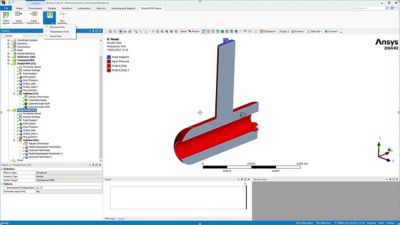
Natural frequencies at which a structure vibrates are referred to as its modes. The model reduction method takes a full finite element analysis (FEA) modal analysis and reduces the complex mass and stiffness matrix into a simplified pair of diagonal matrices for mass and stiffness that solve quickly. 

modal-rom-ansys-mechanical-twin-builder.jpg

Modal reduced order model (ROM) add-on in Ansys Mechanical structural finite element analysis software for Ansys Twin Builder simulation-based digital twin platform.

Superelement

The mass stiffness matrix of a structure can be rewritten in terms of the effective mass and stiffness at the interface points where the structure connects to other components of the system. To generate a superelement, software tools compute the full mass and stiffness matrices and rewrite them in terms of the interface points. An advantage of a Superelement ROM is that it solves quickly and it does not carry information about the internal characteristics of the component the ROM represents.

Non-intrusive models use a wide variety of calculation, data fitting, and interpolation methods. Some of the most common are:

  • Meta Model of Optimal Prognosis (MOP): Multiple regression models are evaluated to find the most accurate for a given dataset.
  • Response Surface: A geometric surface is fitted to the dataset.
  • Field Reduction: A small number of patterns are used to represent the data as it varies over space.
  • Gaussian Process Regression: A probabilistic fit of the data is performed along with a calculation of the confidence for the resulting representation.
  • State Space Identification (Linear/Nonlinear, Invariant/Parametric): Differential equations are formulated to model the system's behavior over time.
  • Neural ODE: Deep learning is used to define the differential equations describing the system's behavior over time.
  • Neural Network: Iterative data training is used to map the complex, non-linear behavior of the system with approximators.
  • Temporal Fusion Transformer (TMT): Another deep learning approach, similar to transformers in natural language processing, but designed to handle physical and economic data rather than text.

When engineers want to use a hybrid approach with both simulation-generated and empirical data, they often apply Bayesian inference or model enrichment methods. 

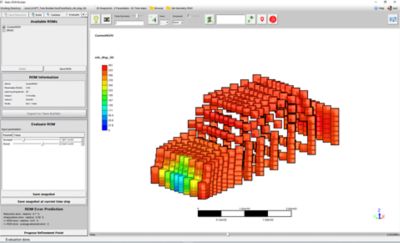
parametric-field-rom-ansys-digital-twin.png

Parametric field history reduced order model (ROM) in Ansys Twin Builder simulation-based digital twin platform.

Examples of Reduced Order Models

Engineers use reduced-order models across industries at every stage of a product’s life cycle, from preliminary design through digital twins of operating machines. More advanced teams are also increasingly deploying ROMs in hybrid systems that combine simulation models and real-time sensor data. ROMs are powerful tools the companies use across disciplines because they are cost-effective, fast, and portable. Here are a few examples to give a feel for the advantages of ROMs:

Microelectromechanical Systems (MEMS) Devices

The complexity and multiphysics behavior of MEMS devices make them ideal for the surrogate modeling that ROMs deliver. For example, take a MEMS device like a micromirror projector chip. It can use electrostatics, optics, piezoelectrics, and mechanical dynamics in its operations. Modeling each discrete form of computational physics as a system would be complex, require expertise across very different physics, and need coupling across solvers. Instead, MEMS designers use a tool like Ansys Mechanical structural finite element analysis software to extract the electrostatic, structural, and model behavior into ROMs. An optics engineer can then use Ansys Zemax OpticStudio optical system design and analysis software to create a ROM for the optics, and an embedded systems expert can use Ansys SCADE model-based development environment for critical embedded software for the control system.

Turbine engines are another complex, multiphysics system, but on the other end of the size scale. Turbine engine companies use ROMs in multiple ways to design and support both propulsion and power systems. Some of the more common applications include:

●       Secondary cooling flow with thermal-fluid ROMs

●       Combustor configuration optimization

●       Control system design and testing

●       Full engine thermal and performance modeling

●       Digital twins for in-service monitoring and predictive maintenance

Fluid Flow in Thermal-Fluid Systems

CFD modeling of fluid flow is one of the more difficult and expensive computational methods because there is no closed-form solution for the equations that represent fluid flow, the Navier-Stokes equations. The pumps, valves, and heating elements used in thermal-fluid systems like natural gas plants, power plant cooling systems, or building climate control systems are too complicated to model individually.

Therefore, fluid dynamicists will often create a detailed CFD model of a component in a fluid system and run multiple simulations to determine the key outputs of the device relative to a set of input parameters. They then use one of the non-intrusive methods to generate a ROM that other engineers can use to quickly determine the component's response in a system-level model that solves in almost real time.

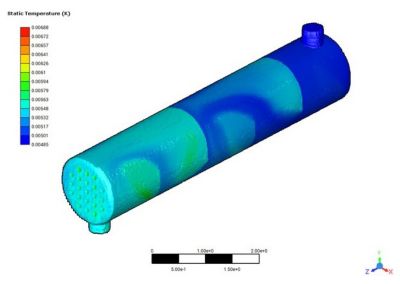
reduced-order-model-crossflow-heat-exchanger-ansys-fluent.jpg

For a crossflow heat exchanger, the ROM capability in Ansys Fluent fluid simulation software provides a solution for each design point in as little as a second on one CPU, while a full simulation could take over two hours on 16 CPUs.

Battery Management Systems (BMS)

The use of battery management systems is growing in tandem with the increasing application of batteries in electric vehicles and battery energy storage systems. A common practice for BMS simulation combines CFD-derived ROMs with thermal ROMs and the control software to model and prevent thermal runaway.

Optimization

Optimization plays a role in almost every industry and every product. Engineers would like to use high-fidelity models in their optimization studies, but optimization requires multiple solves and, therefore, a large amount of time and computational resources. Instead, teams create ROMs that can be solved quickly, and exercise them with a tool like Ansys optiSLang process integration and design optimization software to carry out complex design optimization in a fraction of the time.

Model Based Systems Engineering (MBSE) & Digital Twins

Engineering teams employ reduced order models across industries when building system-level models of their products. Ansys ModelCenter model-based systems engineering software is a primary example of how engineers can build multi-tool workflows and represent key components in their systems with ROMs. This can be extended even further with digital twins that replicate physical assets and systems, where ROMS are used in a tool like Ansys TwinAI AI-powered digital twin software and Ansys Twin Builder simulation-based digital twin platform to provide accurate, actionable information about system behavior.

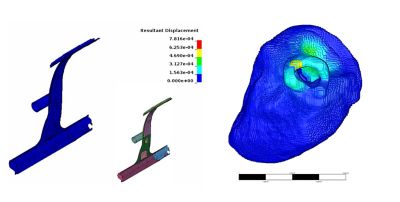
reduced-order-model-extraction-and-export-ansys-ls-opt-digital-twin.png

LS-OPT training data export for ROM extraction in Ansys digital twin software.

Recommendations for Effective Simulation with Reduced Order Models

Reduced order models are a powerful tool for simulation engineers when the creation of the models and their application is done right. Here are some recommendations based on how Ansys customers have successfully deployed ROMs in their engineering workflows:

  • Identify the physical behavior you want to model and analyze with Ansys products (like Ansys Mechanical, Ansys LS-DYNA nonlinear dynamics structural simulation software, Ansys Fluent, Ansys Maxwell advanced electromagnetic field solver, Ansys HFSS high-frequency electromagnetic simulation software, and Ansys Icepak electronics cooling simulation software) and create a high-fidelity model
  • Define the inputs and the outputs of your ROM based on your end goals and your main quantities of interest
  • Generate training data with your high-fidelity model and vary the inputs to cover the final expected range of your ROM usage
  • Choose the most suitable ROM techniques based on the type of inputs and outputs (scalar, signal, field) and the type of analysis (transient, parametric, both) you need
  • Validate the accuracy of your ROM on your main quantity of interest using testing data that you have not used to train it
  • Adapt your ROM with a hybrid strategy in case you have data that can be used as reference behavior

Related Resources

Reduced Order Modeling - Complementing 3D CAE

Learn how Reduced Order Models can be used throughout the product lifecycle, from design and optimization to operations and maintenance.

Reduced Order Modeling (ROMs) for Aerospace Industry

This webinar will present an overview of ROM technology available with the Ansys platform, along with some examples and a demo of the ROM workflow for CFD.

Accelerating Ansys LS-DYNA Simulations with Reduced Order Modeling and Hybrid Analytics

Discover how Ansys tools like Twin Builder ROM streamline LS-DYNA crash simulations, optimize workflows, and accelerate robust system development.