Synopsys and Ansys power the future of innovation—connecting silicon to systems.
-
-
Access Free Student Software
Ansys empowers the next generation of engineers
Students get free access to world-class simulation software.
-
Connect with Ansys Now!
Design your future
Connect with Ansys to explore how simulation can power your next breakthrough.
Free Trials
Products & Services
Learn
About
Back
Products & Services
Back
Learn
Ansys empowers the next generation of engineers
Students get free access to world-class simulation software.
Back
About
Design your future
Connect with Ansys to explore how simulation can power your next breakthrough.
Free Trials
TOPIC DETAILS
What is Asset Lifecycle Management?
Asset lifecycle management (ALM) is a systematic approach for understanding and controlling an organization's assets throughout their life cycle. The goal of ALM is to maximize the value of organizational resources, providing the organization with the decision-making information needed to acquire the right assets, optimize performance, maximize useful life, avoid downtime, and minimize the cost of ownership.
ALM is far more than asset tracking or maintenance management, although it includes these tasks. ALM also uses both maintenance planning and asset management software. The difference between these point solutions and ALM is the use of asset data to make informed decisions that maximize operational efficiency and return on investment.
The Six Stages of Asset Lifecycle Management
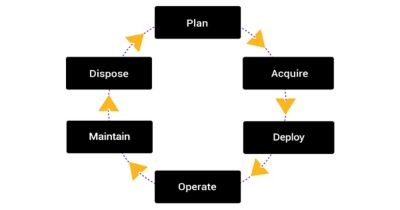
The asset lifecycle management cycle, with six steps
The asset lifecycle management process is typically broken down into six steps, though some practitioners combine operation and maintenance to create a five-step process. The steps encompass what a company is doing with the asset throughout the asset's lifespan, from identifying a need to how the asset will be retired.
1. Planning
The planning stage is the first step in an asset's life cycle. The step focuses on identifying the organization's need for the new asset, delineating the purpose of the asset, and documenting the objectives the organization wants to achieve with the asset. Once these details are captured, the planning team will focus on:
- Creating a budget
- Estimating the asset's value to the organization
- Documenting technical requirements
- Establishing key performance indicators (KPIs) and metrics to track throughout the asset's life
- Listing required features and functions
- Developing a risk mitigation plan
2. Acquisition
Asset acquisition is the next step in the process. The procurement of an asset usually involves the following tasks:
- Investigating vendor options
- Downselecting vendors
- Negotiating price and contract details
- Obtaining the proper approvals throughout the organization
- Processing the purchase of the new asset
- Defining the allocation of upfront and operating costs
3. Deployment
Deployment covers the period from when a new asset is purchased until it begins operation. The typical tasks for deployment include:
- Planning and preparing the site
- Installing
- Configuring
- Integrating into physical and digital systems
- Developing the asset maintenance strategy and maintenance schedules
- Training the operators and maintenance technicians
- Documenting the initial asset value and anticipated depreciation schedule
4. Operation
Also referred to as utilization, the operation step focuses on minimizing cost and optimizing the value derived by the organization and minimizing the total cost of ownership. The tasks involved during utilization vary greatly depending on the function and complexity of the asset. But most companies carry out the following activities:
- Operating the asset
- Monitoring asset performance
- Capturing usage data
- Upgrading as needed to improve performance or reduce downtime
- Modifying operating parameters to better achieve overall business objectives
- Defining inefficiencies and implementing process improvements
5. Maintenance
While utilizing any asset, the organization must also engage in maintenance tasks. Companies that fail to properly conduct maintenance management activities run the risk of incurring significant costs or shutdowns. Typical maintenance tasks include:
- Inspecting the asset and reviewing performance data regularly
- Carrying out preventive maintenance
- Engaging in predictive maintenance, if implemented
- Conducting repairs and required maintenance
- Tracking breakdowns, uptime, and maintenance costs
6. Disposal
When an asset no longer delivers sufficient value to the organization, it reaches the final step in asset lifecycle management: disposal. Stakeholders convene to determine the best approach for decommissioning it. Some of the more common options for dealing with an asset's end of life include the following, which can be carried out on the entire asset or some of its components:
- Standard waste disposal
- Recycling as material or spare parts
- Repurpose in another role or location
- Selling
- Storage
The Different Types of Asset Lifecycle Maintenance
The term asset lifecycle management generally refers to the management of physical assets, but it can also refer to many other items that companies own, which can benefit from management across their life cycle. The different types of ALM are generally defined by the type of assets they manage:
Enterprise Asset Management or Physical Asset Management
This is the most common type of asset lifecycle management and is the primary focus of this article. One key aspect of managing physical assets is the use of hardware-specific workflows and tools for inventory management, maintenance management, and facility management.
IT Asset Lifecycle Management
Modern companies often have a significant investment in IT infrastructure, encompassing both hardware and software. IT asset lifecycle management uses tools and processes that focus on how IT assets interact with one another, as well as utilization, user access, scalability, and cybersecurity issues.
Software Asset Lifecycle Management
Software assets have their own life cycle management needs that often require a separate, focused asset management system. Although the steps are the same, software asset lifecycle management also includes aspects of DevOps, management of software licenses, and tools to automate monitoring.
Digital Asset Lifecycle Management
Data that a company owns and controls can also be considered a digital asset. In some industries, such as healthcare, digital marketing, and finance, digital assets are crucial to success. Data management by a digital asset lifecycle management system can include databases, documents, images, videos, or even cryptocurrency. The primary focus for digital assets is to have access to asset information in real time.
Fleet Lifecycle Management
A subset of enterprise asset management is fleet lifecycle management, which involves managing mobile assets. Most ALM programs focus on fixed assets. For fleet lifecycle management, things like location, accidents, environment, and sustainability have to be factored in.
The Benefits of Effective Asset Lifecycle Management
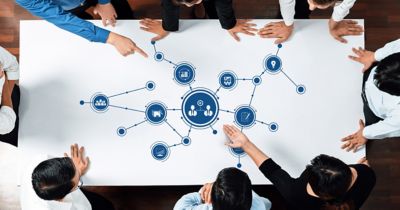
Effective asset lifecycle management is an organization-spanning endeavor.
When done effectively, ALM achieves its overall goal of maximizing the value of organizational assets from planning through disposal. Instead of tackling one or two parts of that life cycle, it looks at the entire lifespan to deliver value from start to finish.
Some of the most common benefits of a well-implemented ALM system include the following elements.
Informed Decision-Making
Having the right information at the right time can make a huge difference, especially in the planning stage of an asset's life cycle. Stakeholders no longer need to experiment. Instead they can make educated decisions on the asset’s purchase, maintenance, performance enhancements, and disposal.
Improved Productivity and Performance
ALM provides an organization with the tools it needs to systematically enhance how its assets deliver value. That value may include operating more hours in a day, decreasing energy consumption, or reducing scrap.
Better Organizational Operating Efficiency
Beyond the performance of the asset itself, ALM can help enterprises monitor, operate, repair, and maintain their assets more efficiently. Transitioning from a reactionary service management paradigm to one driven by monitoring, streamlining, and scheduling can significantly reduce labor and equipment costs for facilities management. This also includes optimizing expenses across the organization, not just for a given asset. ALM enables better scheduling and sharing of maintenance resources.
Reduction in Downtime
One of the most costly impacts on a company is when an asset is down and not delivering the value the company invested in. ALM gives companies the tools, data, and processes to shift from reactive to proactive maintenance, avoiding costly shutdowns and dangerous failures.
Extended Lifespan
Companies can extend asset lifespan through ALM by minimizing wear and tear and replacing parts before they damage other components. Proactive maintenance can also keep performance high for a longer time to extend asset life.
Best Practices for an Effective Asset Lifecycle Management Program
To obtain these benefits, companies implementing and running an ALM need to do more than put a process in place and buy asset management software. Here are seven lessons learned over the years by companies that implemented an effective lifecycle management system:
- Involve stakeholders at every step in the life cycle
- Deploy integrated software solutions
- Remove barriers to data access
- Implement sensors and data acquisition
- Leverage the use of digital twins
- Invest in training for users and maintenance staff
- Use data analytics, simulation, and artificial intelligence (AI) to drive predictive maintenance
As with any strategic business initiative, the ALM implementation and execution teams need to get senior management buy-in not just in the beginning but after the system has been in place for a while. The investment in ALM can sometimes seem like an attractive expense to cut from the budget as the savings are immediate. However, the significant cost of those cuts will eventually show up.
Supporting and Improving Asset Lifecycle Management With Simulation
An effective way to improve the positive impact of ALM is to leverage simulation. Almost every step in an asset's life cycle can benefit from the use of digital models that simulate the asset's behavior. Simulation fits well in ALM because it is another way to generate information about assets for informed decision-making without physical testing or expensive monitoring.
Here are a few examples of how organizations can increase the value of assets and reduce costs through simulation:
Digital Twins

A digital twin model of a lithium-ion battery pack
The use of digital twins is growing as a way to increase the impact of ALM. A digital twin is a virtual representation of an asset using data and simulation. Proper digital twin applications use real-time data from Internet of Things (IoT) sensors on assets, historical data, data generated by multiphysics simulation, and systems modeling to create an accurate, responsive representation of an asset on a computer.
Enterprises use tools like the Ansys Twin Builder simulation-based digital twin platform to provide actionable information about assets without guessing, physical testing, or having to take an asset offline. Digital twins can also enable more accurate predictive analytics to proactively identify maintenance long before a component fails. Digital twins provide valuable information during the operation, maintenance, and disposal stages of an asset's life cycle.
Systems Modeling
Most assets operate in a system and can also be represented as a system model. By integrating model-based systems engineering (MBSE) into ALM, engineers can create data about an asset, model complex behavior, and predict how operating changes impact performance and robustness. Teams can use MBSE as early as the planning stage to look at different options and assist stakeholders in selecting the optimal asset. MBSE tools like Ansys ModelCenter model-based systems engineering software can also be used at almost every stage.
Mission Simulation
Managing any mobile assets, as in fleet asset management, can be a unique challenge. Mission simulation tools like Ansys Systems Tool Kit (STK) digital mission engineering software provide a level of systems modeling that allows multiphysics interaction as assets move through time and space. Mission simulation is usually applied to the operations phase to optimize the performance of multiple assets.
Safety Analysis
Simulation can also play a crucial role in improving the safety of an asset through safety analysis methods. A tool like Ansys medini analyze system-oriented safety analysis software streamlines functional safety analysis across the entire system and includes the electronics and software components of an asset. This capability can be beneficial in the planning and deployment stages, as well as for operation and maintenance.
Physics and Multiphysics Modeling
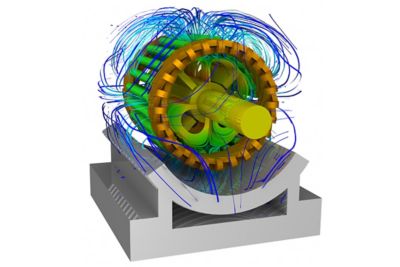
A simulation of an electric motor to understand the complex interaction of magnets
At the core of any simulation strategy to support asset lifecycle management is the numerical simulation of single or multiple physics. These models are created in a variety of software tools like Ansys Mechanical structural finite element analysis software for structural and thermal modeling, Ansys Fluent fluid simulation software for fluids and thermal simulation, Ansys LS-Dyna nonlinear dynamics structural simulation software for studying nonlinear behavior, Ansys HFSS high-frequency electromagnetic simulation software for high-frequency electromagnetics simulation, and Ansys Zemax OpticStudio optical simulation design and analysis software for modeling optics. For asset modeling, engineers can use these tools and others to understand the detailed behavior of any part of an asset, understand the root causes of failures, and optimize performance.
Let’s Get Started
If you're facing engineering challenges, our team is here to assist. With a wealth of experience and a commitment to innovation, we invite you to reach out to us. Let's collaborate to turn your engineering obstacles into opportunities for growth and success. Contact us today to start the conversation.