Synopsys and Ansys power the future of innovation—connecting silicon to systems.
-
-
学生向け無料ソフトウェアにアクセス
Ansysは次世代の技術者を支援します
学生は、世界クラスのシミュレーションソフトウェアに無料でアクセスできます。
-
今すぐAnsysに接続!
未来をデザインする
Ansysに接続して、シミュレーションが次のブレークスルーにどのように貢献できるかを確認してください。
無料トライアル
製品およびサービス
リソースとトレーニング
当社について
Back
製品およびサービス
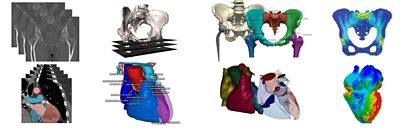
No two people are alike. From jobs to hobbies to food preferences, everyone is different, and the same goes for our bodies. With so many pathological and anatomical differences, personalized medicine is the way to transform how medical and pharmaceutical solutions are designed, tested, implemented, and approved. Ansys, part of Synopsys, in silico technologies for healthcare and Simpleware image processing software are at the forefront of this shift, providing advanced tools that bridge the gap between 3D imaging data and actionable models for simulation and analysis. By integrating these solutions into the healthcare industry, professionals gain the ability to process complex computed tomography (CT) and magnetic resonance imaging (MRI) scans into high-quality, simulation-ready models. This capability enhances precision of medical devices working in the human body and fosters innovation across a range of applications, from surgical planning to in silico trials.
With Simpleware, healthcare teams can directly work with imaging data, preserving intricate details such as material variations and internal defects. These features, often missing in traditional computer-aided design (CAD) models, enable a deeper understanding of real-world conditions and a more accurate representation of physical anatomy. Ansys multiphysics software complements this by enabling simulations that predict performance under varied scenarios, providing essential insights into device behavior and patient-specific outcomes.
These tools bring cutting-edge automation to traditionally time-intensive workflows, enabling repeatable processes that can scale across teams and projects. Batch processing, scripting capabilities, and AI-driven tools further streamline tasks, reducing the time spent on manual image processing while increasing overall productivity. As healthcare challenges grow more complex, this integration of imaging and simulation offers a powerful pathway to address evolving demands with speed and confidence.
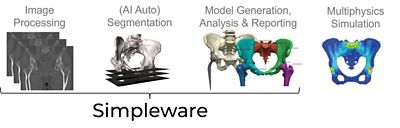
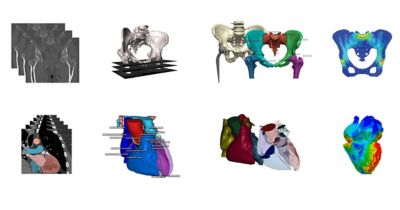
Simpleware bridges the gap from patient images to simulation.
Improving Patient Outcomes
Through advanced modeling and simulation, Ansys and Simpleware empower the development of treatments and devices that align more closely with individual patient needs. By leveraging 3D imaging data to produce highly detailed, patient-specific models, these tools support the creation of medical solutions that are more precise and effective. This process accounts for anatomical variations, providing healthcare teams with the ability to tailor interventions to unique clinical scenarios.
Simulation capabilities enable comprehensive virtual testing, ensuring that devices are optimized for performance and safety within the context of real-world anatomy. This is particularly critical for applications such as surgical planning or implant design, where accuracy and adaptability directly influence patient recovery and treatment success.
The integration of automation tools reduces the time required for preparing models, enabling faster transitions from imaging data to actionable insights. As a result, clinicians and researchers can act on data more quickly, leading to timely and informed decisions for patient care. Faster decisions mean that patients don’t have to wait as long for treatments, diagnoses, and results, leading to better quality of care and life.
In addition, the precision offered by these technologies helps minimize risks associated with errors or inefficiencies, ensuring a higher standard of quality in both diagnostics and treatments. With tools that streamline complex workflows, healthcare providers can focus on delivering outcomes that improve patient quality of life while maintaining confidence in the safety and effectiveness of their medical innovations.
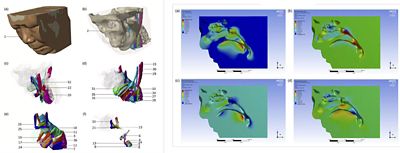
The left shows CT scan data of a 79-year-old male with a normal airway. Simpleware was used to convert the data into finite element (FE) mesh to use in the Ansys Workbench simulation integration platform. The right shows the simulation results of the oropharynx and velopharynx with varying airway pressure to determine area versus pressure slope. The results provided insights to help inform further image-based modeling research and new medical device design for oral pressure therapy devices. Credit: University of Alberta (Departments of Mechanical Engineering and Radiology and Diagnostic Imaging) N. Carrigy, J. Carey, A. Martin, W. Finlay, M. Noga.
.
Streamlining the Design Process and Time to Market
By integrating advanced imaging and modeling tools, Ansys multiphysics software and Simpleware significantly enhance the design process for medical device development. Traditional workflows, which often rely on manual adjustments and trial-and-error approaches, are replaced with a more efficient and automated system. Simpleware's ability to convert CT and MRI scans directly into simulation-ready models eliminates many intermediate steps and reduces reliance on outdated methods.
Through scripting, batch processing, and AI-driven tools, the software further optimizes the design workflow, enabling teams to handle large datasets with ease. This level of automation minimizes time spent on repetitive tasks, freeing up resources for more strategic aspects of product development. By leveraging precise digital models, developers can test, analyze, and refine designs earlier in the process, identifying potential issues before physical prototypes are even created.
The streamlined integration with Ansys simulation platforms enables seamless transitions from model generation to performance analysis, fostering a cohesive workflow. These advancements collectively enable healthcare developers to achieve higher levels of accuracy, reduce project timelines, and optimize resources, all while maintaining stringent design standards.
Addressing Regulatory Standards
Regulatory compliance is a fundamental requirement in the development of medical devices and treatments, demanding meticulous validation to ensure safety and effectiveness. Simpleware Medical is Food and Drug Administration (FDA) 510(k) cleared and has the European Union CE mark. The software is also entered in the Australian Register of Therapeutic Goods (ARTG) for Australia, and is registered as a medical device in Japan.
It provides a complete image processing solution for clinical applications that directly links with Ansys simulation workflows. These tools streamline the validation process by offering simulation-based insights into design performance under various scenarios. Simulation enables developers to analyze products for durability, reliability, and compliance with standards, all before physical testing begins.
With the ability to model patient-specific anatomies and real-world conditions, Simpleware ensures that devices meet rigorous regulatory benchmarks by accounting for detailed variations in human anatomy. Paired with Ansys simulation platforms, these models support the generation of comprehensive data and reports required for regulatory submissions.
Automated workflows and high-fidelity imaging capabilities further enhance regulatory adherence by reducing variability and ensuring repeatable, consistent results. This enables healthcare innovators to confidently address the stringent requirements of regulatory agencies.
The integration of these technologies also helps mitigate risks associated with late-stage design changes, which can delay compliance processes. By identifying potential issues early and addressing them through simulation, teams can minimize delays and maintain efficient timelines for product development. The result is a more predictable and structured pathway toward regulatory approval, reducing the complexity of navigating healthcare standards.
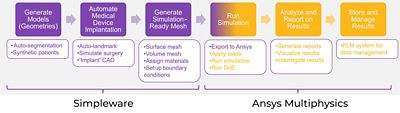
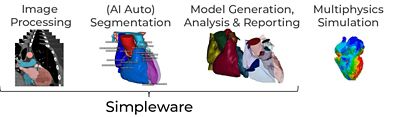
An example of a Simpleware and Ansys simulation software end-to-end in silico trial workflow
A Bright Future
Multiphysics simulation and Simpleware have reshaped the approach to medical device development and patient-specific solutions. Our tools streamline traditionally complex workflows, combining advanced imaging with high-fidelity simulation to support innovation at an unprecedented scale. The ability to process large datasets with speed and precision, alongside automated features, positions these solutions as indispensable for meeting the evolving demands of healthcare technology.
By facilitating efficient design validation, addressing regulatory needs, and enabling tailored patient care, these platforms bridge the gap between conceptual innovation and practical application. This integration empowers healthcare teams to stay ahead of industry trends, leveraging cutting-edge capabilities to enhance safety, accuracy, and efficiency in the products they deliver.
Learn more about how Ansys multiphysics solutions and Simpleware can help with your medical innovations.


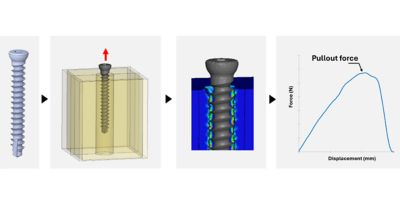
The Advantage Blog
The Ansys Advantage blog, featuring contributions from Ansys and other technology experts, keeps you updated on how Ansys simulation is powering innovation that drives human advancement.