Skip to Main Content

Wheel Aerodynamics in Cycling: Bridging Research and Performance

Cycling wheels are a key aerodynamic component of the bicycle–cyclist system, contributing approximately 5–10% of total drag. In addition, they experience an aerodynamic moment that can increase overall power demand by a further ~2–5%. Over time, various wheel designs, such as deep-section rims, tri-spoke and disc wheels, have been developed to optimise the aerodynamic performance of the wheels, particularly in crosswind conditions where the so-called sail effect can reduce their drag.

Today, these optimisations are increasingly supported by computational fluid dynamics (CFD) simulations, especially during early-stage design when physical prototypes are not yet available. However, ensuring reliable and reproducible CFD results requires a robust and carefully validated methodology.

This webinar presents recent research aimed at establishing a robust CFD framework for cycling wheel aerodynamics, highlighting best practices and key modelling considerations. An applied case study, developed by a collaboration between the professional cycling team Equipe Groupama–FDJ United and the high-end component manufacturer Miche, demonstrates how aerodynamic insights translate into measurable performance gains on the road.
Date/Time:
July 2nd, 2026
9:00 AM EDT / 4:00 PM GMT / 5:00 PM CEST

Venue:
Virtual

Register Now

This site is protected by reCAPTCHA and the Google Privacy Policy and Terms of Service apply.

About this Event

In time trial cycling, performance is defined by marginal gains—and aerodynamics remains one of the most critical factors. While teams rely on wind tunnel testing, field measurements, and CFD to refine performance, many simulation approaches still fall short by assuming static rider positions, limiting their ability to reflect the realities of motion.

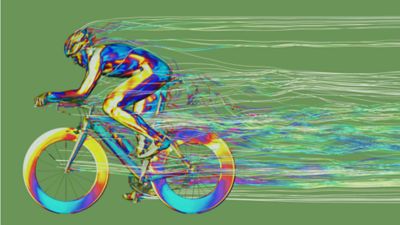
This session explores a more advanced and realistic approach to cycling aerodynamics using Ansys Fluent. By applying an overset mesh technique to simulate a pedaling cyclist, engineers can capture dynamic motion and uncover how airflow evolves throughout the pedal cycle. This enables a deeper understanding of rider-bike interaction and its impact on drag and wake behavior.

Attendees will see how this method not only aligns closely with experimental wind tunnel results but also unlocks new insights into transient aerodynamic effects—helping teams move beyond static assumptions toward more accurate, data-driven performance optimization.What you will learn 

What you will learn

  • Understand how dynamic CFD simulation of a pedaling cyclist improves aerodynamic accuracy compared to traditional static models
  • Learn how Ansys Fluent and the overset mesh method capture rider motion, airflow interaction, and transient wake behavior
  • Discover how simulation results correlate with wind tunnel data to enable more informed, performance-driven design decisions

Speakers

Fabio Malizia - Assistant Professor at Heriot Watt University
Victor Simonin - Ingénieur d’études R&D chez Equipe cycliste Groupama-FDJ

Ansys Discovery cycling simulation

Secure Your Place Today