Synopsys and Ansys power the future of innovation—connecting silicon to systems.
Ansys Rocky
Particle Dynamics Simulation Software
Ansys Rocky is the industry-leading discrete element method (DEM) software that quickly and accurately simulates particle flow behavior.
Quickly and Accurately Simulate Particle Flows
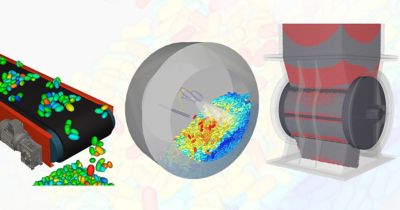
Rocky is designed to solve engineering problems. Rocky is uniquely capable to models real particle shapes including any solids, 2D shells, and rigid and flexible fibers. The simulations are fast and accurate. With multi-graphics processing unit (GPU) solver technology, you can simulate the behavior of different shaped and sized particles in many industrial applications.
-
Multi- GPU Solver

-
Scalable, efficient, large particle counts
-
Realistic Particle Shapes including fibers
-
Wear modeling, particle breakage, cohesion
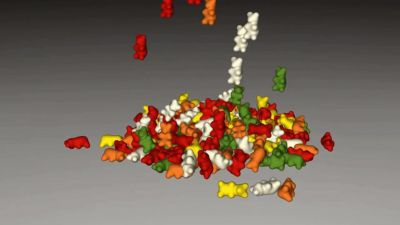
Custom Fitting a Solution for Kitchen Appliances
Using DEM to design a more robust heat exchanger

Compared to bench-top component-level testing, overall foulant simulation can produce savings of up to 10% of total development costs — along with reduced time to market, since results are available in a week, compared to months.
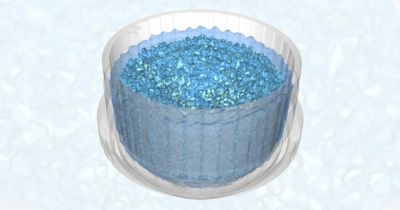
Built-in appliances fill today’s high-end kitchens, in which seamless integration with cabinetry can pose technical challenges related to airflow restriction in a machine’s compartment. This problem is exacerbated by dirt accumulation on the condenser (heat exchanger), which can affect appliance performance.
Experimental evaluation of dirt accumulation on condensers is time-consuming and expensive. Consequently, Sub-Zero is coupling Ansys Fluent computational fluid dynamics (CFD) and Ansys Rocky discrete element modeling (DEM) to quickly gain insight on the mechanisms behind dirt accumulation in an effort to design a more robust heat exchanger.
March 2026
What's New
Ansys Rocky 2026 R1 delivers significant advancements across DEM simulation, graphics processing unit (GPU) acceleration, and multiphysics coupling. This update is designed to extend accuracy and provide performance at scale.
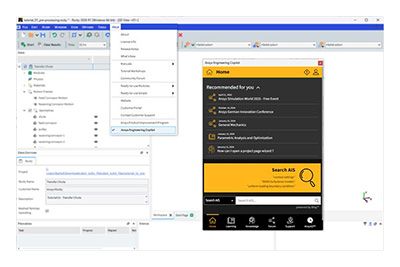
DEM Simulation
The Ansys Engineering Copilot tool has been integrated directly into the desktop interface of Rocky. A new script is now available to automate the calculation of the mixing index for multiple materials. Additionally, new modules have been introduced to implement various types of fluid and intermolecular forces without requiring CFD coupling.
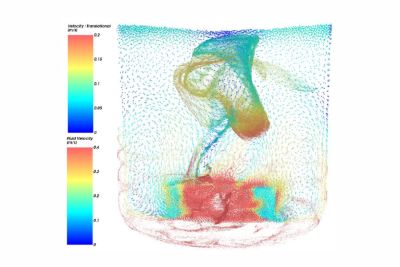
Multiphysics Coupling
The new coupling between Rocky Unresolved and Fluent VOF support enhances DEM/CFD application capabilities, and GPU support for one-way Fluent coupling improves simulation performance.
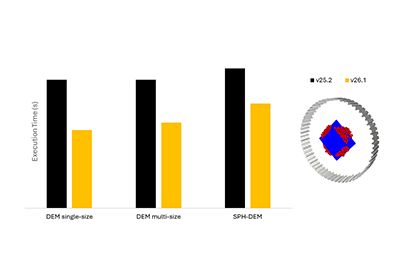
Performance and Usability
Optimization of the volumetric generation of DEM and SPH elements, along with enhanced usability for creating particle inlets through PrePost Scripting automation.
ROCKY CAPABILITIES
Solve the Largest, Most Complex Particle Simulations With Ease
Ansys Rocky unlocks the potential of solving the most challenging DEM simulations. Large scale simulations, going up to millions of particles, can be solved using real particle shapes on multi GPU’s.
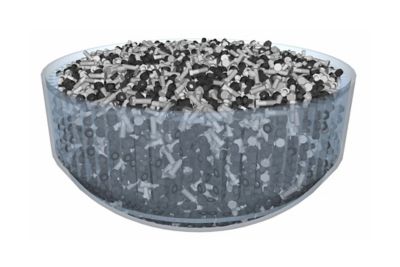
Key Features
Rocky is the premier tool for quickly and accurately simulating the behavior of bulk materials with complex particle shapes and size distributions.
- Multi-GPU Processing
- Realistic, Complex Particle Shapes
- Fluids Coupling
- Structural Mechanics Coupling
- Electromagnetic Coupling
- Multibody Dynamics
- Breakage Modeling
- Smoothed-Particle Hydrodynamics
Featured Webinars
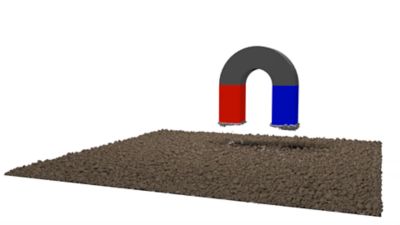
Ansys 2025 R1: Ansys Rocky What’s New
Join us in this webinar to discover all the new features in Ansys Rocky’s 2025 R1 release.
Webinar Series
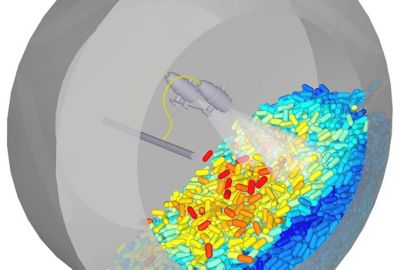
Ansys Rocky Webinar Series
This webinar series features 15-minute demonstrations showcasing how Rocky can be used to solve some of your most challenging particle simulations.
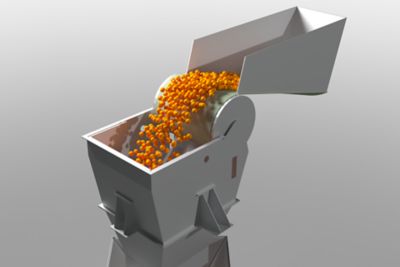
Ansys 2024 R2: Ansys Rocky What’s New
Join us for this webinar to discover all the new features in Ansys Rocky's 2024 R2 release, including Rocky-Mechanical coupling enhancements, transient point cloud support, and pre and post-processing with Ansys EnSight Integration and IISPH new interface.
Webinars on Demand
Blogs
Case Studies

Ansys software is accessible
It's vital to Ansys that all users, including those with disabilities, can access our products. As such, we endeavor to follow accessibility requirements based on the US Access Board (Section 508), Web Content Accessibility Guidelines (WCAG), and the current format of the Voluntary Product Accessibility Template (VPAT).