Synopsys and Ansys power the future of innovation—connecting silicon to systems.
-
-
Access Free Student Software
Ansys empowers the next generation of engineers
Students get free access to world-class simulation software.
-
Connect with Ansys Now!
Design your future
Connect with Ansys to explore how simulation can power your next breakthrough.
Free Trials
Products & Services
Learn
About
Back
Products & Services
Back
Learn
Ansys empowers the next generation of engineers
Students get free access to world-class simulation software.
Back
About
Design your future
Connect with Ansys to explore how simulation can power your next breakthrough.
Free Trials

Get key takeaways from our executive roundtable at Simulation World Detroit.
Digital engineering gives innovators creative agency to test the limits of their ideas in a virtual environment. It is in this convergence of digital technologies, data-driven models, and advanced simulations where new designs are born at unprecedented levels of speed and accuracy.
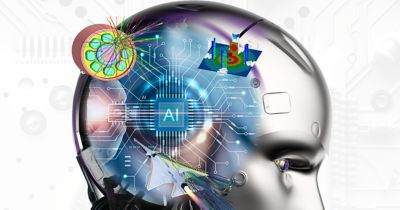
Adding artificial intelligence (AI) into the mix further accelerates innovation by unlocking opportunities to automate repetitive tasks, train AI copilots on highly accurate simulation data, and make digital engineering technologies available and understandable to more collaborators.
During Simulation World 2025 (an Ansys, part of Synopsys event), a group of industry leaders came together for the in-person panel discussion “Digital Engineering in the Age of AI.” They discussed their engineering challenges and how digital tools like simulation and AI are being used to meet those challenges.

Panelists from Boeing Ventures and AE Ventures, JuliaHub, Cummins, Booz Allen Hamilton, Lockheed Martin, and Synopsys discuss digital engineering in the age of AI at Simulation World Detroit.
First Things First: Digital Engineering as a Foundational Strategy
To better contextualize the value of AI in modern engineering first requires an understanding of digital engineering. Digital engineering is a significant departure from traditional approaches dependent on physical prototypes, spreadsheets, and siloed workflows. Instead, digital engineering promotes collaboration among all disciplines, such as mechanical, electrical, and software engineers using digital tools and methods throughout the entire development process.
“What digital engineering is bringing us is the ability to be able to not only trace a thread from system to system but be able to iterate on parameters … (and) paint the whole performance envelope in a really robust way,” said panelist Nathan VanRheenen, director and chief engineer, Boeing Ventures and AE Ventures.
A key differentiator in digital engineering is an emphasis on the early integration of data, models, and simulations to inform design decisions. To this end, teams leverage model-based systems engineering (MBSE) to visualize complex systems in a cross-collaborative, digital environment. The net effect of this creative approach is efficiency, as changes and improvements in one domain are seamlessly aligned with others via a structured systems logic framework that places models at the heart of system design.
Overall, digital engineering constitutes a more integrated, efficient approach to problem solving that drives faster iterations and improves optimization. It promotes cross-collaboration among teams, reducing miscommunications and design conflicts responsible for costly delays and rework. Industries with high system complexity like aerospace and automotive are leading the way in terms of adoption, as they rely heavily on digital engineering to manage the intricate relationships among components.
“If you're digital first, you get tremendous benefits ... so much so that my company decided to invest $6 billion in our digital transformation, and it is absolutely already returning much, much more than that in terms of competitive advantage and benefits,” said panelist Mark Maybury, vice president, commercialization at Lockheed Martin. “So, digital engineering really is, you could argue it's even a culture, it's a mindset ... There are technologies like MBSE, it’s data driven. It's now increasingly AI and model-driven. But it is something that really applies across the full life cycle.”
— Mark Maybury, vice president, commercialization, Lockheed Martin

Simulation as a Catalyst for Change
Another important takeaway from the panel discussion is the central role that simulation plays in digital engineering. It gives engineers a sense of agency to freely explore different designs and evaluate their performance in a virtual environment. This is critical against the backdrop of increasingly complex product requirements and shrinking timelines and budgets.
Advanced simulation tools enable faster analysis and more informed decision-making across multiple physical domains, including mechanical, electrical, fluid dynamics and thermal systems. Teams can leverage them to address complex physics interactions between components and predict system behavior with greater accuracy. The takeaway, of course, is the assurance that designs perform as intended in real-world conditions.
So, what happens when AI is incorporated into a simulation workflow? AI enhances speed and democratizes these processes. It is at the intersection of artificial intelligence/machine learning (AI/ML) and simulation that these technologies complement each other in powerful ways.
Engineers can harness AI to use machine learning to build models that accelerate prediction with simulation such as tools like Ansys SimAI software. To this end, machine learning models can quickly estimate results for computationally heavy simulations, while reduced-order modeling techniques can be used to streamline more complex analyses. This enables teams to quickly pivot to adapt to design changes and optimize systems more effectively.
Generative AI is one component of the expected return on investment when deploying AI. However, today’s engineers still spend a significant amount of time searching for information across various sources like documentation, training materials, and forums. As workflows become increasingly complex, opening a support case is not always straightforward. This is where a copilot AI tool can dramatically reduce the time needed to access relevant information, all without leaving the product desktop.
“There's the generative AI story, which is all about helping you build the model,” said panelist Viral Shah, co-founder and CEO at JuliaHub. “But the second part is the scientific capabilities ... running simulation in seconds or minutes which used to take hours. There's this entire suite of capabilities, with GPUs, with surrogates, with optimization, with reduced-order modeling that will allow you to bring scientific AI capabilities to accelerate your simulation.

“So if I think about agent engineers and what they can do, so automating tasks that are, let's say, high toil and low risk, that is the first step. When we start talking about agents orchestrating and driving other agents, and then furthermore, agents that are able to reason, that are able to plan, and then make decisions and drive other task agents or agent engineers, we're a little farther away from that.”
— Buvna Ayyagari, SVP, New Ventures at Synopsys
Agentic AI in Digital Engineering
Panelists were also apt to point out the role AI could play in reshaping digital engineering to accelerate innovation. Within this engineering domain, agentic AI could emerge as a valuable tool to autonomously manage complex engineering tasks, such as refining workflows and proposing design enhancements.
Agentic AI represents a conceptual evolution from traditional AI, which operates within a specific framework of predefined rules and requires human guidance. The key differentiators for agentic AI promise to be the ability to reason, plan, learn, and execute various tasks with increasing autonomy. This vision involves the application of AI agents, either working in solitary or within multi-agent systems, with the purpose to independently solve engineering challenges.
The idea is that agentic AI models or “agents” will come together and coordinate with other agents to work alongside engineers, analyzing data, and performing simulations to support faster, more informed decisions. This level of activity has the potential to distill down the time it takes to model and test intricate systems even further in a simulation environment by optimizing setup and decision-making.
Collaboration is indeed an agentic AI superpower. It could integrate insights across all disciplines including mechanical, electrical, and software engineering. For example, agentic AI could be useful in the recommendation of design adjustments that account for thermal, structural, or aerodynamic constraints, ensuring a given design remains robust across different physics domains.
For now, however, agentic AI is still in its infancy. The technology’s ability to plan and reason autonomously remains limited, necessitating human oversight. The good news is that agentic AI is setting the stage for more innovative problem-solving in engineering. In the near future, engineers may come to rely on agentic AI to manage repetitive or computationally demanding work, so they can reclaim their time and focus on other high-value tasks.
“If I can liken the agentic AI flow to the journey that we see in autonomous driving going from L1 to L5, you know, with L1 being your adaptive cruise control and your L5 being completely autonomous vehicles, if you liken that to our journey in agentic AI adoption, I would say we're somewhere (around) L1, L2, L3 is easy to do,” said panelist Buvna Ayyagari, SVP, New Ventures at Synopsys. “But when we start talking about agents orchestrating and driving other agents, and then furthermore, agents that are able to reason, that are able to plan, and then make decisions and drive other task agents or agent engineers, we're a little farther away from that.”
"Maybe one day … we'll see that (level of innovation) coming from AI," said panelist Bob Tickel, Director, Structural and Dynamic Analysis at Cummins. "I still think that's going to come from people utilizing the tools. And so, I don't want to be a skeptic, but I want to, again, try to make sure physics are still included and ... that we make the best decisions. But definitely there's a path here to speed us up and to help us move faster."
"Maybe one day … we’ll see that (level of innovation) coming from AI. I still think that’s going to come from people utilizing the tools."
— Bob Tickel, director, structural and dynamic analysis, Cummins

Digital Twins and the NVIDIA Omniverse
Digital twins can be viewed as key enablers of AI because of their ability to effectively close the gap between AI-driven and real-world applications. A digital twin is an integrated, data-driven virtual representation of real-world entities and processes, with synchronized interaction at a specified frequency and fidelity.
Digital twins are detailed virtual counterparts of physical systems. As such, they enable engineers to monitor, analyze, and enhance system performance in real time. In the shift from passive monitoring to autonomous decision-making, digital twins will be crucial in establishing transparency and trust.
“(Digital twin) is kind’ve an integration of … real-time data coming in. The synthetic data you can use physical AI to generate from that real-time data,” said panelist Bill Vass, CTO at Booz Allen Hamilton. Physical AI lets autonomous systems perceive the real world and then use that perception to perform actions. “So, you collect all that data and you have a combination of data that you've generated along with the real data, and you apply that into a digital twin that incorporates the physicality of the environment, the software systems, (and) the electronic systems.”
From there, Vass provided a practical application of digital twin and NVIDIA Omniverse, an open-AI platform for developing generative physical AI-powered applications for industrial digitization. Omniverse helps engineers extend the functionality of digital twins by fostering real-time collaboration across engineering disciplines. Working within Omniverse, multiple teams can interact within a shared virtual environment to integrate mechanical, electrical, and software designs into one cohesive digital model.
“We pulled together a demo showing the radio lobes or the RF (radio frequency) lobes of a transmitter communicating to a drone in real time as a truck drives in with a jammer,” he said. “And, then having Ansys show us the real physics of the jamming and all the radio lobes in real time running in Omniverse, how to adapt it to avoid the jamming. So, I think those are the areas where you sort of see the digital twin and Omniverse come together.”
Are You Prepared for a Digital Engineering Future?
How will the next generation of engineers be equipped with the skills they need to excel in a digital- and AI-driven environment? For a deeper dive into this topic, and others touched on here, be sure to catch the entire “Digital Engineering in the Age of AI” Simulation World session, and download the IDC study “Transform Product Innovation with Multiphysics Simulation for Digital Engineering,” which was sponsored by Ansys, part of Synopsys..

Just for you. We have some additional resources you may enjoy.
“What digital engineering is bringing us is the ability to be able to not only trace a thread from system to system but be able to iterate on parameters … (and) paint the whole performance envelope in a really robust way.”
— Nathan VanRheenen, director and chief engineer, Boeing Ventures and AE Ventures

The Advantage Blog
The Ansys Advantage blog, featuring contributions from Ansys and other technology experts, keeps you updated on how Ansys simulation is powering innovation that drives human advancement.