Subdivision Surfaces for Modeling in Ansys Discovery Software
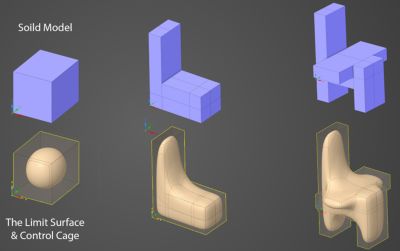
This case study explains the principles and application of subdivision surfaces in Ansys Discovery™ 3D product simulation software. It describes how polygonal geometries transform into smoother, continuous surfaces through iterative refinement using the Catmull-Clark algorithm. The resource highlights the relationship between traditional parametric surfaces and Bicubic B-Spline subdivision surfaces, emphasizing how subdivisions improve geometric continuity and control over curvature. Through visual demonstrations and mathematical context, it illustrates how engineers can create complex freeform shapes with precision and flexibility. The study connects theoretical concepts to practical modeling workflows, showing the relevance of subdivision surfaces in engineering fields such as automotive, aerospace, and product design.
Learning Outcomes
- Understand how subdivision surfaces improve smoothness and geometric continuity.
- Explain the role of the Catmull-Clark algorithm in surface refinement.
- Apply subdivision modeling concepts to engineering design in Ansys Discovery software
Applicable Courses for Use
- Industrial Design
- Intro to Product Design
- CAD and Modeling
Related Resources
Sub D Modeling in Ansys Discovery – Course Overview | Ansys Courses