Automation induces anxiety in those who fear that technology will replace humans in the workforce. But as we transition from Industry 4.0 to 5.0, some apprehension could be alleviated with a shift in focus. The fourth industrial revolution centered on technology, but the fifth emphasizes human interaction and collaboration with technology. The European Commission describes it as more comprehensive than 4.0, with pillars for sustainability, human-centricity, and resilience. This redirection of focus is right on time for smart manufacturing.
What is smart manufacturing? According to CESMII, The Smart Manufacturing Institute, it includes the efficient orchestration of factories and the physical and digital processes within plants. The government-funded U.S. nonprofit highlights this instrumentation as collaborative, information-driven, and event-driven. It describes smart manufacturing processes as “integrated, monitored, and continuously evaluated with the sensing, information, analytical models, and workflows needed to automate routine actions and prescribe action for nonroutine situations.” Not surprisingly, a natural result of smart manufacturing has been the development of smart factories, also known as digital or intelligent factories.
If you’re wondering how simulation fits into this, the intersection begins here. First, multiphysics simulation provides critical insight and predictive accuracy to support the sensing data and analytical models described above. In connection, it integrates with artificial intelligence/machine learning (AI/ML) algorithms to optimize this insight and support advanced technologies like digital twins, additive manufacturing, and automation. By integrating multiphysics simulation to adopt smart manufacturing processes, industrial plants thrive as smart factories effectively and efficiently.
According to McKinsey & Co., advanced data and analytics, AI/ML, and other technologies enable solutions that, if integrated successfully, can drive 30-50% reduction in machine downtime, 10-30% increase in throughput, 15-30% increase in labor productivity, and 85% more accurate forecasting.
Smart factories feature interconnected machines, networks, and technologies such as AI/ML, Industrial Internet of Things (IIoT) sensors, and cloud computing to collect information, accelerate data transfer, and streamline processes, often using automation or robotics.
However, not every smart factory is the same. One factory might rely heavily on AI/ML, while another leverages cloud computing. Similarly, smart factories are powered by different networks. For example, a smaller factory might power its IIoT devices with Wi-Fi. In contrast, larger factories might use cellular networks, particularly private 5G networks, which can offer greater reliability with high bandwidth, low latency, and more security.
Although each smart factory is unique, all smart factories leverage technology to improve efficiency from as early as conception throughout the product life cycle, including operations and maintenance (O&M). An important component of manufacturing is new product introduction (NPI). Unlike product design, which focuses on concept or functionality, NPI centers around manufacturability and scalability, considering factors like efficiency, cost, and time to market. In relation, NPI often invites manufacturing teams into early design stages. This aligns well with the heart of smart manufacturing and Industry 5.0 in its holistic approach and consideration of efficiency — the driving force behind smart factories.
Smart Factory Efficiencies:
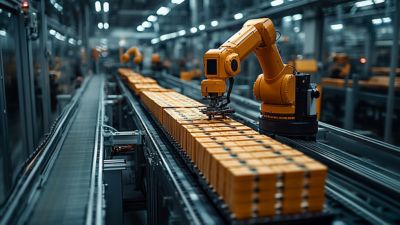
Smart factories leverage technology and automation to increase efficiency, such as by implementing robotics on an assembly line.
Demonstrating their dedication to efficiency and cutting-edge technology, nearly 200 manufacturers have joined the World Economic Forum’s Global Lighthouse Network. To earn Lighthouse designation, manufacturers must apply Industry 4.0 technologies at scale “to drive step-change financial, operational, and sustainability improvements by transforming factories, value chains, and business models.”
Several of our industrial customers are Lighthouse manufacturers, including Tata Steel.
“Innovation fuels progress, and at Tata Steel Nederland, we’re pioneering a transformative journey towards sustainability,” said Paul van Beurden, knowledge group leader – R&D, Tata Steel Nederland, in a press release. “By harnessing the power of Ansys TwinAI software, we’re optimizing our production processes, minimizing energy loss, and driving toward our decarbonization reduction targets of 30%-40% by 2030 and being carbon neutral by 2045. Ansys technology is instrumental in getting us there.”
In today’s evolving digital landscape, product development teams increasingly support data fusion in a trend to “shift simulation left,” i.e., integrate simulation earlier in design and development. By introducing simulation earlier, development teams gain critical insights to inform design, prevent product failure, decrease spending, and reduce time to market.
At the same time, with embedded sensors, AI/ML, and digital twins, smart factories maximize simulation during O&M with benefits like real-time systems analysis and predictive maintenance, which enable machine operators to detect issues sooner. This supports asset health performance and life cycle optimization. It also reduces equipment downtime and related repair costs while increasing sustainability with insights encouraging fuel efficiency and carbon reduction.
Similarly, simulation empowers advanced technologies like additive manufacturing, also known as 3D printing. This technology supports sustainability by increasing the success rate of first-attempt printing results, which reduces the time, energy consumption, material waste, and costs of trial-and-error printing. Additive manufacturing also helps secure supply chains with its ability to produce parts locally, at scale, and on demand.
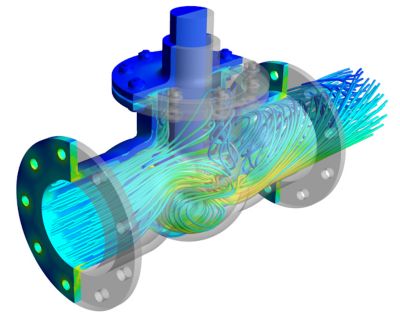
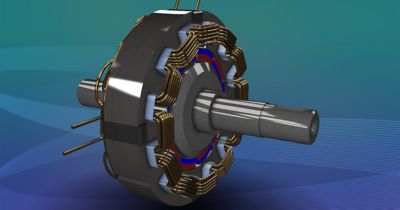
Ansys solutions support smart manufacturing with a comprehensive open ecosystem of multiphysics simulation tools spanning engineering disciplines from structures and fluids to electronics. In addition, Ansys Connect solutions enable digital engineering more easily by linking simulation, data, and resources across an organization into one digital thread, which increases operational efficiency and collaboration. These solutions include simulation process and data management (SPDM), materials management, process integration and design optimization, and model-based systems engineering (MBSE). Additional solutions support niche technologies and areas such as digital twins, AI/ML, additive manufacturing, and cloud computing.
Powered by simulation, digital engineering is driving smart factory development worldwide, impacting manufacturing in nearly every industry from construction and transportation to automotive and aerospace. According to Mordor Intelligence, the smart factory market is estimated at $389.14 billion in 2025 and is forecasted to hit $619.34 billion by 2030.
See how Ansys, part of Synopsys, is dedicated to supporting smart manufacturing and the next generation of smart factories with innovative industrial solutions.
Just for you. We have some additional resources you may enjoy.
“By harnessing the power of Ansys TwinAI software, we’re optimizing our production processes, minimizing energy loss, and driving toward our decarbonization reduction targets of 30%-40% by 2030 and being carbon neutral by 2045.”
— Paul van Beurden, knowledge group leader – R&D, Tata Steel Nederland
The Ansys Advantage blog, featuring contributions from Ansys and other technology experts, keeps you updated on how Ansys simulation is powering innovation that drives human advancement.