Skip to Main Content

Teaching Electrical Engineering with Ansys

Incorporating Ansys simulation tools into your electrical engineering curriculum brings theoretical concepts to life, giving students valuable hands-on experience with industry-standard simulation software. This practical approach deepens understanding, improves retention, and better prepares students for success in their academic and professional careers.

Ansys for Electrical Engineering Curriculum

Why Teach Using Ansys?

Empower the next generation of electrical engineers by integrating Ansys software into your curriculum. With Ansys, students can simulate real-world electrical systems, gaining a deep understanding in key areas such as circuit design, power electronics, signal integrity, electromagnetics, embedded systems, and more. Teaching with Ansys bridges the gap between theoretical principles and practical application, equipping students to design, analyze, and optimize complex electrical systems.

By using the same industry-trusted simulation tools as leading companies, your students gain in-demand skills and a competitive advantage in the job market. Bring cutting-edge innovation into your classroom and prepare your students to solve the most pressing challenges in electrical engineering—teach with Ansys.

Electromagnetics Winner

Resources for Undergraduate Electrical Engineering Courses

Explore how Ansys software, paired with Educational Resources, makes it easy to teach core electrical engineering topics, including the fundamentals of electromagnetics, antennas and arrays, signal propagation, advanced electronics, and more, helping students master complex concepts and develop simulation skills.


Fundamentals of Electromagnetics

Using simulation in fundamental electromagnetics helps students connect abstract concepts (e.g, transmission lines, electrostatics, and magnetostatics) to practical applications. With Ansys tools, students can visualize fields, understand basic setups, and explore more complex designs, analyze electromagnetic waves and their propagation through structures, and compare simulation results with analytical models, building a deeper and more intuitive understanding of key principles.

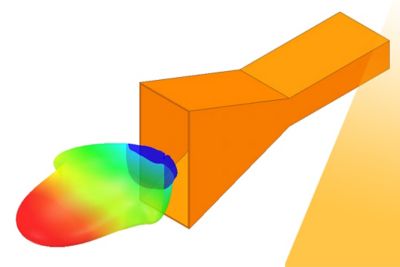
Transmission Lines and Waveguides with Ansys Electronics Desktop

Current Loop Simulation using Ansys Maxwell Software

Antennas and Arrays

The use of simulation in antenna topics enables students to explore electromagnetic principles used widely in antenna and communication systems (e.g., radiation pattern, antenna size and operating frequency, signal propagation, and impedance matching). By modeling single antennas, 1D arrays, or 2D arrays in Ansys HFSS, the students analyze key parameters and their effects on the antenna system, along with the use of specialized tools to evaluate performance, while developing practical skills for modern communication system design.

Dipole Theory and Simulation

Design a Dipole Antenna and its Matching Network Using PyAEDT

1D Dipole Antenna Array in Ansys HFSS

Design and Simulation of Microstrip Patch Antenna and 2D Array in Ansys HFSS

Signal Propagation

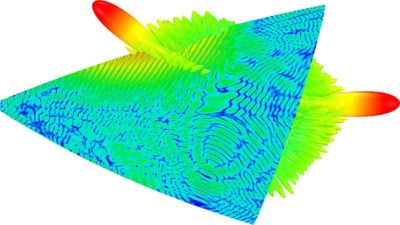
Using simulation in signal propagation courses helps students understand how electromagnetic waves travel between transmitting and receiving antennas in communications and radar systems. By modeling real-world scenarios in Ansys HFSS and comparing results with theoretical models such as the Friis and radar range equations, students can explore the impact of key parameters on signal strength and link budget in wireless systems performance.

EM Wave Propagation and Reception

Creating a Communication Scenarion in Ansys HFSS® Software Using the SBR+ Solver

Creating a Radar Scenarion in Ansys HFSS® Software Using the SBR+ Solver

Advance Electronics

Using simulation in advanced electronics topics allows students to explore complex applications such as radar systems, RF filter design, and bioelectronics practically and intuitively. Within Ansys HFSS, students can model signal behavior, optimize filter performance, and analyze electromagnetic interactions with human tissues, supporting a deeper understanding of electronics in advanced applications.

Creating a Radar Scenarion in Ansys HFSS® Software Using the SBR+ Solver

Filters Design using Ansys Nuhertz FilterSolution Software

Introduction to Healthcare Electronics with Ansys HFSS Software