Synopsys and Ansys power the future of innovation—connecting silicon to systems.
-
-
학생용 무료 소프트웨어에 액세스하기
차세대 엔지니어에게 힘을 실어주는 Ansys
학생들은 세계적 수준의 시뮬레이션 소프트웨어를 무료로 이용할 수 있습니다.
-
지금 바로 Ansys에 연결하십시오!
미래를 설계하기
시뮬레이션이 다음 혁신을 어떻게 지원할 수 있는지 알아보려면 Ansys와 연결하십시오.
무료 트라이얼
제품 및 서비스
학습하기
회사 정보
Back
제품 및 서비스
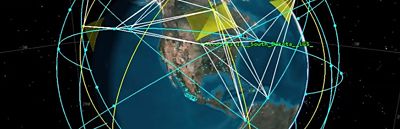
Empowering our customers to design the future with confidence, Ansys 2025 R2 delivers another leap forward for digital mission engineering (DME) with strategic innovations that continue to break down workflow barriers while also delivering unprecedented integration and control capabilities. The seamless integration of Ansys Systems Tool Kit (STK) DME software and Ansys Orbit Determination Tool Kit (ODTK) orbital measurement processing software eliminates the traditional barriers between orbit determination and mission planning, reducing processing time while enhancing solution accuracy for space operations teams. Complementing this integration, the Ansys STK Aviator capability’s flight control-based trajectory modeling brings a new dimension to aircraft simulations, providing a critical capability for autonomous system development. These advancements are further amplified by significant PySTK enhancements that directly extend our powerful analytical tools to Python-centric teams. By democratizing access to sophisticated aerospace analysis tools, these innovations break down silos between specialized engineering teams and accelerate development cycles with integrated modeling environments. But the updates and enhancements include much more.
Bridging Design and Operations: STK and ODTK Integration
Integrating STK software and ODTK software directly addresses a critical challenge in the satellite life cycle: the transition from theoretical mission design to practical operations. By connecting the STK Astrogator feature’s mission planning capabilities with ODTK software’s operational tracking and orbit determination functions, this integration bridges the traditional gap between the design and operational phases of space missions.
For customers, this means that the carefully optimized trajectories created in STK software can now flow into operational tracking and orbit determination processes in ODTK software without the need to convert data manually or interrupt your workflow. This integration ensures that operational decisions are informed by the same high-fidelity models used during mission design, which maintains consistency throughout the entire life cycle.
The integration significantly reduces setup time for operational orbit determination and eliminates manual data transfer, delivering more efficient operations and improved mission outcomes for satellite operators and space mission teams.
Enhancing Flight System Development With STK Software
The STK Aviator flight controller capability enables engineers to explicitly design, analyze, and control complex flight paths through actual flight control logic rather than through trajectory models. Flight control logic governs how an aircraft or spacecraft responds to the pilot inputs, environmental conditions, and system feedback to maintain safe and efficient flight.
For customers, this means they can now implement and test autopilot algorithms within STK software’s comprehensive mission environment. Rather than approximating how an aircraft might follow a desired path, engineers can model specific control inputs and the resulting aircraft responses, including the realistic handling of environmental factors like wind and atmospheric conditions.
This capability transforms STK software from an analysis tool into a flight system development environment, in which control algorithms can be designed, refined, and validated against mission objectives. Engineers can now evaluate how autopilot decisions affect overall mission performance and identify how to optimize flight control parameters for specific mission scenarios. Valuable for autonomous aircraft development, STK software reduces development risk and accelerates the validation process for advanced flight control systems.
Integrating Ansys Systems Tool Kit (STK) digital mission engineering (DME) software and Ansys Orbit Determination Tool Kit (ODTK) orbital measurement processing software directly addresses a critical challenge in the satellite life cycle: the transition from theoretical mission design to practical operations.
Connecting Powerful Capabilities of STK Modeling With the Flexibility of Python
Although STK software is used for modeling and simulating complex missions, along with providing a high-fidelity environment with visualization and analysis tools for multidomain operations, PySTK offers direct access to the powerful STK engine via Python. PySTK can be used to automate scenario creation, run parametric studies, extract and analyze data with Python tools, and integrate STK models with the Ansys portfolio of products.
Not only does PySTK enable users to create Python scripts for repeatable workflows and scalability, but it also enables users to run batch simulations, scale parametric studies, and modify simulations as they run to change parameters dynamically. Python is a powerful tool that lets users customize user interfaces and dashboards, and it can also integrate with other analytical tools. PySTK transforms STK software into a powerful and programmable simulation engine.
SysML v2 Model Execution
The Behavior Execution Engine (BEE) adds an initial capability to support executing SysML v2 models created with Ansys System Architecture Modeler (SAM). Early adopters of the upcoming SysML v2 specification can explore executing their models and include connections with analysis tools like STK software to bring system behaviors to life in the context of the mission. Users will be able to open their model for execution directly from Ansys System Engineering Portal, select an appropriate configuration, and execute their model.
PySTK: a next-generation Python application programming interface (API) for STK software, providing PyAnsys compliance, usability improvements, and enhanced documentation
Chains Improvement: Date Rate Metric
In STK software, the Optimal Strand feature within the Chains tool is designed to identify the most efficient communication path, referred to as a strand. Through a network of interconnected assets such as satellites, ground stations, and relays, this new capability enables you to perform first-pass optimization of communication paths based on maximum achievable data throughput.
A new “Data Rate” metric has been added to the Optimal Strand options for Chains analysis. The new capability provides some basic network modeling capabilities without the need for detailed communications analysis. All objects are updated to include a data rate metric and can now be included in chain analysis. The “optimal strand” is selected based on the minimum and maximum data rate of the constituent nodes (depending on the strand comparison selected). Users can report on the constraining data rate in each strand at each time.
You can now understand bottlenecks within a network, optimal strands based on max/min data rates, and the evaluation of alternative network and strand options. Customers benefit from enhanced communication efficiency by selecting strands with higher data rates. This helps missions achieve faster data transmissions and reduces the time required for information exchange. It also enables optimized network utilization by directing data through paths that can handle higher throughput. Improved mission planning is the result of communication strategies aligning with mission objectives.
The Ansys-Curated Cesium Ion Server and 3D Tilers
Supporting high-quality, geospatial 3D visualizations in STK software by integrating with Cesium ion, a cloud-based platform for streaming 3D geospatial content like terrain models and satellite imagery, is part of 2025 R2’s new enhancements.
Cesium ion is a robust, scalable, and secure platform for 3D geospatial data. Ansys-hosted global terrain data is available out of the box, tailored for the best STK experience, and higher fidelity than ever. With a self-hosted deployment, you can process your proprietary data and stream it all to any STK scenario. You can share the results securely with colleagues or make them available through apps.
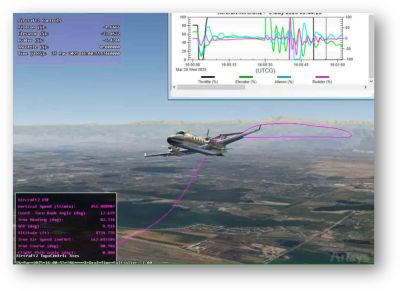
Control flight paths through manipulation of the aircraft control surfaces, or implement custom autopilot logic.
The reliable terrain data accessible through STK software will enhance local terrain analysis and improve job processing. It includes tilers that enable you to process photogrammetry, build geometry, and point clouds for local use. The ability to convert and deploy customized 3D data using Cesium’s 3D Tiler tools enables seamless integration in the simulation environment.
The Ansys STK Shield Plus Capability
The Ansys STK Shield Plus capability was developed in collaboration with Electro Magnetic Applications, Inc. (EMA). It integrates specialized electromagnetic effects analysis directly into STK software’s mission modeling environment, enabling engineers to assess and mitigate electromagnetic risks.
It offers six automated workflows accessible directly from the STK graphical user interface (GUI), including shielding effectiveness, lightning probability, overbraid/transfer impedance, radiation hardening (rad-hard), surface charging, and ray tracing.
Mission engineers benefit from integrated analysis, which enables comprehensive evaluations within one platform, enhanced accuracy provided by high-fidelity simulations that account for electromagnetic phenomena, time reduction in completing complex efficiency and mechanism (EME) evaluations, and risk mitigation much earlier in the design phase. You can realize significant cost and schedule savings for your overall mission design by reducing the number of detailed iterations required by subject matter experts (SMEs) before converging on an optimal vehicle configuration.
Learn more about STK software and ODTK software today.



The Advantage Blog
The Ansys Advantage blog, featuring contributions from Ansys and other technology experts, keeps you updated on how Ansys simulation is powering innovation that drives human advancement.