Micro-optics are microscale optical components that range from 1 micrometer to 1 millimeter in size (lateral size or diameter, depending on the system). The field is closely related to photonics, which involves manipulating, transmitting, and controlling light at small scales using miniaturized systems.
Many types of micro-optics systems exist today, most of which are smaller versions of bulkier optical systems that are fabricated using traditional optical materials, such as glasses and polymers. However, some micro-optics systems are used in infrared applications that use lithography-fabricated semiconductor materials as well.
Today’s micro-optics systems use many of the fundamental principles and optical functions of larger optical systems, only at much smaller scales. This includes the refraction, diffraction, and reflection of different light wavelengths. The smaller scales of micro-optics sometimes cause optical aberrations, but the overall benefits of system miniaturization make micro-optics crucial for many advanced technology applications.
Numerous types of micro-optics exist, and many are fabricated in a similar way to conventional optical components ― including lenses, mirrors, prisms, diffraction gratings, and apertures ― but just on a much smaller scale. Below are some of the common micro-optical components used today.
Microlenses are very small lenses that have a diameter on the scale of microns instead of millimeter, centimeter, or larger scales. One of the biggest advancements in microlens technology in recent years has been gradient-index (GRIN) lenses. GRIN lenses have multiple surfaces (which can be made from different materials), all with different refractive indexes. The multiple layers refract light using the refractive index variations of the layers in the lens that periodically refract the light to the next layer. GRIN lenses have also started to incorporate diffractive optical elements by putting a grating across the surface of the microlens. However, these are not traditional GRIN lenses and are more akin to a metalens. The other main class of microlens is the micro-Fresnel lens, which uses a series of concentric curved surfaces to focus light using refraction.
Microlens arrays ― also known as lenslet arrays ― are a series of tiny lenses (lenslets) that are fabricated and ordered into a specific pattern. This is often a grid or a periodic pattern, and they’re arranged into these specific patterns to perform different functions, such as manipulating, focusing, or directing light. Microlens arrays can also be fabricated into refractive microlens arrays and diffractive microlens arrays based on their intended function and operational principles.
Optical fibers are well known for transmitting light in everyday telecommunications. Optical fibers that have a microscale-sized core diameter are considered to be a micro-optic system. These fibers with ultrasmall diameters are grouped together to transmit light (containing data) over long distances in fiber-optic cables. Optical fibers have a core with a lower refractive index, cladding with a higher refractive index, and an outer protective coating. The higher refractive index reflects the light back inside the core, guiding the light to its intended destination and ensuring that the fiber doesn’t experience any loss during transmission. This reflection principle is called total internal reflection (TIR). While the principle is used to carry light over long distances, the controlled leaking of light from optical fibers is also used for ambient lighting effects in cars, aircraft, ships, nightclubs, and more.
Microprisms are smaller versions of optical prisms that are made from solid glass and have a specific geometry that enables them to rotate, displace, and disperse light. While microprisms are smaller versions of conventional optical prisms, they’re primarily used to direct light and have found a lot of use in fiber-optic communications as optical switches.
Micromirrors are smaller versions of large mirrors and work using the same fundamental principles of reflection. Like conventional mirrors, micromirrors are created with a reflective coating ― made from either a dielectric or metallic multilayer structure ― on their surface to reflect light on much smaller scales. They’re often combined with small-scale actuators that enable their position to be precisely adjusted during operation. Micro-electromechanical systems (MEMSs) devices are an example of micromirror systems. While MEMSs can contain many components, a common MEMS architecture is a series of micromirrors, each of which can quickly change angle, either together or independently.
There are many types of micro-optics ― all come with their own specific benefits for a certain application ― but the main overall advantage is their small size. Additionally, the small size brings a number of secondary benefits, including the ability to make optical devices lighter and less bulky, especially as traditional multibandwidth optical systems are cumbersome in size. It also means that advanced optical components can be developed for microelectronics and optoelectronics using less material and at lower costs.
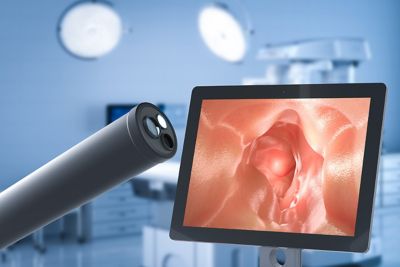
The small scale of micro-optics is also opening up these lenses to new applications, such as advanced surgical endoscopes and robotic surgery that can enable the user to see through different types of fluid with different viscosities and transparencies.
Micro-optical components are helping to improve the performance and reduce the size of existing optical devices, open up lenses and other optical components to new applications, and replace existing technologies with more advanced systems. Below are some common uses.
Photogrammetry is a similar process to light detection and ranging (lidar) sensing but uses cameras instead. Photogrammetry is a way of reconstructing objects and environments using photographs. Photos are taken from multiple angles using cameras on the ground and in the air, and advanced software algorithms are processed and combined to create topographical maps and 3D models.
Photogrammetry allows for mapping on much larger scales and can be done automatically using computers. Photogrammetry can measure millions of points in the vicinity of the camera and calculate the distance to each of those points. Photogrammetry is more accurate than lidar and can detect those distances passively, whereas lidar requires rays to be sent out and time-of-flight calculations to be performed. Lenslet arrays are being used in photogrammetry applications in the form of light field imaging (LFI) cameras. These cameras don’t need to physically move because each lens ― all set apart at specific distances ― has its own field of view to measure the surroundings.
Drones and other uncrewed vehicles are heavy, and there’s demand to reduce the size and weight of the components. While optical components are a small part of the weight, they allow the imaging systems and monitoring technologies to be scaled down as drones become smaller. Aside from miniaturizing conventional optical systems, drones and other autonomous vehicles can be integrated with photogrammetry systems.
Drones with photogrammetry systems can fly over a site and survey it in less than an hour compared with manual methods that take two or three people a few days to perform the same task. Because the cameras can have multiple fields of view without moving, they could also potentially replace the lidar systems used in autonomous vehicles today.
Medical devices ― especially those that go inside the body ― need to be small. Micro-optics are helping to miniaturize the optical elements in different medical devices and surgical tools.
One of the biggest application areas is improving the performance and reducing the size of the lenses in endoscopes. Micro-optics are now providing a way to use multiwavelength capabilities in endoscopes, which is helping surgeons to see through different fluids, including blood and water. In the past, it has been too cumbersome to include all the required optical components that would enable endoscopes to have these capabilities. However, the development of micro-optics systems has helped miniaturize the optical component requirements to a level where it is possible in surgery.
For surgical procedures, robotic surgical machines can contain lasers of different wavelengths in a system, some transparent to blood but opaque to water and others with the opposite properties. This allows the surgeon to target specific tissues of interest while preventing other tissues from being harmed.
Microlenses can also be used to collimate and focus light from small light emitters, such as vertical cavity surface emitting lasers (VCSELs), laser diodes, and waveguides on photonic integrated circuit (PIC) chips. Micro-optics can correct light that has deviated from its ideal characteristics, improve the brightness of light, and couple the light from multiple fibers. In addition, micro-optics can be used in beam splitters and polarizers to split laser beams into their polarized components.
Phased array antennas are integrated into many platforms and packages and can be used to maximize the energy directed in a specific direction. The animation above shows an HFSS software animation of dynamic beamsteering and also shows electric currents that the antenna induces onto other parts of the host package.
The small scale of micro-optics makes them a challenge to design and fabricate. From the choice of fabrication method to the aperture size potentially becoming a limiting factor, there are many things that engineers need to consider when designing micro-optic systems.
The small scale and need for high performance means that fabrication techniques with high precision are required. If micro-optics are not fabricated to a high quality, then the performance of the overall system will suffer. Because of this, a range of advanced fabrication methods are used, including:
For surgical applications like endoscopes, engineers need to show how bodily fluids interact with the optical components and how the light propagates through different bodily fluids. So the fluids, the optics, and how the ray traces throughout the whole system need to be modeled — Ansys Fluent fluid simulation software can be used to model these interactions.
Like normal lenses, microlenses have to be mounted. The mounting of lenses can cause vibrations that can affect the performance of the optics. Additionally, mounting lenses can induce birefringence that can also affect the optical properties of the microlens. The physical aspects that can affect micro-optics can be modeled by Ansys Mechanical structural finite element analysis software.
Thermal issues can affect micro-optics in different ways. Heat can cause the expansion and contraction of components that can lead to the structural deformation of the glass, including waving in the glass. The refractive index of the glass is temperature-dependent, and the glass will absorb different levels of light/laser energy as it passes through the lens, depending on the temperature of the glass. Therefore, modeling the thermal effects is important for high-performance optics, and this can be done with Ansys Thermal Desktop thermal-centric modeling software and Mechanical software.
Optical systems can be simulated at different scales using Ansys Lumerical software, Ansys Zemax OpticStudio optical system design and analysis software, and Ansys Speos CAD integrated optical and lighting simulation software. Lumerical uses finite-difference time-domain (FDTD) and quantum well solvers to simulate optical systems at very small scales, such as simulating metalenses, individual substrate layers, and optical coatings. OpticStudio software is the next scale-up that models the full micro-optic system as an individual system. Speos software is the largest-scale simulator and looks at how the micro-optic components integrate into the wider application system, such as in a vehicle.
While there are many different tools available for simulating different aspects of micro-optics, solving micro-optics design problems requires multiple tools working in conjunction with each other because no single tool can simulate all the different required aspects on its own.
Micro-optics will continue to develop and become smaller, lighter, and more advanced. GRIN lenses have been one of the biggest developments to date, but in the future we are likely to see the rise of metalenses and co-packaged optics. Metalenses are a combination of diffractive optics and regular optics in a very thin and flat nanoscale lens, whereas co-packaged optics are an advanced system that enables micro-optics and electronic elements to be integrated onto the same chip. It’s also thought that quantum computing could be one of the next big applications to use micro-optics.
To find out more about how you can design more efficient and high-performance micro-optic systems and unlock new applications, get in touch with our technical team today.
如果您面臨工程挑戰,我們的團隊將隨時為您提供協助。憑藉豐富的經驗和對創新的承諾,我們邀請您與我們聯絡。讓我們共同合作,將您的工程障礙轉化為成長和成功的機會。立即與我們聯絡,開始對話。