Synopsys and Ansys power the future of innovation—connecting silicon to systems.
-
-
학생용 무료 소프트웨어에 액세스하기
차세대 엔지니어에게 힘을 실어주는 Ansys
학생들은 세계적 수준의 시뮬레이션 소프트웨어를 무료로 이용할 수 있습니다.
-
지금 바로 Ansys에 연결하십시오!
미래를 설계하기
시뮬레이션이 다음 혁신을 어떻게 지원할 수 있는지 알아보려면 Ansys와 연결하십시오.
무료 트라이얼
제품 및 서비스
학습하기
회사 정보
Back
제품 및 서비스

Find out what happens when you give customers the freedom to customize FMEDA safety analysis for automotive semiconductor applications.
When you want to evaluate for automotive safety, you might run a series of crash tests to evaluate crashworthiness and the crash avoidance technologies at work in a given vehicle design.
The Insurance Institute for Highway Safety’s (IIHS) Top Pick and the National Highway Traffic Safety Administration’s (NHTSA) five-star ratings are based on this testing. And they’re a very familiar part of the car buying experience for most consumers.
Yet there is one area that gets little attention in the substantiation of automotive safety, and that’s semiconductors. Current-generation vehicles can have several thousand of them, depending on the level of features involved.
Supplier NXP Semiconductors, in an ongoing collaboration with Ansys, part of Synopsys, has integrated Ansys medini analyze software for semiconductors into existing workflows as a key tool for functional safety analysis across its entire portfolio. In doing so, NXP is providing a standardized framework for customers to evaluate and adopt failure modes, effects, and diagnostic analysis (FMEDA) models during their own safety analysis.
When Safety Is No Accident
Automotive semiconductor chips are crucial to powering a wide range of systems supporting advanced driver-assistance, infotainment, battery management, power management, and vehicle communication. Any failure at the chip level could result in a number of issues, including the complete breakdown of these systems.
Certainly, as automotive technologies continue to advance, the complexity involved in ensuring their functional safety will continue to grow. This need extends to the functionality, safety mechanisms, and configurability integrated into semiconductor devices.
One tried-and-true method for testing functional safety in automotive semiconductor designs is FMEDA. This systematic methodology identifies potential system failure modes, evaluates their effects, and then assesses the effectiveness of any diagnostic measures taken to ensure semiconductor safety and reliability.
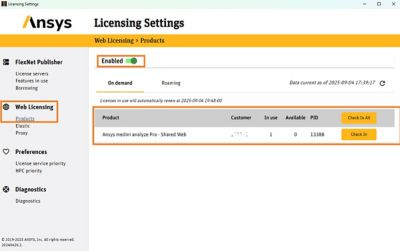
Customers can now request a free, time-limited shared DC configurator web license from Ansys that enables configuration of their FMEDAs directly in Ansys medini analyze software. The license is valid typically for four weeks and can be renewed any time. No server setup is required. The license is supported for medini analyze software versions 2024 R2 and onward.
FMEDA Analysis at the Nanoscale
The type of support that the Ansys/NXP collaboration affords is invaluable to customers. More often than not, the adaptation of FMEDA models to real-world vehicle applications is difficult for automotive engineers tasked with determining safety and reliability at the nanoscale.
Typical challenges include:
- Tailoring FMEDAs to the electronic control unit (ECU) use case, mission profiles, and failure rate catalog
- Enabling or disabling device elements based on actual usage
- Adapting external safety mechanisms and diagnostic coverage
- Reevaluating hardware architectural safety metrics, such as Single-Point Fault Metric (SPFM), Latent Fault Metric (LFM), Probabilistic Metric for Hardware Failures (PMHF), Safe Failure Fraction (SFF), and Probability of Dangerous Failure per Hour (PFH)
Further, the intricate nature of semiconductors used in automotive applications is driving the need for functional safety throughout the entire supply chain.
“Modern automotive microcontrollers and processors integrate increasing levels of functionality, safety mechanisms, and configurability,” says Tina Lamers, VP global safety at NXP Semiconductors. “Their contribution to system safety can only be fully understood when device-level safety analysis is seamlessly integrated into ECU (electronic control unit) and vehicle-level safety concepts. This makes functional safety a shared responsibility across silicon vendors, tier 1 suppliers, and original equipment manufacturers (OEMs).”
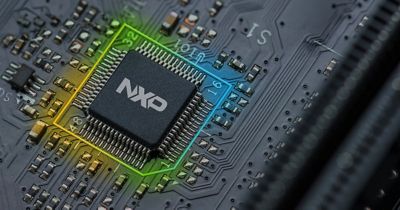
NXP automotive-grade semiconductor solution designed for functional safety applications up to Automotive Safety Integrity Level (ASIL) D in accordance with ISO 26262
Proving Safety Together
For NXP customers, proving functional safety is difficult, as automotive requirements for semiconductors have become increasingly burdensome due to growing design complexity. It’s a big reason why customers come to NXP looking for help navigating the complexities involved in proving the functional safety of their semiconductor applications.
Ansys medini analyze software is one of the main tools NXP uses to support its customers during FMEDA modeling. The tool helps them achieve the level of customization needed to solve specific customer challenges and improve their day-to-day work through ISO 26262 safety analysis, flexible report formats, sensitive design data management, and the ability to update FMEDA to update safety metrics.
“Historically, FMEDA configuration required iterative support from NXP safety experts, impacting turnaround time,” says Yashwant Singh, functional safety architect at NXP. “Medini analyze software provides a standardized, ISO 26262-aligned framework that enables consistent FMEDA execution across projects. It enables flexible configuration while protecting sensitive design data, automatically updates safety metrics, and generates reports aligned with customer and OEM expectations, streamlining both internal workflows and customer collaboration.”
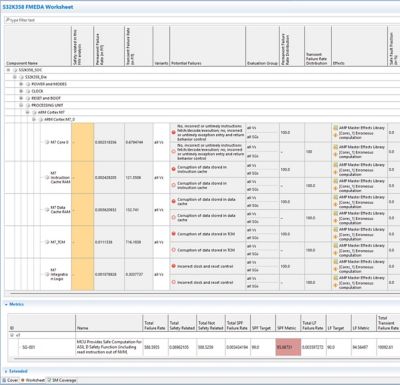
Medini analyze software is an industry tool for ISO 26262 and IEC 61508 safety analysis (FMEA, FTA, DFA, FMEDA). NXP uses the tool to deliver FMEDAs in a static Excel format (also available for delivery in medini analyze software (.mprx) format). Sensitive design information, such as area and flip-flop count of individual elements, is removed in the customer FMEDA. Customers can update the FMEDA in medini analyze software and reevaluate safety hardware metrics.
FMEDA Gets Personal With Free Customer Support
Now NXP is offering self-service FMEDA customization for customers who don’t normally use medini analyze software. With support from medini analyze software and NXP, customers can independently configure NXP FMEDAs using a free, time-limited, web-based medini analyze license.
The integration offers a flexible, adaptable approach to FMEDA customization. Customers can tailor their safety configurations based on specific application needs. And for those who don’t typically use medini analyze software, this arrangement gives them the freedom to configure FMEDAs to their real application assumptions, adjust safety relevance and diagnostic coverage, and instantly see the impact on hardware safety metrics.
“What makes this free, time-limited shared DC configurator web license from Ansys a standout in terms of NXP FMEDA configuration?” asks Alison Young, functional safety manager at NXP Semiconductors. “There’s no permanent license investment required. The web-based, shared configurator offers easy access to customers and is limited strictly to FMEDA configuration. And perhaps more importantly, there are fewer back and forth interactions with NXP needed, enabling our customers to run FMEDAs independently.”
Requesting a medini analyze shared license from Ansys is simple. Customers can visit the Ansys website to complete a simple online registration form to receive the appropriate license needed to customize their FMEDAs.
Of course, the benefits are worth the effort for customers. They include:
- Faster turnaround times. The amount of time spent during back and forth the interactions with NXP safety experts is significantly reduced resulting in a faster execution on the customer end. Configuration and metric validation are available immediately.
- Flexible FMEDA adaptation enables seamless integration. Customers are guided by Ansys and NXP from the beginning, as well as on the customizable aspects of analysis within NXP FMEDA.
- Confident validation of safety metrics. Customers can directly validate SPFM, LFM, and PMHF for ISO 26262 compliance; dangerous undetected failure rate; and SFF, DC, and PFH for IEC 61508 compliance using their own configurations, improving confidence in system-level safety analysis.
- Higher customer satisfaction and trust. Greater transparency and autonomy strengthen trust across tier 1 and OEM relationships relying on this data.
NXP customer Prodrive Technologies is a great example of this licensing arrangement in action.
Ansys and NXP Collaboration Puts Prodrive BMS Microcontroller Modules to the Test
Prodrive develops and manufactures electronic products for the mobility industry. One of the company’s core competencies is power electronics, applied in products such as DC/DC converters (both LV and 800V applications), charging solutions, (high-speed) inverters, sensors, and ECUs.
In this instance, Prodrive’s battery management systems (equipped with NXP microcontroller units (MCUs), in combination with other dedicated hardware) were assessed for power control performance against ISO 26262 ASIL-D safety mechanisms.
Before the licensing arrangement, even minor FMEDA updates required multiple support interactions and reevaluation cycles between NXP and Prodrive. Now, with the shared medini analyze trial license, Prodrive can independently configure FMEDAs and immediately assess metric impact, significantly accelerating development and decision-making independent of any additional consultation time.
“ASIL decomposition is used between the NXP microcontroller and dedicated hardware,” says Marcel van de Ven, electronics engineer at Prodrive. “The Ansys medini analyze trial license successfully supported us in a detailed metrics calculation of the safety-critical modules inside the microcontroller.”
The expediency of the tool to deliver insights during development was a big plus.
“Before, we only had the detailed Excel report from NXP, which also gives a lot of insight,” says van de Ven. “Having access to the tool, we immediately see the results of our changes. This helps us make the right decisions for optimizing the DC of our BMS units.”
Interested in learning more about Ansys safety solutions for semiconductors? Make sure to visit our Embedded World 2026 event page. You can also sign up for a free trial of medini analyze software and test-drive it yourself.

Just for you. We have some additional resources you may enjoy.
“Medini analyze software provides a standardized, ISO 26262-aligned framework that enables consistent FMEDA execution across projects.”
— Yashwant Singh, functional safety architect, NXP Semiconductors



The Advantage Blog
The Ansys Advantage blog, featuring contributions from Ansys and other technology experts, keeps you updated on how Ansys simulation is powering innovation that drives human advancement.