Case Study
-
-
학생용 무료 소프트웨어에 액세스하기
차세대 엔지니어에게 힘을 실어주는 Ansys
학생들은 세계적 수준의 시뮬레이션 소프트웨어를 무료로 이용할 수 있습니다.
-
지금 바로 Ansys에 연결하십시오!
미래를 설계하기
시뮬레이션이 다음 혁신을 어떻게 지원할 수 있는지 알아보려면 Ansys와 연결하십시오.
무료 트라이얼
제품 및 서비스
학습하기
회사 정보
Back
제품 및 서비스
“By validating our designs digitally early on, we can anticipate development risks, identify issues before even creating mockups, and move to the physical phase with a high degree of confidence. This approach reduces costs and prevents rework, cutting down engineering time without compromising product quality.”
-Marcio Ferraz Gobato, Senior Principal PDE - Interiors, Cabin Systems and IFEC - Core Engineering Department / Embraer
For leading aircraft manufacturer Embraer, creating physical mockups of aircraft lighting systems and interior cabin appearances is a part of its development process. Anticipating lighting design issues even before a physical mockup is assembled can prevent unnecessary rework costs and schedule impacts. With these challenges in mind, the company began researching applications to address these critical issues and enhance its development process.
With the addition of Ansys optical tools, Embraer was able to optimize its design workflow and demonstrate the effectiveness of simulation for validation purposes to regulatory agencies. The company plans to expand the use of these tools across multiple lighting applications, including exterior and interior lighting, lighting effects appearance, and interface to virtual reality. These capabilities enable engineers to validate the readability of information systems inside the cabin, enhancing both design precision and compliance.
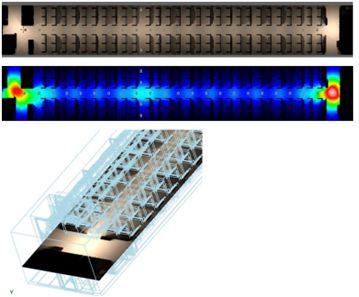
Cabin emergency lighting system modeling and simulation
Challenges
Embraer sees opportunities in the design and validation of its aircraft illumination systems. The use of digital simulation tools enhances flexibility to explore design variations and optimize efficiency. Given the stringent certification and appearance requirements, Embraer sought a more efficient solution to optimize designs and reduce development and certification risks.
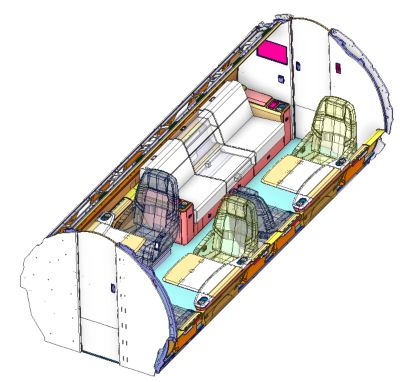
Embraer executive aircraft cabin virtual mockup using Ansys Speos software for optical simulation
Engineering Solutions
Embraer selected Ansys Speos software to support the design of its aircraft illumination systems. By leveraging optical simulation, Embraer reduced development risks, enhanced the design workflow, and opened the opportunity to discuss with authorities the viability of using simulation for certification purposes. The tool was utilized for applications including cabin emergency lighting, external lighting (such as anti-collision and landing lights), and appearance analysis (for executive jets, cabin sign readability, and eVTOL interiors).
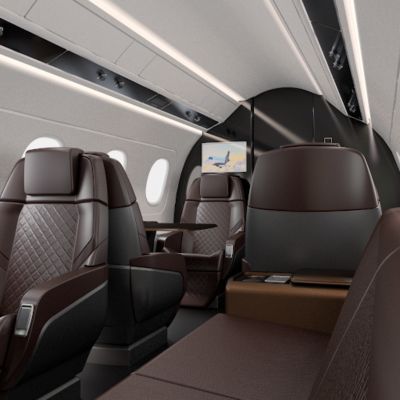
Virtual cabin environment in Speos software
Benefits
By validating designs digitally, Embraer reduced development risks and created opportunities to accelerate the development timeline for aircraft illumination systems. Optical simulations enable thorough testing of design variations, reducing rework costs and engineering time while ensuring the highest product quality and compliance with lighting requirements.
“The eVTOL market, being under development, is already a project challenge by nature. For the external lighting project, different solutions are required for various flight phases and trajectories,” Embraer product development engineer Marcela Salomão says. “Shadows and dimensions of the vehicle itself bring a completely new perception. Some references from traditional aircraft are not directly applicable to an eVTOL vehicle. Therefore, simulations are the main tool for developing an effective project.
“Speos software allows realistic simulation with the Human Eye Sensor [capability], supporting assessments of what best suits the shape of the vehicle, complying with all certification requirements, and providing an excellent experience for pilots and operators.”
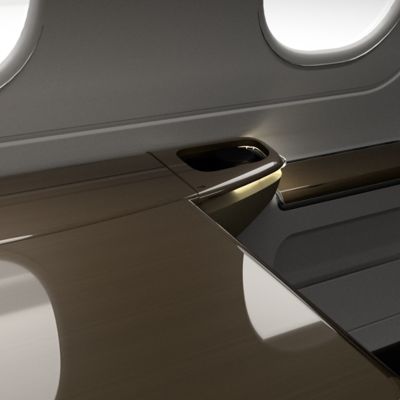
High-fidelity product appearance analysis
시작하기
엔지니어링 과제에 직면하고 있다면우리 팀이 도와드리겠습니다. 풍부한 경험과 혁신에 대한 헌신을 가지고 있는 우리에게 연락해 주십시오. 협력을 통해 엔지니어링 문제를 성장과 성공의 기회로 바꾸십시오. 지금 문의하기