Synopsys and Ansys power the future of innovation—connecting silicon to systems.
THEMENDETAILS
Was versteht man unter Systemsimulation?
Bei der Systemsimulation wird ein mathematisches Modell eines realen Systems erstellt; anschließend werden die Eingangsgrößen variiert, um zu beobachten, wie sich Änderungen dieser Eingangsgrößen auf das System und dessen Ausgangsgrößen auswirken. Anhand dieser Beobachtungen lassen sich die Wechselwirkungen zwischen Subsystemen verschiedener Domänen, die gegenseitigen Auswirkungen dieser Wechselwirkungen sowie die Gesamtleistung des Systems nachvollziehen. Dieser Ansatz lässt sich auf jedes komplexe System anwenden, auch wenn sich der Begriff in den meisten Fällen auf die Erstellung und den Einsatz eines Simulationsmodells eines physikalischen Systems bezieht. In der Systemtechnik wird ein System wie folgt definiert: „Eine Kombination aus interagierenden Elementen, die so organisiert sind, dass sie einen oder mehrere festgelegte Zwecke erfüllen.“
Ingenieur*innen nutzen diese Form des virtuellen Prototypings (auch als Systemsimulationen oder Simulation auf Systemebene bezeichnet), um komplexe Systeme zu verstehen, zu denen auch Maschinen, Elektronik, Software, menschliche Bediener sowie flüssige oder feste Materialien gehören, die sich durch oder um das System herum bewegen. Das Ziel der Simulation von Systemmodellen besteht im Verständnis der Wechselwirkungen zwischen den Komponenten, um die gewünschten Aktionen auszuführen, sowie der Auswirkungen dieser Wechselwirkungen auf die einzelnen Komponenten – was häufig als Systemverhalten bezeichnet wird. Systemmodelle laufen schnell – möglichst nah an der Echtzeit.
Vorteile der Systemsimulation
Die Simulation auf Detail- oder Komponentenebene konzentriert sich auf einzelne Komponenten oder Baugruppen unter Verwendung von Werkzeugen der Finite-Elemente-Methode (FEA) oder der numerischen Strömungsmechanik (CFD). Da die Geräte jedoch immer komplexer werden und mehrere physikalische Phänomene, Steuerungssysteme und zunehmende Automatisierung kombinieren, haben die Systemingenieur*innen Simulationsmodelle entwickelt, die die untersuchten Geräte auf einer übergeordneten Ebene betrachten und dabei die Wechselwirkungen zwischen den Komponenten erfassen.
Die Systemsimulation unterstützt den gesamten Designprozess. Zunächst dient sie den Ingenieur*innen als Werkzeug, mit dem sie ihr Produkt bereits früh im Designzyklus untersuchen können, wenn die Details noch nicht bekannt sind. Zu diesem Zeitpunkt können sie architektonische Entscheidungen treffen und Kompromisse abwägen. Das Systemmodell liefert zudem die Anforderungen und Randbedingungen, die für das Design auf Komponentenebene benötigt werden. Später im Designprozess sorgt die Systemsimulation für die Verifizierung und Validierung des Designs auf Systemebene und bildet letztlich die Grundlage für digitale Zwillingsmodelle, die die Betriebsphase des Produkts unterstützen. Die Ingenieur*innen führen Systemsimulationen durch, um besser zu verstehen, wie sich ihre Produkte als System über den gesamten Produktlebenszyklus hinweg verhalten. Diese Informationen tragen zu fundierten Entscheidungen bei, die im Allgemeinen vier Vorteile mit sich bringen:
- Geringere Produktentwicklungskosten: Ohne Systemsimulation erkennen die Ingenieur*innen Probleme auf Systemebene in ihrem Design erst am Ende des Entwicklungszyklus, wenn sie den Prototyp gebaut und getestet haben. Die Systemsimulation für die Systemtechnik findet in der Projektdefinitionsphase – also auf der linken Seite des V-Modells – statt, wenn die Kosten für Änderungen am geringsten sind.
- Markteinführungszeit: Virtuelles Prototyping ist nicht nur eine schnellere Methode zur Produktvalidierung als der Bau und Test realer Prototypen, Systemsimulationen erleichtern auch die interdisziplinäre Zusammenarbeit von Ingenieur*innen, wodurch ein funktionsfähiges Produkt schneller auf den Markt gebracht werden kann.
- Gesteigerte Produktleistung: Der bedeutendste Vorteil der Systemtechnik ist die Optimierung der Systemleistung. Dank der kurzen Laufzeiten von Systemsimulationen können Ingenieur*innen mithilfe von Systemmodellen die Produktionskosten senken, die Qualität verbessern, den Durchsatz erhöhen, die Effizienz steigern und die Zeitabstände zwischen Reparaturen und Austausch von Komponenten verlängern.
- Reduzierte Betriebskosten: Eine wichtige Leistungskennzahl sind die Betriebskosten des Systems. Da Systemsimulationen in der Regel schnell ablaufen, kann das Verhalten eines Systems über seine gesamte Lebensdauer hinweg bewertet werden – eine Aufgabe, die bei physikalischen Tests nur schwer zu bewältigen ist. Durch die Anwendung verschiedener Testszenarien können die Ingenieur*innen mithilfe von Simulationssoftware die Auswirkungen von Komponenten- oder Systemänderungen zugunsten einer Senkung der Betriebskosten bewerten.
Anwendungsbereiche der Systemsimulation
Da es sich bei vielen Geräten heutzutage um Systeme mit zahlreichen Komponenten handelt, die auf komplexe Weise miteinander interagieren, nutzen die Ingenieur*innen branchenübergreifend die Systemsimulation. In einigen Branchen haben sich systemorientierte Simulationsprozesse jedoch zu einem zentralen Bestandteil des Systemdesigns entwickelt. Einige Beispiele hierfür vermitteln einen guten Überblick darüber, wie Teams die Systemsimulation einsetzen.
- Telekommunikation: Die Telekommunikationsbranche leistete Pionierarbeit im Bereich der Systemtechnik, um das komplexe Netzwerk von Telefonen zu modellieren. Da die Branche mittlerweile auf Glasfaser-, Satelliten-, Mikrowellen- und Mobilfunknetze umgestellt hat, hat die Komplexität der verwendeten Systemmodelle zugenommen. Die Branche nutzt die Systemsimulation für die Netzwerkplanung, um zu bestimmen, wo Sender platziert und wie Knoten im Netzwerk miteinander verbunden werden sollen.
- Automobiltechnik: Kraftfahrzeuge waren schon immer Systeme, doch moderne Fahrzeuge sind heute hochkomplexe Gebilde mit elektrischen und mechanischen Komponenten, die über Kommunikationsnetze gesteuert werden. Automobilingenieur*innen nutzen modellbasiertes Systems-Engineering (MBSE) für Sicherheitssysteme und elektrische Antriebsstränge, eindimensionale Strömungsnetzwerke für Kraftstoff- und Kühlmittelströme sowie Mehrkörperdynamik-Simulationen für Fahrwerk und Lenkung.
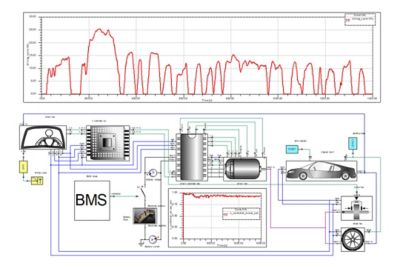
Eine Darstellung des Antriebsstrangs eines Elektroautos aus der simulationsbasierten Plattform für digitale Zwillinge „Ansys Twin Builder“
- Luft- und Raumfahrttechnik: Auch die Systeme, die den Einsatz von Flugzeugen und Raumfahrzeugen unterstützen, nutzen Systemtechnik in großem Umfang. Neben Anwendungen in der Automobilindustrie werden 1D-Modelle zur Darstellung der Kühlung innerhalb und außerhalb des Fahrzeugs, für die Einsatzsimulation zur Optimierung der Funkkommunikation sowie für die umfassende Modellierung von Regel- und Steuerungssystemen eingesetzt.
- Industrieanlagen: Ein weiteres gutes Beispiel für den effektiven Einsatz von Systemsimulationen sind die Industrieanlagen in modernen Fertigungseinrichtungen. Ingenieur*innen nutzen die Systemmodellierung dieser komplexen Maschinen – oder mehrerer Maschinen in einer Produktionslinie –, um Ineffizienzen aufzuspüren und zu beseitigen, um KI-Modelle zu trainieren, die maschinelles Lernen nutzen, sowie für die vorausschauende Instandhaltung.
- Finanzmärkte: Finanzmärkte sind ein hervorragendes Beispiel für eine Branche, in der Systemsimulationen über die Modellierung physikalischer Systeme hinaus zum Einsatz kommen. Doch die Finanzmärkte sind ebenso komplex, und Analyst*innen können mit einem eindimensionalen Netzwerk arbeiten, das Lösungen mithilfe derselben numerischen Methoden liefert. Die gängigsten Anwendungen von Modellen auf Systemebene in der Finanzwelt sind die Vorhersage der möglichen Wertentwicklung eines Anlageportfolios mithilfe stochastischer Modellierung oder Stresstests, um zu untersuchen, wie eine Bank oder ein Bankensystem auf eine Krise reagieren könnte.
Systemsimulation und digitale Zwillinge als branchenübergreifende Lösung
Ein zunehmender Einsatzbereich der Systemsimulation ist der Bereich der digitalen Zwillinge. Ein digitaler Zwilling wird definiert als virtuelle Darstellung realer Objekte und Prozesse, die mit einer festgelegten Frequenz und Genauigkeit synchronisiert wird. Während eine herkömmliche Systemsimulation den Designprozess steuert, sind digitale Zwillinge virtuelle Darstellungen von Betriebssystemen. Die Ingenieur*innen nutzen Systemsimulationen, wenn eine genaue physikalische Modellierung erforderlich ist. Diese modellbasierten virtuellen Systeme haben gegenüber datengesteuerten Modellen den Vorteil, dass sie noch nie aufgetretene Verhaltensweisen vorhersagen können.
Obwohl digitale Zwillinge bei Bedarf detaillierte Komponentenmodelle verwenden können, beinhalten sie in der Regel Systemsimulationen, da diese Probleme besonders schnell lösen – eine Voraussetzung für die meisten Implementierungen digitaler Zwillinge. Dies gilt insbesondere für die Kombination von digitalen Zwillingen mit Anwendungen des industriellen Internets der Dinge (IoT), bei denen Tools ein virtuelles Modell mit der Echtzeit-Datenerfassung verknüpfen. Die Ingenieur*innen stellen fest, dass hybride Modelle mit digitalen Zwillingen, die Daten und Simulation kombinieren, erhebliche Vorteile beim Zugriff auf verwertbare Informationen und bei der Systemoptimierung bieten.
Verschiedene Arten der Systemsimulation
Ingenieur*innen klassifizieren Systemsimulationen auf vielfältige Weise. In den meisten Fällen unterscheiden sie die Ansätze anhand der zugrunde liegenden physikalischen Phänomene, der Zeitdarstellung in den Algorithmen, der Rolle von Zufallsfaktoren bei den Eingaben und der Dimensionalität.
Obwohl dies nicht Teil der typischen Definition ist, umfasst die Systemsimulation in vielen Fällen auch die Modellierung der Software, die mit dem System interagiert. Systemingenieur*innen führen Simulationen von Steuerungssystemen anhand eines Systemmodells der Geräte durch, die von der Software gesteuert werden. Außerdem integrieren sie Software zur Verwaltung der Eingaben und zur Verarbeitung der Ausgaben ihrer Modelle.
Beim Folgenden handelt es sich um eine Auflistung der Simulationsarten, die zur Modellierung von Systemen verwendet werden:
Physikalische Modellierung
Die gängigste Methode zur Klassifizierung von Systemsimulationsansätzen erfolgt anhand der darin abgebildeten physikalischen Phänomene, da diese die Eingangsgrößen, die Gleichungen und die Ausgangsgrößen bestimmen, die zur Darstellung der einzelnen Komponenten herangezogen werden. In vielen Fällen müssen die Ingenieur*innen eine Form der multiphysikalischen Simulation einsetzen, um das Verhalten ihres Systems zu erfassen:
- Simulation elektrischer und elektronischer Systeme: Von Chips über Leiterplatten (PCBs) bis hin zu Umspannwerken sind elektrische Geräte per Definition Netzwerke aus Komponenten und somit Systeme. Das Ziel besteht darin, Stromstärke, Spannung und Widerstand im System zu verstehen, während die Elektronen fließen. Die Anfänge der Systemtechnik liegen bei Bell Labs, wo die Ingenieur*innen das elektrische Netzwerk des Telefonsystems verstehen mussten. Sie verwendeten analoge mathematische Modelle, um diese Systeme zu simulieren.
- Simulation von Fluidsystemen: Fluids verbleiben selten in einer einzigen Komponente. Gase und Flüssigkeiten bewegen sich zwischen den Komponenten und verändern dabei Geschwindigkeit, Druck, Dichte, Temperatur oder Zusammensetzung. Diese Systemsimulation modelliert jede Komponente dahingehend, wie sich das Fluid zwischen Ein- und Ausgang verändert.
- Simulation mechanischer Systeme: Der Schwerpunkt der Simulation mechanischer Systeme liegt auf der Erfassung der Positionen, Geschwindigkeiten und Beschleunigungen physikalischer Körper sowie der auf sie und zwischen ihnen wirkenden Kräfte. Die Automobilindustrie war Vorreiter bei dieser Form der physikalischen Modellierung und nutzte die Mehrkörperdynamik, um Fahrzeugaufhängungen besser zu verstehen.
- Optische Systemsimulation: Kameras und andere optische Sensoren sind allgegenwärtig, und viele Systeme nutzen Licht zur Informationsübertragung. Genau wie Fluids durchläuft Licht in der Regel eine Reihe von Komponenten, um eine Aufgabe zu erfüllen. Optikingenieur*innen nutzen die Simulation optischer Systeme, um den Weg, die Frequenz und die Amplitude des Lichts zu messen.
- Multiphysikalische Systemsimulation: Wie oben erwähnt, beinhalten die meisten heutigen Systeme eine oder mehrere physikalische Disziplinen. Aus Sicht der Systemmodellierung bedeutet dies, dass die Ergebnisse eines physikalischen Prozesses als Eingaben für einen anderen physikalischen Prozess innerhalb des Systems dienen. Multiphysikalische Systemmodelle nutzen zudem häufig die Co-Simulation, bei der ein vollständiges Modell einer bestimmten physikalischen Disziplin in das Systemmodell integriert wird, anstatt nur eine vereinfachte Darstellung zu verwenden. Zu den gängigsten Simulationsabläufen, die mehrere physikalische Bereiche abdecken, gehören:
- Elektromechanische Simulation
- Strömungsmechanische Simulation
- Prozesssimulation (Lieferkette, Fertigung, Materialverarbeitung, Finanzmärkte usw.)
- Optomechanische Simulation
- Photonik
- Fluidthermische Simulation
Umgang mit der Zeit
Die nächste Klassifizierung bei der Systemsimulation betrifft die für die Zeit verwendete Methodik. Ingenieur*innen unterteilen den Simulationsansatz in drei Kategorien:
- Kontinuierliche Simulation: Das Modell berechnet die Werte für jeden Punkt in der Zeit, in der Regel unter Verwendung von Differentialgleichungen.
- Diskrete Zeitsimulation: Das Modell berechnet Ergebnisse in bestimmten Zeitschritten. Dies kann aus numerischen Gründen geschehen, weil sich das System langsam verändert oder weil das System selbst über eine interne Uhr verfügt, die in bestimmten Intervallen Aktionen auslöst.
- Diskrete Ereignissimulation: In manchen Systemen passiert nichts, bis ein Ereignis eintritt. Dies ist in Fertigungs-, Gesundheits- und Logistiksystemen so üblich. Ein Beispiel ist ein Roboter, der einen Deckel auf ein Glas schraubt: Er wird erst aktiv, wenn ein Glas ankommt.
Die Rolle der Zufälligkeit
Ein wesentlicher Bestandteil der Systemsimulation ist die Zufälligkeit des Verhaltens von Systemkomponenten oder der Systemeingaben. Im Grunde gilt: Wenn die Ergebnisse bei einer bestimmten Eingabekombination immer gleich sind, ist das System nicht zufällig. Es gibt zwei Arten, wie Ingenieur*innen die Systemsimulation klassifizieren, um mit Zufälligkeit umzugehen:
- Stochastische Simulation: Aufgrund der Zufälligkeit im System oder bei den Eingaben führen Ingenieur*innen mithilfe der Monte-Carlo-Methode Tausende von Simulationen durch, um eine Wahrscheinlichkeitsverteilung des Systemverhaltens zu ermitteln. Aus diesem Grund muss das Systemmodell sehr effizient sein und schnell genug laufen, damit eine stochastische Simulation praktikabel ist.
- Deterministische Simulation: Die Ingenieur*innen geben bestimmte Werte ein und erfassen die entsprechenden Ergebnisse. Da weniger Durchläufe erforderlich sind, können bei deterministischen Simulationsmodellen ausgefeiltere, detailliertere Modelle verwendet werden, deren Ausführung länger dauert.
Dimensionalität
Simulationsingenieur*innen gruppieren Simulationen häufig nach der Anzahl der Dimensionen, , für die das Modell Berechnungen durchführt.
- 0-D: Das Modell enthält keine räumlichen Dimensionen und verwendet konzentrierte Parameter, die über eine Komponente hinweg einheitlich sind.
- 1-D: Das Modell stellt das System als Blöcke mit Ein- und Ausgaben dar. Einige Komponenten können Schwankungen in nur einer Dimension berücksichtigen.
- 3-D: Das Modell bildet Schwankungen der Eigenschaften über eine Komponente hinweg in drei Dimensionen genau ab. Für die Systemmodellierung nutzen Ingenieur*innen die Co-Simulation, bei der sie eine FEA oder CFD mit dem Systemmodell verbinden, oder ein Modell reduzierter Ordnung (ROM) für Komponenten, das Schwankungen über alle drei räumlichen Dimensionen hinweg berechnet.
- System-of-Systems (SoS, Systemverbund): Die nächste Dimensionsebene wird erreicht, wenn Systemingenieur*innen mehrere unabhängige Systemmodelle zu einem größeren, komplexeren Modell verbinden. Dieser Ansatz wird häufig in der Einsatzsimulation verwendet, bei der mehrere Systeme – wie beispielsweise eine Satellitenkonstellation – miteinander interagieren, während sie ihre jeweils eigenen, spezifischen Missionen ausführen.
Jüngste Fortschritte in der Systemsimulation
Zu den bedeutendsten Verbesserungen der letzten Zeit im Bereich der Systemsimulation gehören die zunehmende Komplexität der Modelle und die Einbeziehung weiterer physikalischer Phänomene. Verbesserungen in der Rechenleistung, insbesondere bei Grafikprozessoren (GPUs), haben dazu einen wesentlichen Beitrag geleistet. Darüber hinaus haben Branchenexperten die Industriestandards überarbeitet und verbessert, um den Austausch von Modellen zwischen verschiedenen Tools zu vereinfachen. Neue Plattformen wie Ansys System Architecture Modeler (SAM) geben Ingenieur*innen Werkzeuge an die Hand, mit denen sie die Architektur und das Verhalten von Systemen definieren können, indem sie offene Ökosysteme unterstützen. So können die Benutzer*innen virtuelle Darstellungen komplexer und vielschichtiger Systeme in einer Vielzahl von Simulationswerkzeugen definieren und verwalten.
Obwohl KI in Form von maschinellem Lernen bereits seit einiger Zeit fester Bestandteil der Systemsimulation ist, nutzen Ingenieur*innen Agentic AI, um den Simulations-Workflow zu automatisieren und Kompromissanalysen autonom durchzuführen. KI treibt zudem die Entwicklung von Weltmodellen wie NVIDIA Omniverse voran und verleiht der System-of-Systems-Simulation eine neue, umfassendere und kollaborativere Dimension.
Ingenieur*innen nutzen zunehmend physikalisch fundiertes maschinelles Lernen, um die Erstellung von ROMs zu beschleunigen. Zusätzlich zu klassischen Techniken wie projektionsbasierten ROMs und Regression beziehen Forscher Deep Learning und in einigen Fällen generative Modelle ein, um niedrigdimensionale Lösungsmannigfaltigkeiten und latente Dynamiken zu erlernen. Diese Modelle werden durch Leitgleichungen, Randbedingungen oder Simulationen auf Systemebene eingeschränkt, wodurch physikalische Konsistenz gewährleistet und gleichzeitig der Rechenaufwand reduziert wird.
Tools zur Systemsimulation
Auf dem Markt gibt es eine Vielzahl von Tools zur Systemsimulation, von denen einige für spezifische Anwendungen entwickelt wurden, während andere für den allgemeinen Einsatz bestimmt sind. Der wichtigste Aspekt bei der Auswahl eines Tools zur Systemsimulation ist die Gewährleistung, dass das gewählte Computerprogramm die modellierten Systeme genau abbildet. Außerdem sollte es Industriestandards unterstützen, sich mit anderen Komponenten oder Tools auf Systemebene verbinden lassen und leicht zu erlernen und zu bedienen sein.
Wenn Ingenieur*innen eindimensionale und detaillierte Simulationen kombinieren müssen, nutzen sie ein Tool wie die simulationsbasierte Plattform für digitale Zwillinge Ansys Twin Builder. Die Twin Builder-Plattform legt den Schwerpunkt auf die Erstellung präziser virtueller Abbildungen vielschichtiger Systeme unter Einbeziehung hochpräziser ROMs aus hochdetaillierten Physikmodellen und basiert auf einem bewährten 1-D-Solver. Zudem schließt sie die Lücke zur Anbindung an IoT-Anwendungen und umfasst Tools zur schnellen und präzisen Erstellung von ROMs. Alternativ können Ingenieur*innen, wenn sie Simulationsmodelle auf Systemebene kombinieren müssen, ein Tool wie Ansys CoSim nutzen, um domänenübergreifende, miteinander verbundene Systeme mithilfe der jeweils branchenführenden Werkzeuge für die einzelnen Domänen zu simulieren.
Eine weitere Anwendung der Systemsimulation ist die Zusammenführung von Systemmodellen auf einer einzigen Plattform für MBSE. Ingenieur*innen bevorzugen ein branchenunabhängiges MBSE-Tool wie die MBSE-Software Ansys ModelCenter, die einen anforderungsbasierten Ansatz verfolgt und mehrere System-, Steuerungs- und Komponentensimulationen zu einem umfassenden Workflow verbindet, der auch Automatisierung unterstützt. Um Ingenieur*innen dabei zu helfen, diese Modelle effizienter und genauer zu erstellen, nutzen sie eine Plattform wie SAM. Sie löst das Systemmodell nicht auf. Sie bietet eine robuste Plattform und eine zentrale Informationsquelle für die Darstellung auf Systemebene.
Manchmal müssen sich Systemdesigner jedoch auf eine bestimmte Art der Systemmodellierung konzentrieren. Die thermische Aspekte spezialisierte Modellierungssoftware Ansys Thermal Desktop ist ein hervorragendes Beispiel für ein Tool auf Systemebene, das sich auf einen Teilbereich der Physik konzentriert. Im Laufe der Jahre hat sie sich zum De-facto-Standard für die Modellierung der thermischen Leistung von Raumfahrzeugen entwickelt und ermöglicht es Ingenieur*innen, die Erwärmung und Abkühlung im Orbit durch die Modellierung von Subsystemen und Komponenten zu simulieren.
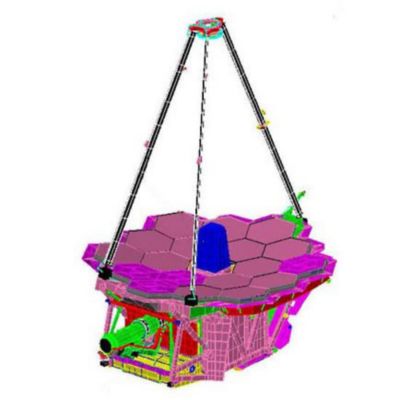
Ein Modell des James-Webb-Weltraumteleskops auf Systemebene in der thermisch ausgerichteten Modellierungssoftware „Ansys Thermal Desktop“
Wenn Ingenieur*innen ihre Software in ein Systemmodell einbinden möchten, nutzen sie ein Tool wie die modellbasierte Entwicklungsumgebung Ansys SCADE Suite für kritische eingebettete Software. Dieses Tool ist eine Plattform, mit der Plattformtechniker*innen eingebettete Steuerungssoftware definieren und entwickeln und anschließend virtuelle Hardware-in-the-Loop-Simulationen durchführen, um die Algorithmen zu testen.
Für die Einsatzsimulation nutzen Ingenieur*innen Werkzeuge wie die digitale Einsatzplanungssoftware Ansys Systems Tool Kit (STK), um System-of-Systems-Simulationen komplexer, miteinander interagierender, unabhängiger Systeme durchzuführen. Diese Software umfasst realistische Geländemodelle, vielfältige physikalische Phänomene und leistungsstarke Rendering-Funktionen. Ebenso erleichtern Prozessintegrations- und Konstruktionsoptimierungstools wie die Software Ansys optiSLang für Prozessintegration und Konstruktionsoptimierung Ingenieur*innen die Automatisierung von Systemsimulationsabläufen und unterstützen sie dabei, den Konstruktionsraum ihres Produkts in einer einzigen Umgebung intelligent zu untersuchen.