-
-
Kostenlose Software für Studierende
Ansys unterstützt die nächste Generation von Ingenieur*innen
Studenten erhalten kostenlosen Zugang zu erstklassiger Simulationssoftware.
-
Verbinden Sie sich jetzt mit Ansys!
Gestalten Sie Ihre Zukunft
Stellen Sie eine Verbindung mit Ansys her, um zu erfahren, wie Simulation Ihren nächsten Durchbruch vorantreiben kann.
Länder und Regionen
Kostenlose Demoversionen
Produkte & Dienstleistungen
Lernportal
Über das Unternehmen
Back
Produkte & Dienstleistungen
Back
Lernportal
Ansys unterstützt die nächste Generation von Ingenieur*innen
Studenten erhalten kostenlosen Zugang zu erstklassiger Simulationssoftware.
Back
Über das Unternehmen
Gestalten Sie Ihre Zukunft
Stellen Sie eine Verbindung mit Ansys her, um zu erfahren, wie Simulation Ihren nächsten Durchbruch vorantreiben kann.
Kostenlose Demoversionen

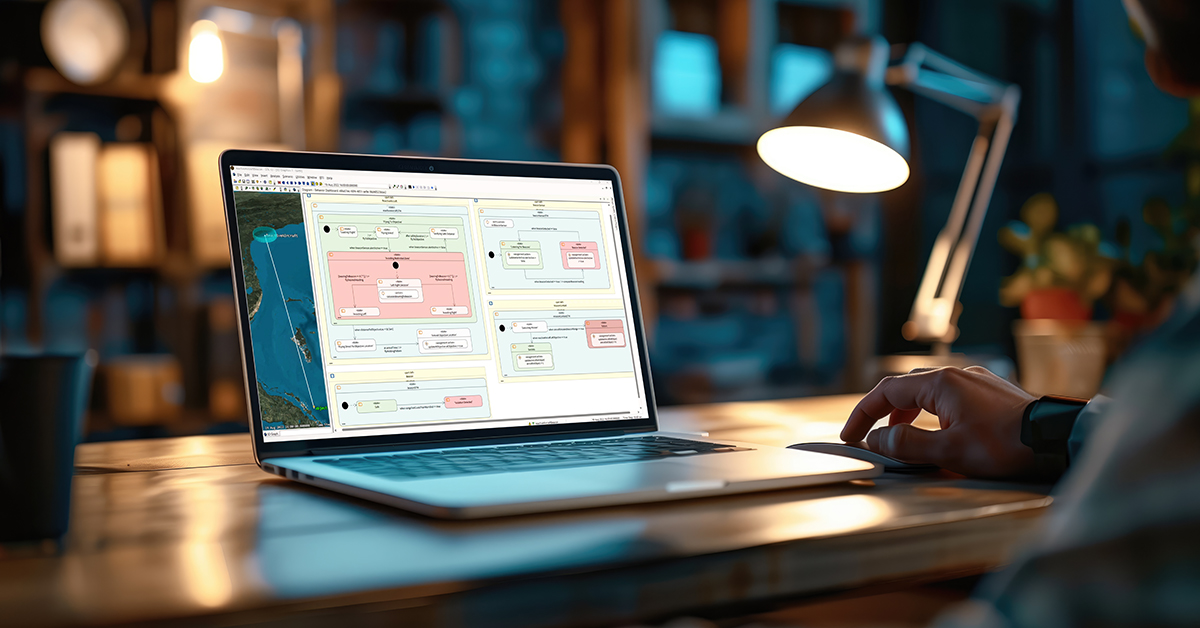
As systems engineering continues to become increasingly complex and distributed, organizations are seeking solutions that can bridge traditional engineering silos while enabling real-time collaboration across global teams. Model-based systems engineering (MBSE) solutions from Ansys, part of Synopsys, anchored by the Ansys System Architecture Modeler (SAM) capability, represent a fundamental shift in how enterprises will be able to approach systems design, requirements verification, and deployment in the future.
The Cloud-Native Advantage: Beyond Traditional Desktop Limitations
At the heart of the Ansys strategy for MBSE and enabling organizations to thrive with their digital engineering efforts was a crucial architectural decision: building the Ansys SAM capability as a truly cloud-native platform rather than adapting legacy desktop applications. This distinction matters more than many may realize. While traditional system modeling methods may involve desktop applications hosted on virtual machines in the cloud — essentially providing “desktop in the cloud” experiences — the SAM capability was designed from the ground up to live natively in cloud environments.
This cloud-native architecture delivers immediate operational benefits. Engineering teams no longer need to install software on every user’s workstation. Instead, a web browser becomes the universal access point. More importantly, it ensures every team member works with the same version of the SAM capability and that teams collaborate on the same model in real time. Gone are the days of version conflicts, duplicated files scattered across desktops, and the inevitable confusion of figuring out which model is the latest.
The broader implications extend beyond convenience. When data lives centrally on servers rather than distributed across individual machines, organizations gain control over their intellectual property (IP) while enabling seamless collaboration across time zones and organizational boundaries. Engineering teams can literally watch models evolve in real time as colleagues contribute from anywhere in the world.
SysML v2: The Interoperability Revolution
The emergence of SysML v2 generated both excitement and confusion in the systems engineering sphere. While some vendors advocate for hybrid approaches that combine SysML v1 and v2 elements in the same model, Ansys takes a clear stance: Mixing these fundamentally different languages will not provide organizations with a future-ready state.
SysML v2 enables users to exchange v2-compliant models between different vendors’ implementations. This breaks the traditional vendor lock-in that has plagued systems engineering for decades. However, creating “Frankenstein models” that combine v1 and v2 elements eliminates this interoperability advantage, effectively trapping organizations within specific vendor ecosystems.
For new adopters, this positioning is particularly compelling. Organizations starting their MBSE journey can begin with SysML v2 from day one, avoiding the complexity and limitations of legacy approaches.

Ansys SAM Pro and SAM Enterprise: Scalable Solutions for Diverse Needs
The SAM capability scales across organizational requirements through two primary configurations. SAM Pro provides the core cloud-native modeling capabilities that form the foundation of modern systems engineering workflows. For organizations requiring deeper integration with specialized tools, SAM Enterprise adds integrations with and capabilities from desktop applications including the Ansys SCADE embedded software product collection for safety-critical systems, Ansys ModelCenter MBSE software for simulation-driven requirement verification, and Ansys medini analyze system-oriented safety analysis software for reliability analysis.
This hybrid approach enables system engineers to utilize a cloud-native application to collaborate with domain-specific experts Organizations can gain the advantages of a cloud-based solution while enabling desktop applications to integrate seamlessly when needed.
Competitive Differentiation Through Simulation Excellence
In addition to architectural modeling, Ansys leverages 50+ years of simulation expertise to create a unique value proposition. As the leader in simulation software, organizations can realize a competitive advantage by combining architectural modeling capabilities with powerful safety, software, and verification workflows that other systems engineering vendors struggle to match.
Ansys has a commitment to an open ecosystem and actively enables connections to any tool, even those developed by other vendors, to empower today’s engineers to solve the most pressing challenges.

Security and Deployment Flexibility
Understanding that data security and privacy remain critical to regulatory and compliance requirements, Ansys designed the SAM capability with flexible deployment options. While cloud-native by design, the SAM capability can be installed on-premises using Docker containers, running on any machine that supports Docker. This flexibility addresses the needs of organizations in regulated industries or those with strict data requirements.
The ability to deploy the SAM capability on-premises while maintaining cloud-native benefits represents a significant competitive advantage. Organizations can utilize real-time collaboration, centralized data management, and version control without compromising their security and regulatory compliance requirements.
Engineering Smarter Through Integration
Ansys MBSE solutions and the SAM capability represent more than incremental improvements to existing systems engineering tools. They represent a fundamental change in how engineering teams will be able to collaborate, verify requirements, and manage complex systems throughout their life cycles. By combining cloud-native architectures with simulation excellence and an open ecosystem approach, Ansys provides organizations with the foundation needed to break traditional silos and engineer smarter solutions.
As industries continue to embrace model-based approaches, organizations that invest in truly collaborative, standards-based platforms will find themselves better positioned to enable transformational engineering capabilities.
Learn more about how Ansys MBSE solutions can help you. Check out the on-demand webinar "Break Silos, Validate Early, Engineer Smarter with SysML v2 Web Platform."



The Advantage Blog
The Ansys Advantage blog, featuring contributions from Ansys and other technology experts, keeps you updated on how Ansys simulation is powering innovation that drives human advancement.