-
-
Kostenlose Software für Studierende
Ansys unterstützt die nächste Generation von Ingenieur*innen
Studenten erhalten kostenlosen Zugang zu erstklassiger Simulationssoftware.
-
Verbinden Sie sich jetzt mit Ansys!
Gestalten Sie Ihre Zukunft
Stellen Sie eine Verbindung mit Ansys her, um zu erfahren, wie Simulation Ihren nächsten Durchbruch vorantreiben kann.
Länder und Regionen
Kostenlose Demoversionen
Produkte & Dienstleistungen
Lernportal
Über das Unternehmen
Back
Produkte & Dienstleistungen
Back
Lernportal
Ansys unterstützt die nächste Generation von Ingenieur*innen
Studenten erhalten kostenlosen Zugang zu erstklassiger Simulationssoftware.
Back
Über das Unternehmen
Gestalten Sie Ihre Zukunft
Stellen Sie eine Verbindung mit Ansys her, um zu erfahren, wie Simulation Ihren nächsten Durchbruch vorantreiben kann.
Kostenlose Demoversionen

This year marks the 20th anniversary of the Ansys Granta MI materials intelligence platform. We use this milestone to reflect on how far materials information management has come. What began as a response to the growing need for better materials selection and data handling has evolved into a powerful enterprise platform used by leading organizations worldwide. Let's look back at the origins, milestones, and ongoing evolution of Granta MI software and consider how it continues to shape the future of engineering in an increasingly digital and sustainability-focused world.
Granta MI software has its roots in the pioneering work on materials selection at the University of Cambridge. It all began with the development of CES Selector, a software tool based on the Ashby selection methodology, which was designed to help engineers make informed materials choices. As its user base grew, so did the demand for flexibility. Customers wanted to add their own proprietary data, prompting CES Selector’s evolution and the development of CES Constructor and the development of CES Constructor.
But design data alone wasn’t enough. Users, especially in sectors like aerospace, wanted access to the raw test data behind those design values and needed to share it securely across large organizations. A collaborative project with NASA Glenn Research Center helped highlight the need for such a system.
These early projects showed the system's potential, but it soon became clear that a new product with a modern enterprise architecture was needed. To define the requirements, materials intelligence company Granta Design launched the Materials Data Management Consortium (MDMC), bringing together a dozen major aerospace companies. Their shared challenge? Managing complex materials data at scale. The result was the Granta MI platform.
The early development of the Granta MI platform marked a significant step forward in materials data management. Launched in June 2005, version 1.0 offered core functionality for importing, managing, and sharing materials data, and the tool was initially adopted by MDMC members.
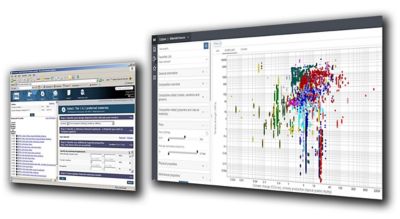
The evolution of the Ansys Granta MI interface: version 1.0 in 2005 (left) and version 2025 R2 (right)
With version 1.1 in 2006, the platform expanded its capabilities and began to reach new sectors, including medical device manufacturers. By the time version 1.3 was released in 2007, the software was gaining traction among large aerospace firms and broadening its appeal to industrial customers. Despite the financial crisis of 2008, Granta MI software continued to grow, and version 2.0 coincided with a growing recognition of the role materials data plays in meeting environmental and substance regulations. This led to the formation of the Environmental Materials Information Technology (EMIT) consortium to focus on addressing these challenges. In 2009, version 3.0 introduced what is now known as the Ansys Granta MI for Restricted Substances module, directly shaped by the needs identified through EMIT. This demonstrated Granta’s commitment to evolving its technology in response to real-world regulatory and industry demands.
Following its early success, Granta MI software continued to expand its reach across industries. Initially rooted in aerospace and defense, the platform found growing relevance in automotive, energy generation, and industrial equipment sectors. As the user base grew into the hundreds and eventually thousands within large organizations, the platform evolved to meet enterprise-level demands. This included enhancing scalability, introducing workflow automation tools, enabling Python application programming interfaces (APIs) for custom development, and supporting cloud deployments to improve accessibility and performance.
A major milestone in the platform’s development was its seamless integration with wider engineering ecosystems. The introduction of the Ansys Granta MI Materials Gateway solution enabled engineers to access validated materials data directly within computer-aided design (CAD), computer-aided engineering (CAE), and product life cycle management (PLM) systems, ensuring traceability and consistency throughout the product development process.
The strategic importance of materials data in simulation was underscored when Ansys acquired Granta Design in 2019, retaining “Granta” as a trusted brand. This marked the beginning of deeper integration with Ansys tools such as the Ansys Electronics Desktop (AEDT) electronics system design platform and Ansys Discovery 3D product simulation software, alongside advanced features like material calibration. As simulation capabilities grew, so did the focus on emerging areas like electromagnetics. This led to the development of new data products and integrations tailored to this increasingly vital field.
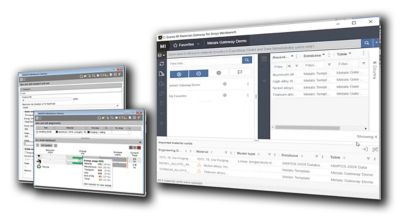
The evolution of the Granta MI Materials Gateway solution: version 6.0 (2012, left) and version 2025 R2 (right)
The engineering landscape continues to evolve, and materials are more important than ever. From enabling sustainability initiatives to navigating the complexities of critical materials and global supply chains, the role of materials data spans every industry. In the era of digital engineering, accurate and accessible materials information is essential throughout the entire design and production process.
Looking ahead, the future of Granta MI software lies in greater accessibility and intelligence. Cloud deployment will make the system available to more users across a wider range of platforms, while the integration of AI and machine learning promises to deliver deeper insights, smarter automation, and even more powerful decision support. As always, Granta MI software will continue to evolve — meeting the needs of its users and helping organizations unlock the full value of their materials data.
Learn more about the Granta MI platform and how it can benefit your business.




The Advantage Blog
The Ansys Advantage blog, featuring contributions from Ansys and other technology experts, keeps you updated on how Ansys simulation is powering innovation that drives human advancement.