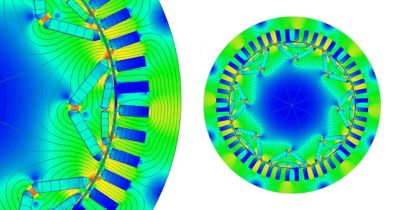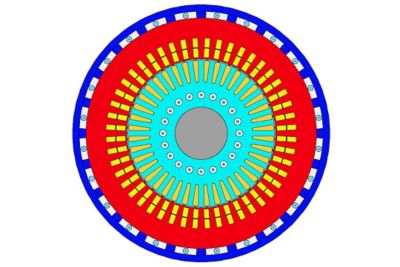
Quick Specs
Fast calculations and streamlined data input processes leave time for Motor-CAD users to explore more motor topologies and fully assess the impact of advanced loss effects in the initial stages of an electromechanical design.
Synopsys and Ansys power the future of innovation—connecting silicon to systems.
Ansys empowers the next generation of engineers
Students get free access to world-class simulation software.
Design your future
Connect with Ansys to explore how simulation can power your next breakthrough.
Students get free access to world-class simulation software.
Connect with Ansys to explore how simulation can power your next breakthrough.
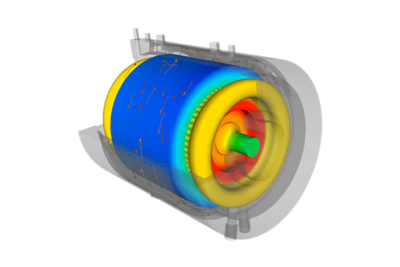
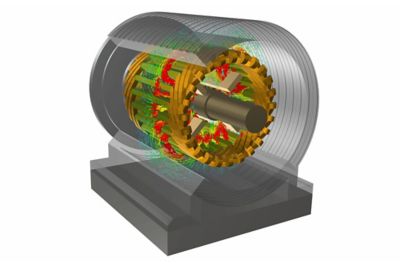
Ansys Motor-CAD is a dedicated electric machine design tool for fast multiphysics simulation across the full torque-speed operating range.
Motor-CAD enables design engineers to evaluate motor topologies and concepts across the full operating range, to produce designs that are optimized for performance, efficiency and size. Motor-CAD software’s four integrated modules—EM, Therm, Lab, Mech—enable multiphysics calculations to be performed quickly and iteratively, so users can get from concept to final design in less time.

Ansys Motor-CAD is a dedicated, industry-leading tool for electric motor design and simulation. Motor-CAD’s intuitive, template-based setup simplifies and automates the analysis process while its built-in electromagnetic, thermal and mechanical solvers offer valuable multiphysics insights into a motor design.
Fast calculations and streamlined data input processes leave time for Motor-CAD users to explore more motor topologies and fully assess the impact of advanced loss effects in the initial stages of an electromechanical design.
March 2026
The 2026 R1 release advances axial flux machine (AFM) solutions by adding Thermal module support and expanding magnetic and NVH capabilities. An improved induction machine performance map approach with Ansys Maxwell, along with an enhanced Multi-Static with Losses analysis, speeds magnetic and loss predictions − enabling faster iteration and earlier design evaluation.
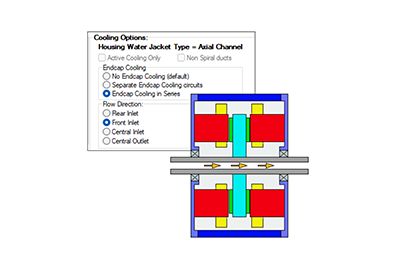
The new Thermal module support (Beta) for AFMs includes blown-over and natural convection, water- jacket cooling, and shaft groove cooling. It also supports adaptive rotor templates, demagnetization methods, a hybrid method for AC loss, and Lab module support, including Ansys Maxwell-Lab link (Beta).
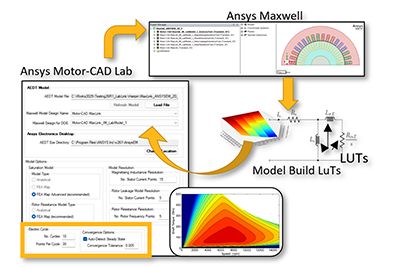
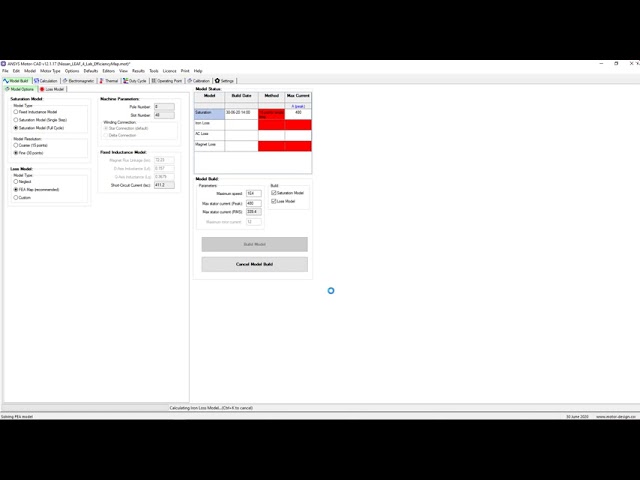
A unified performance map now supports induction machines with automated Ansys Maxwell–Motor‑CAD integration. Magnetizing and leakage inductance and iron loss Look-Up-Tables (LUTs) improve model accuracy, while automatic steady‑state detection and enhanced Python data‑transfer significantly cut analysis time across all types of electric machines.
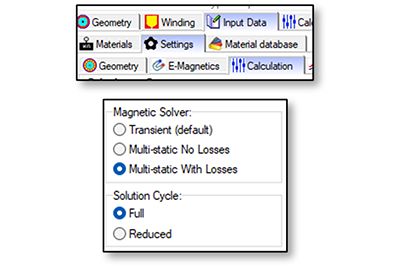
Deliver faster, more accurate magnetic and loss predictions using Multi-Static with Losses option. It is further improved using model symmetry and automatic symmetry detection which reduces setup time. This increase confidence in early-stage evaluations. The capability boosts design throughput and accuracy, improving decision-making and enabling quicker screening and comparison of electric machine topologies.
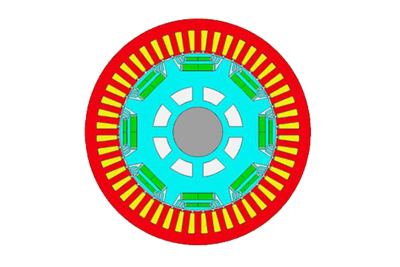
MOTOR-CAD CAPABILITIES
With decreasing development cycles, motor designers need to make design decisions quickly, and with certainty that they will not face problems down the line. Fast calculations and streamlined data input processes leave time for Motor-CAD users to explore more motor topologies and fully assess the impact of advanced loss effects in the initial stages of a design.
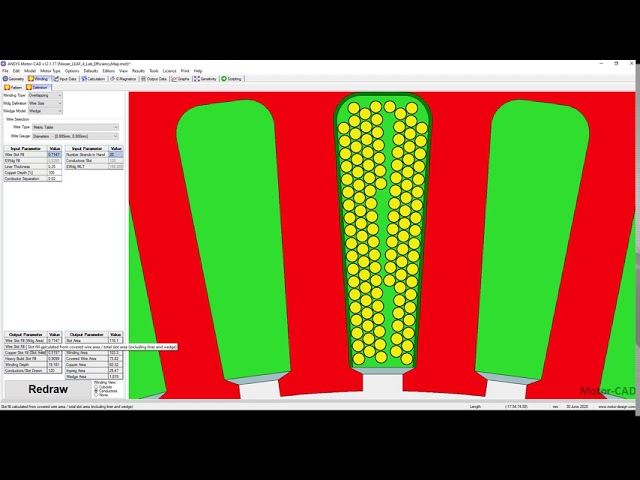
Motor-CAD software’s intuitive, template-based setup and embedded multiphysics expertise simplifies the design process and reduces reliance on multiple teams for specific electromagnetic, thermal or mechanical experience — so motor designers can keep more control over their designs.
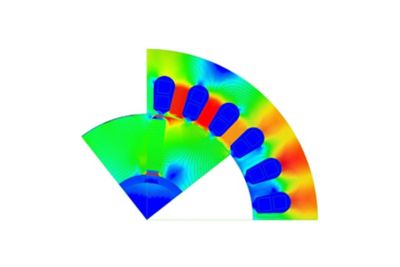
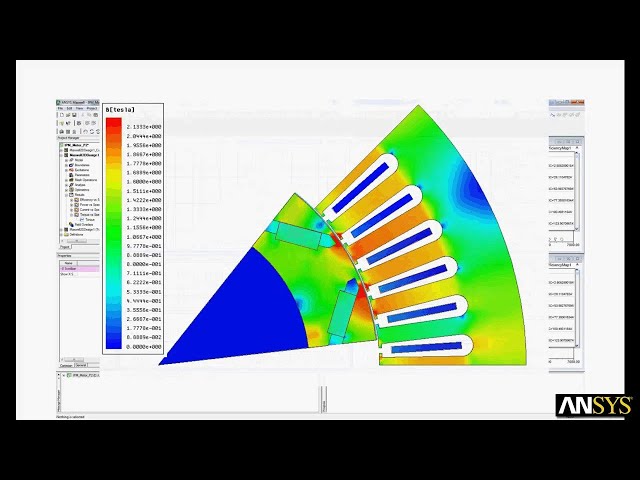
Motor-CAD delivers high-fidelity, 2D/3D analysis capability enabling users to analyze end-effects, demagnetization, core loss, hysteresis and other advanced electromagnetic phenomena, calculate the thermal envelope for operation and design complete motor cooling systems
MOTOR-CAD RESOURCES & EVENTS

Noise, vibration, and harshness (NVH) are essential aspects that must be considered when designing and optimizing a motor. Using Ansys Motor-CAD with Ansys optiSLang, we show how to optimize the motor’s noise alongside the motor’s electromagnetic, thermal, and mechanical requirements. As the design matures, structural information from Ansys Mechanical can improve the rapid analytical structural model, increasing the fidelity of the solution while maintaining the speedy solution times that allow fast design optimization.
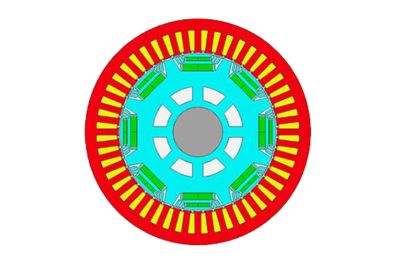
Learn how Ansys Motor-CAD can rapidly evaluate a candidate induction machine design using multiphysics analysis against the complete specification, including continuous torque/speed characteristics and drive cycle efficiency.
This webinar series showcases solutions spanning all aspects of electric machine design - be it concept design and development, cooling system development, noise, vibration, and harshness (NVH), or system-level optimization.
Watch an overview of the complete Ansys motor design flow.
This is part one of a two-part video series designed with FSAE Electric & Solar teams in mind. In this video, you will learn the basic electromagnetic analysis of a motor using Ansys Motor-CAD.
This is part two of two-part video designed with FSAE Electric & Solar vehicles in mind. In this video, the process of calculating quantities such as torque, winding current, voltage plots, efficiency maps & torque speed curves will be demonstrated using Ansys Motor-CAD.
It's vital to Ansys that all users, including those with disabilities, can access our products. As such, we endeavor to follow accessibility requirements based on the US Access Board (Section 508), Web Content Accessibility Guidelines (WCAG), and the current format of the Voluntary Product Accessibility Template (VPAT).