Synopsys and Ansys power the future of innovation—connecting silicon to systems.

A Synopsys custom study highlights the growth and application of digital twins across industries, supported by emerging technologies and the power of simulation.
Today, almost everywhere you look, there’s an article, advertisement, or video about how artificial intelligence (AI) is transforming our lives and industries around the world. Although AI is getting most of the attention, digital twins are making a significant impact. The global digital twin market was estimated at $35.82 billion in 2025 and is forecast to reach $328.51 billion by 2033, according to Grand View Research.
What are digital twins? In simple terms, digital twins are virtual replicas of real-world objects or activities, continually updated to reflect those objects or activities in real time. They provide valuable insight across sectors and markets to optimize physical assets, processes, and systems, from industrial equipment to smart factory favorites like robotic arms.
Based on the report, the substantial anticipated market growth of digital twins is driven by Industry 4.0, predictive maintenance, and real-time monitoring, enabled by AI, cloud computing, 5G, and the Internet of Things (IoT) for data integration.
To learn more about how industries implement digital twins, Synopsys worked with Peerless Research Group, publisher of Digital Engineering 24/7, in late 2025 to study digital twin applications, including their uses, purposes, and tool integration. Respondents represent a range of industries, including consumer goods, industrial equipment, automotive, aerospace and defense (A&D), energy, and healthcare.
Let’s explore how industries apply digital twins and how engineering solutions from Ansys, part of Synopsys, support them.
Survey Background
The Digital Twins Solutions Custom Study was based on 184 total respondents.
The study was conducted by Peerless Research Group from September to October 2025 and produced in part by Digital Engineering 24/7.
Where indicated, some questions allowed more than one answer.
Power Digital Twins With Simulation
Ansys digital twin solutions harness the power of simulation, AI, and reduced-order modeling — major players in most digital twin integrations, according to survey results.
For instance, 41% of respondents (n=80) use process digital twins to model manufacturing or operational workflows, and 40% use product digital twins. With multiple answers permitted, an additional 35% of respondents said they use digital twins powered by AI and data while 23% use reduced-order model (ROM)-based digital twins for real-time insights.
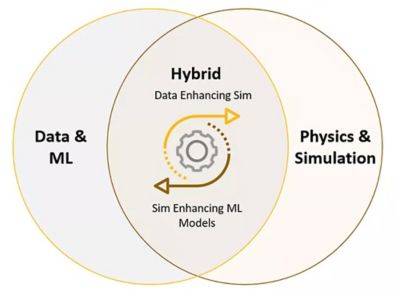
Hybrid digital twins blend data and physics, bridging the gap between design and operations with real-time insights that consider changes in operating conditions and equipment degradation.
Essentially, ROMs are simplified versions of complex models that capture the behavior of source models, enabling engineers and designers to democratize simulation and use minimal computational resources to examine a system’s principal properties.
When asked how they integrate simulation with digital twins, 30% of the 69 qualified respondents said they build digital twins primarily from high-fidelity physics models while 20% use surrogate models or ROMs.
Equipped with reduced-order modeling and AI techniques, the Ansys Twin Builder simulation-based digital twin platform and Ansys TwinAI AI-powered digital twin software connect design and operations by integrating simulation insights with real-world data.
As a result, hybrid digital twins enable real-time monitoring, predictive maintenance, and performance optimization across operating scenarios and product variations, automatically adapting to changing environments, circumstances, and conditions.
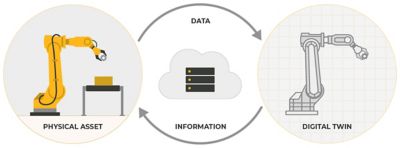
With their unique capabilities, digital twins offer significant support for everyday engineering, design, and operational challenges while shortening timelines and improving product quality.
When asked how their companies use digital twins, 30% of respondents (n=90) said they are mainly used for design and development while 26% said they are used in production or operations.
Optimize Operations With Simulation and Digital Twins
With multiphysics simulation and techniques, such as reduced-order modeling, Synopsys engineering solutions empower teams to quickly and accurately model complex physics simultaneously, boosting design exploration, reducing physical testing, and saving time and resources.
This is positive news for 36% of qualified respondents who said their organization’s primary purpose for using or intending to use digital twins is to explore designs and test virtually.
In addition to speed and accuracy, digital twins enable modern industrial practices, such as predictive maintenance, which improve product reliability and prevent downtime and costly repairs. This might interest many manufacturers that consider these areas concerning.
When asked to select the top two business needs that were most challenging during design or operational activities, 41% of qualified respondents said improving product or system reliability, 34% said accelerating design cycles and time to market, and 27% said reducing downtime and maintenance costs.
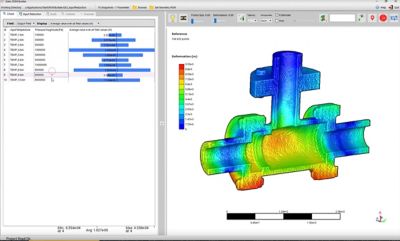
Hybrid digital twin solutions, such as the Ansys Twin Builder simulation-based digital twin platform, enable reduced-order modeling, which simplifies computationally heavy models and speeds up simulation time.
Apply Digital Twins Across Industries
Digital twins benefit a wide range of industries, applications, and environmental initiatives.
For example, hybrid digital twins and virtual sensors enable glass manufacturers to monitor and predict issues in extreme temperatures or environments while reducing energy consumption and providing a more viable solution than physical sensors.
Reaching sustainability targets, such as reducing emissions by 2030 and achieving net zero by 2050, is difficult for industries with energy-intensive processes that operate in harsh environments. Digital twins offer an efficient alternative. To learn more ways that digital twins optimize manufacturing processes, support energy efficiency, and improve sustainability, check out the glass manufacturing and energy sector episodes of The Twin Talks, an Ansys interview series dedicated to digital twin technology.
Digital twins are making an impact in the automotive sector too. Top challenges facing electric vehicle (EV) adoption include concerns about cost, charging, and the rapid pace of technological development, according to Raja Badrinarayanan, a lead application engineer at Ansys, part of Synopsys.
To combat these challenges, engineers are adopting new technologies and techniques to optimize design and development.
“EV development is a complex engineering problem involving several departments to collaborate on a single goal, and the possibility to quickly perform multiple design iterations through technologies, such as reduced-order modeling, helps in arriving at a desired optimal design much sooner than traditional methods,” he said during an episode of The Twin Talks focused on EVs. “And digital twins also help democratize simulation, which is traditionally done only by engineers with very specific or niche expertise and access to large computer resources.”
In healthcare segments, such as biopharmaceuticals, digital twins monitor dynamic environments — often including living organisms — in real time, ensuring the most effective manufacturing of biological medicines. To discover other ways digital twins support medicine and medical devices, watch this healthcare episode of the Twin Talks.
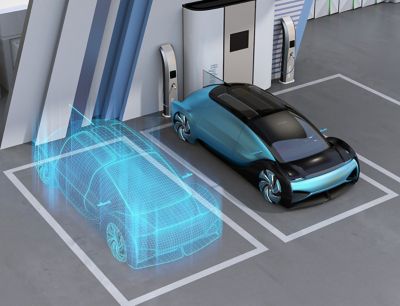
Digital twins benefit a range of industries, from automotive and manufacturing to energy and healthcare.
Hybrid digital twins also advance A&D modernization programs by blending operational data with simulation to understand system performance and increase operational efficiency. Discover more A&D applications in this episode of the Twin Talks.
Maximize Simulation Data for Better Digital Twins
Like AI, digital twins depend on accurate data to work effectively. Simulation data provides a wealth of insights and accuracy to support digital twins, but poor data management can prevent organizations from maximizing its value.
Only 13% of qualified respondents cited computer-aided engineering (CAE) simulation data as the primary data source for their digital twins while 34% noted product life cycle management (PLM), computer-aided design (CAD), and/or design engineering data. Respondents could report more than one source.
Simulation process and data management (SPDM) software, such as Ansys Minerva SPDM software, enables teams to manage simulation data, workflows, and resources across their organization, spanning departments and engineering disciplines, from a single central database.
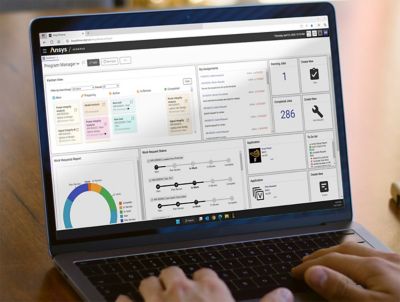
Ansys Minerva simulation process and data management (SPDM) software enables teams to manage simulation data, workflows, and resources throughout their organization from one central database.
Built with a vendor-neutral architecture in an open ecosystem, the Minerva platform works seamlessly with Ansys software, third-party tools, existing PLM and CAD systems, and other enterprise applications, such as enterprise resource planning (ERP) systems. This interoperability is pivotal to modern engineering workflows, as indicated by 41% of qualified respondents who integrate their digital twins with enterprise applications, such as CAD and PLM systems. Since respondents could give multiple answers, ERP systems were also noted by 23%.
By combining your organization’s simulation tools into one platform, SPDM makes data more accessible and shareable. This supports management and decisions for both on-premises and cloud deployment ecosystems.
Based on survey feedback, 46% of qualified respondents primarily deploy their digital twins on-premises via servers or data centers while 19% take a hybrid approach, deploying them in the cloud and on-premises.
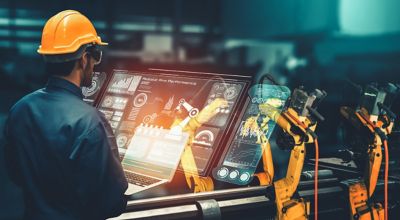
Digital twins provide valuable insight across sectors and markets to optimize physical assets, processes, and systems, from industrial equipment to smart factory favorites like robotic arms.
Discover Digital Twins Today
Learn more about the study in the white paper “The Role of the Digital Twin in Modern Design and Engineering.”
Discover simulation-based digital twin software and other tools to support your operations at Industrial Processes and Equipment Simulation Software Solutions from Ansys.

Just for you. We have some additional resources you may enjoy.
Download the White Paper
Read “The Role of the Digital Twin in Modern Design and Engineering” today!


The Advantage Blog
The Ansys Advantage blog, featuring contributions from Ansys and other technology experts, keeps you updated on how Ansys simulation is powering innovation that drives human advancement.