Skip to Main Content

Drive Innovative Design Using Electrothermal Insights

Electrothermal and multiphysics simulation bring electromagnetics, thermal, and structural behavior together, enabling teams uncover hidden hotspots, make informed performance decisions, and build designs ready for real world demands.

ANSYS APPLICATIONS

Achieve Stronger, More Reliable Electronic Designs with Multiscale Electrothermal Accuracy

Electrothermal reliability is now a make or break challenge as electronics shrink, speeds rise, and power densities surge. Designs must withstand extreme temperatures, unpredictable environments, and tightly coupled electrical-thermal-mechanical interactions. Electrothermal solutions from Ansys, part of Synopsys, deliver multiscale, multiphysics accuracy from chips to full systems. A unified platform accelerates collaboration and first pass success. GPU accelerated solvers and ROMs provide rapid, high fidelity results, while electrical-thermal-mechanical analyses uncover risks early to ensure durable, high performance architectures.

  • Check icon outline
    Multiscale Electrothermal Accuracy
  • Check icon outline
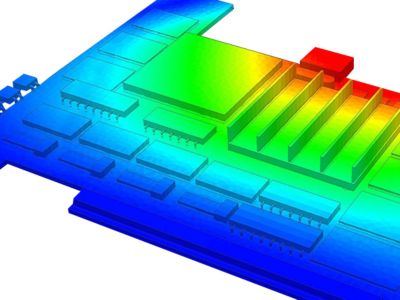
    Hotspot & Overheating Mitigation
  • Check icon outline
    Improved Real-World Reliability
  • Check icon outline
    Digital Twins for Design & Operational
  • Check icon outline
    Cross-Domain, Multiphysics Collaboration
  • Check icon outline
    AI-Powered Simulation Acceleration

Key Features

Unified Multiphysics Insight for High-Performance Electrothermal Design
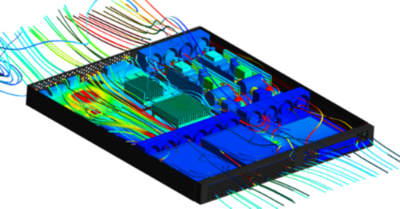
Electrothermal solutions

Combine EM, Thermal and Structural Analysis

Ansys Electronics Desktop (AEDT) unifies electromagnetic, thermal, mechanical, and circuit simulation with direct links to Ansys Icepak, Ansys Mechanical, Ansys Maxwell, and the full Ansys multiphysics portfolio.

Orchestrate Multiscale, Multiphysics Simulation for Electrothermal Design

Delivers unified multiscale and multiphysics simulation for accurate electrothermal design, enabling faster decisions, improved reliability, and optimized performance from system to silicon.

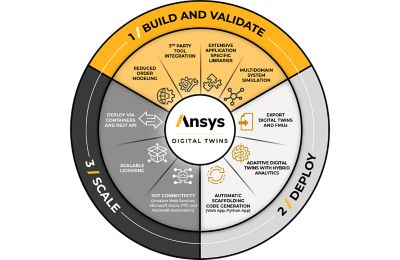
Connect Design and Operations with Digital Twins

Enables high fidelity digital twins for design and operations, combining simulation and real world data to predict performance, optimize decisions, and improve reliability throughout the lifecycle.

Boost Simulation Performance with Advanced Solvers and HPC Scalability

Modern UX, GPU/CPU solvers, and HPC capabilities support faster meshing, higher-fidelity results, and efficient scaling for demanding electrothermal simulations.
Featured Products

Featured Webinars

Electrothermal solutions
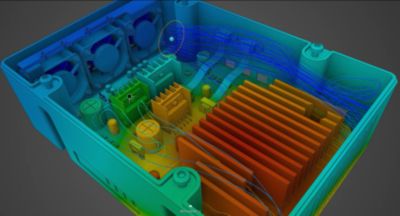
Design Cooler, Faster with Real-Time Thermal Simulation

Learn how Ansys Icepak and Ansys Discovery accelerate electronics cooling with real‑time multiphysics, rapid concept evaluation, and high‑fidelity thermal analysis to reduce failures and improve design reliability.
Electrothermal solutions
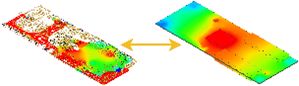
Electrothermal Analysis of PCBs in Air and Vaccuum

Explore a streamlined PCB electrothermal workflow, from DCIR simulation to Ansys Icepak thermal modeling, showing how coupled solvers and temperature-dependent materials improve accuracy for power integrity.
Electrothermal solutions
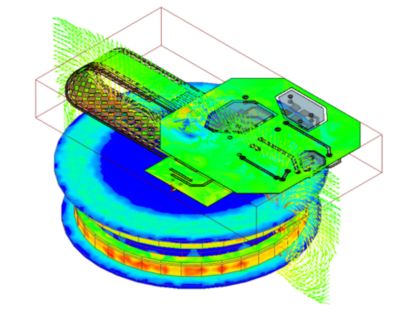
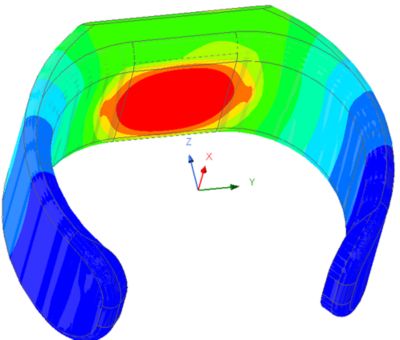
Optimize Wireless Charger Efficiency and Thermal Performance

Learn how Ansys Maxwell and Ansys Icepak improve wireless charger design by predicting EM behavior, core and AC losses, and thermal performance while enabling full system level analysis with reduced order models.
White Papers

Electrothermal solutions

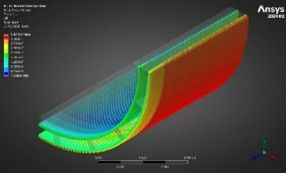
Co Simulate Thermal and Structural Circuit Breaker Behavior

Discover how transient‑transient co‑simulation with Ansys Icepak and Ansys Mechanical reveals thermal trips, deformation effects, and performance limits, enabling faster optimization of next‑generation low‑voltage circuit breaker designs.

Electrothermal solutions

Advancing Transformer Design at Hitachi Energy

Hitachi Energy uses early, automated PyAEDT simulation to streamline multiphysics transformer design, improve accuracy, speed development, and enable collaborative engineering.

Case Studies & Blogs

2020-12-case-study-icon-block.jpg

Optimize Automotive Lighting Reliability with Advanced Thermal Simulation

Elausa conducts thermal optimization in automotive interior lighting projects with help from Ansys solutions.

2020-12-case-study-icon-block.jpg

Advance Microsatellite Development with Integrated Multiphysics Simulation

Learn how Ansys multiphysics simulation helped Creotech create virtual prototypes of satellite components, modules and subsystems, enabling their engineers to analyze designs and verify their expected operation.

Electrothermal solutions

Solve Wireless Charging Overheating with Advanced Thermal Simulation

Explore why wireless chargers overheat and how simulation helps predict electromagnetic losses, manage rising temperatures, and ensure safer, more efficient charging performance in compact consumer devices.

Electrothermal solutions

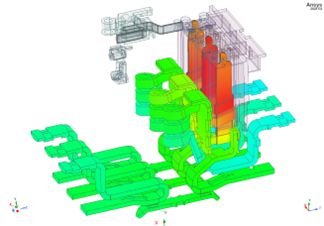
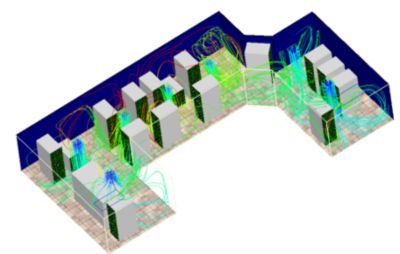
Powering the Future of AI Data Centers

Explore how soaring AI workloads are driving unprecedented data‑center energy demand and how advanced simulation helps optimize power, cooling, and infrastructure to meet rapidly escalating global requirements.

FAQs

High‑fidelity, multiscale electrothermal simulation captures chip‑to‑system behavior, revealing hotspots and material limits early. GPU‑accelerated solvers and reduced‑order models deliver fast, accurate insights that significantly reduce prototype cycles and development time.

A unified simulation workflow lets teams explore design alternatives quickly, balancing thermal performance with size, weight, cost, and power constraints. Integrated physics ensures decisions reflect real behavior rather than isolated assumptions.

Steady‑state, transient, CFD, and fully coupled electrothermal‑mechanical simulations reveal how heat, current, and stress interact across components and assemblies. This comprehensive modeling strengthens reliability predictions across all operating conditions.

Advanced multiphysics coupling models electrical, thermal, and mechanical interactions simultaneously, exposing hidden bottlenecks in dense designs. This enables optimized layouts, materials, and power distribution while maintaining reliability under extreme operating conditions.


Virtual testing of heat sinks, airflow paths, interface materials, and cooling components provides rapid comparison of mitigation options. High‑fidelity computational fluid dynamics (CFD) and conjugate heat‑transfer models guide optimized cooling strategies before hardware exists.

Electrothermal models incorporate enclosure geometry, airflow limits, power cycling, and environmental loads. This delivers accurate, system‑level predictions that help engineers validate architectures and prevent thermal failures in demanding real‑world applications.