Quick Specs
Lumerical MODE puts high-accuracy waveguide simulation at the forefront with a Finite Difference Eigenmode (FDE) solver, a variational FDTD (varFDTD) solver, and a Bidirectional Eigenmode Expansion (EME) solver.
Synopsys and Ansys power the future of innovation—connecting silicon to systems.
Ansys potenzia la nuova generazione di ingegneri
Gli studenti hanno accesso gratuito a software di simulazione di livello mondiale.
Progetta il tuo futuro
Connettiti a Ansys per scoprire come la simulazione può potenziare la tua prossima innovazione.
Gli studenti hanno accesso gratuito a software di simulazione di livello mondiale.
Connettiti a Ansys per scoprire come la simulazione può potenziare la tua prossima innovazione.
Whether you are working on fiber optics or integrated photonics, MODE has everything you need to get the most out of your waveguide and coupler designs.
Comprehensive Optical Waveguide Design Environment
MODE enables you to accurately model waveguide and coupler performance. Combining bidirectional Eigenmode expansion, varFDTD, and finite difference eigenmode solvers, MODE can easily handle both large planar structures and long propagation lengths, providing accurate spatial field, modal frequency, and overlap analysis.

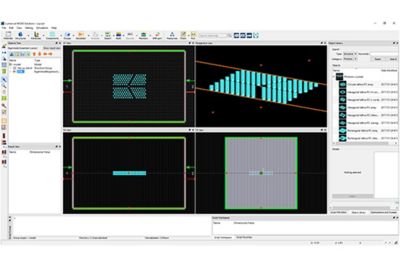
Lumerical MODE puts high-accuracy waveguide simulation at the forefront with a Finite Difference Eigenmode (FDE) solver, a variational FDTD (varFDTD) solver, and a Bidirectional Eigenmode Expansion (EME) solver.
March 2026
The 2026 R1 release of Ansys Lumerical MODE enhances photonic design with Synopsys OptoCompiler integration and PyLumerical, streamlining workflows, multiphysics simulations, and advanced component modeling for innovative telecom and semiconductor solutions.
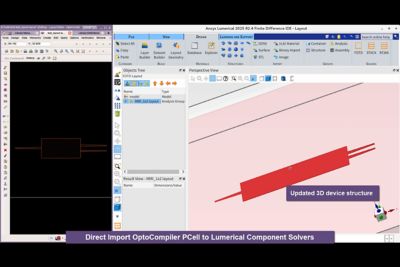
Experience seamless photonic design with the Synopsys OptoCompiler-Lumerical synergy, featuring direct integration with Lumerical MODE, FDTD, and multiphysics. Accelerate telecom and semiconductor innovation using advanced photonic component modeling and simulation, ensuring efficient, high-tech solutions tailored to your needs.
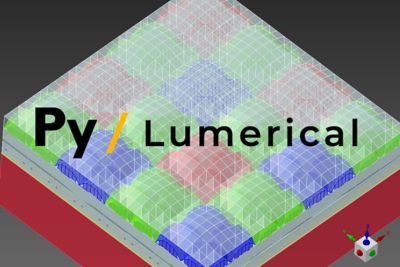
Automate Lumerical tools seamlessly with PyLumerical, a Python-based solution. Fully compatible with the PyAnsys ecosystem, it integrates with FDTD, MODE, Multiphysics, INTERCONNECT, and other Ansys tools like Optislang and Speos, plus open-source Python libraries. Simplify workflows and enhance multiphysics simulations with this modern, efficient approach.

CAPABILITIES
Create your model faster — and with accuracy — by employing Lumerical MODE. Lumerical MODE lets you focus on ideas and product, instead of worrying about how the software can get you there. The Bidirectional Eigenmode expansion and varFDTD engines easily handle both large planar structures and long propagation lengths, providing accurate spatial field, modal frequency, and overlap analysis.
34% of an engineer's time is spend in searching for simulation data. This video highlights how such challenges can be solved with Ansys Minerva and make engineers more productive.
Reduce the complexity involved in simulation projects, allow team members to work harmoniously to save time and ensure best practices consistently across the projects.
It's vital to Ansys that all users, including those with disabilities, can access our products. As such, we endeavor to follow accessibility requirements based on the US Access Board (Section 508), Web Content Accessibility Guidelines (WCAG), and the current format of the Voluntary Product Accessibility Template (VPAT).