Synopsys and Ansys power the future of innovation—connecting silicon to systems.
-
-
Software gratuito per studenti
Ansys potenzia la nuova generazione di ingegneri
Gli studenti hanno accesso gratuito a software di simulazione di livello mondiale.
-
Connettiti subito con Ansys!
Progetta il tuo futuro
Connettiti a Ansys per scoprire come la simulazione può potenziare la tua prossima innovazione.
Customer Center
Supporto
Partner Community
Contatta l'ufficio vendite
Per Stati Uniti e Canada
Accedi
Prove Gratuite
Prodotti & Servizi
Scopri
Chi Siamo
Back
Prodotti & Servizi
Back
Scopri
Ansys potenzia la nuova generazione di ingegneri
Gli studenti hanno accesso gratuito a software di simulazione di livello mondiale.
Back
Chi Siamo
Progetta il tuo futuro
Connettiti a Ansys per scoprire come la simulazione può potenziare la tua prossima innovazione.
Customer Center
Supporto
Partner Community
Contatta l'ufficio vendite
Per Stati Uniti e Canada
Accedi
Prove Gratuite

Healthcare is undergoing a profound technological shift — one defined by miniaturized imaging systems, intelligent diagnostic devices, robotic surgical platforms, and increasingly personalized patient care. At the heart of many of these innovations lies optical technology, powering everything from endoscopes and fluorescence‑guided tumor detection systems to wearable heart rate monitors and implanted intraocular lenses.
Yet this rapid advancement brings an equally important requirement: ensuring safety, regulatory compliance, and reliable performance in devices that directly interact with the human body and measure crucial vital signs. This is where simulation‑driven prototyping, with the help of solutions from Ansys, part of Synopsys, has become indispensable.
Compliance Through Multiphysics Simulation
Ensuring regulatory compliance for medical devices is one of the most challenging aspects of product development. Optical systems often involve tightly coupled physical behaviors — light propagation, thermal diffusion, mechanical strain, biological interaction, and even electromagnetic effects. Regulatory bodies expect manufacturers to understand and carefully test these behaviors with a high level of precision, so that their devices don’t have any negative effects on the body. Multiphysics simulation provides a comprehensive way to meet these requirements by enabling engineering teams to model optical, thermal, and mechanical phenomena simultaneously under clinically relevant conditions.
One of the key strengths of multiphysics simulation is the ability to evaluate optical exposure and irradiance on human tissue with exceptional accuracy. Using tools such as Ansys Speos computer-aided design (CAD) integrated optical and lighting simulation software, designers can simulate how light is distributed across complex tissue geometries and anatomical surfaces. This enables engineers to predict whether a device may exceed safe exposure thresholds that could cause harm, discomfort, or tissue damage. By relying on virtual human body and tissue models and realistic optical behavior, teams can assess worst‑case conditions long before reaching clinical evaluations to prevent any unwanted outcomes.
Thermal safety is another critical component of regulatory compliance. Optical medical devices — especially those involving lasers, LEDs, or high-intensity illumination — can generate heat that must be carefully managed to avoid burns, irritation, or unintended tissue responses. With Ansys Mechanical structural simulation software, engineers can perform detailed structural‑thermal analysis, enabling teams to identify hotspots, predict heat diffusion over time, and determine whether thermal results remain within safe boundaries. The ability to link optical results from Speos software directly to thermal and mechanical models creates a unified view of device behavior that mirrors how it will operate with the human body.
Automated data transfer through Ansys System Coupling physics solver connection software streamlines these workflows even further. Instead of manually exporting data between optical, thermal, and mechanical solvers, System Coupling software synchronizes simulations and maintains consistency across models. This not only reduces human error, but also accelerates the design process, making it feasible to run iterative studies that explore material choices, power settings, or design variations under a range of conditions. Automation ensures that compliance tests can be repeated quickly and reliably, supporting defensible documentation for regulatory submissions.
Ultimately, multiphysics simulation strengthens device reliability, safety, and regulatory readiness. By combining optical, thermal, and mechanical modeling in a unified workflow, healthcare companies can design optical systems that not only perform exceptionally well but also meet the stringent requirements of today’s medical regulatory landscape. This integrated approach ensures that patient safety remains at the forefront while enabling faster, more cost‑effective development of next‑generation optical healthcare devices.
Simulation-Enabled Optical Use Cases
1. Endoscopy and Micro-Objective Design for Surgical Robotics
Modern endoscopes and surgical robotic systems must deliver exceptionally clear visualization while operating in extremely confined, fluid‑immersed anatomical environments. Simulation enables engineers to design and refine these systems long before physical prototypes are built.
Tools such as Ansys Zemax OpticStudio optical system design and analysis software and Ansys Lumerical advanced 3D electromagnetic simulation software enable optical teams to model miniaturized components — including metalenses, diffractive optical elements, fiber bundles, and micro‑cameras — with sub-wavelength precision. Designers can evaluate how these components behave when packaged into tiny form factors that must navigate inside the human body without sacrificing image quality.
Metalens-based fiber-optic endoscope design to reduce the size of the device, which poses main limitations on clinical applications
Realistic light‑tissue interaction modeling is another critical advantage. Using OpticStudio or Speos software, light propagation can be simulated as it passes through or reflects off biological structures, fluids, and tissues. Engineers can test how light scatters in blood, mucosal surfaces distort contrast, or how different wavelengths behave in low‑visibility environments. This enables optimized illumination strategies, such as choosing the right LED configuration, diffuser design, or fiber‑optic routing to achieve dependable visibility.
Comprehensive structural, thermal, and optical performance (STOP) analysis further strengthens the design process. Multiphysics simulation makes it possible to examine how physical stresses from bending or insertion influence optical alignment, how heat from LEDs or lasers dissipates within the endoscope, and how stray light or sensor latency might affect visualization during surgery. By combining all these factors in a realistic virtual patient environment, teams can predict real‑world performance. These workflows not only improve safety and image quality but also accelerate regulatory processes by providing digital evidence of compliance and reducing the need for repeated in vivo or bench testing.
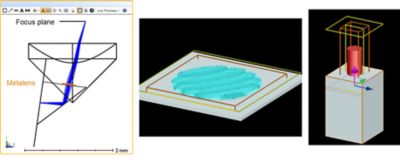
Metalens endoscope design in Ansys Zemax OpticStudio optical system design and analysis software and Ansys Lumerical advanced 3D electromagnetic simulation software
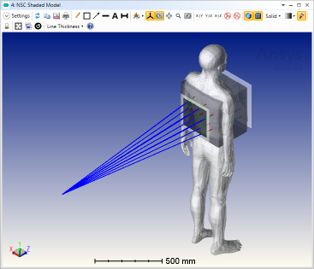
Ray-tracing simulation in the X-ray regime
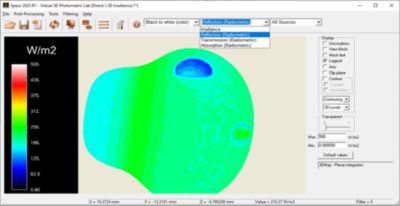
The irradiance response of tumor and bladder surface
2. Medical Imaging: X‑Ray, Confocal Microscopy, and Fluorescence Diagnostics
Optical simulation also plays a transformative role in medical imaging technologies. In X‑ray imaging, for example, OpticStudio software enables engineers to create highly realistic organ and tissue phantoms that represent complex absorption, scattering, and attenuation behavior in the X‑ray regime. With these phantoms, designers can evaluate how radiation propagates through the body, how detectors respond under different conditions, and how reconstructed radiographs will appear. Automated scripting workflows can generate large sets of synthetic radiographs, enabling researchers to test numerous patient geometries, imaging angles, or detector configurations without exposing anyone to radiation.
Confocal and fluorescence microscopy benefit equally from advanced simulation. These imaging systems depend on precise alignment of optical components such as pinholes, beam splitters, laser sources, and detector apertures. OpticStudio capabilities enable engineers to model these complex interactions with high fidelity. Fluorescence behavior — including isotropic emission, photoluminescence, and scattering — can be simulated using realistic material models, ensuring that imaging performance is thoroughly evaluated before physical manufacturing. Engineers can even generate virtual microscopy images and 3D reconstructions to assess contrast, resolution, and noise under various detector or illumination configurations. This dramatically reduces the number of physical prototypes required and enables faster iteration on high‑performance designs.
Fluorescent tumor detection systems rely heavily on maximizing contrast between cancerous and healthy tissues. Simulation tools make this possible by modeling a wide range of fluorescent dyes and their spectral responses using validated material libraries. Engineers can virtually apply these dyes to tissue models and observe how different wavelengths interact with both tumor regions and the surrounding anatomy. They can test illumination strategies involving lasers, broadband sources, or near‑infrared LEDs, and analyze absorption and reflection characteristics across heterogeneous tissue. This enables them to identify an optimal dye‑illumination pairing earlier in development — reducing cost and clinical trial risk and improving diagnostic performance.
3. Wearable Optical Sensors for Non‑Invasive Continuous Monitoring
Wearable medical and wellness devices rely on optical sensing technologies such as photoplethysmography (PPG) to measure heart rate, blood oxygen saturation, and other vital signs. These devices must operate accurately across a wide variety of skin types, physiological conditions, and motion states — challenges that would normally require extensive physical testing. Simulation effectively replaces much of this work by offering realistic human skin models in tools like Speos and OpticStudio software.
These multilayer models incorporate epidermis, dermis, and hypodermis layers along with variations in melanin, blood perfusion, and scattering profiles. As a result, engineers can predict how light travels through each skin layer, which wavelengths are most effective for different sensor configurations, and which geometries offer the strongest and cleanest signal-to-noise ratio return. This helps teams select the right LED wavelength, optimize detector placement, and minimize noise due to reflection or scattering.
Simulation also supports time‑dependent modeling of physiological changes. Using multiphysics workflows, designers can simulate arterial pulse waveforms, tissue displacement during movement, or deformations caused by wrist rotation. These dynamic simulations enable developers to understand how movement affects the accuracy of PPG signals, and how algorithms or sensor placements can be adjusted to maintain reliability.
Safety compliance is another essential outcome of simulation-driven design. By modeling localized heating caused by the applied visible or infrared sources, engineers can ensure that devices remain within ANSI, IEC, or ISO exposure limits. Simulation also reveals how device behavior changes across different skin types and ages, enabling reliable and inclusive performance for diverse user populations. Altogether, these capabilities dramatically reduce the time and cost required to bring wearable medical sensors from early concept to market-ready devices.
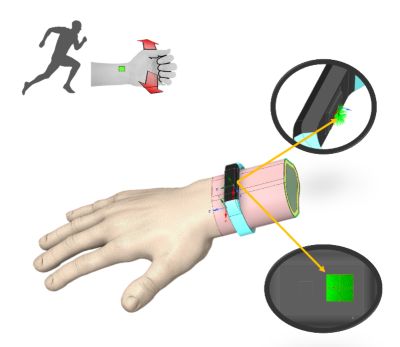
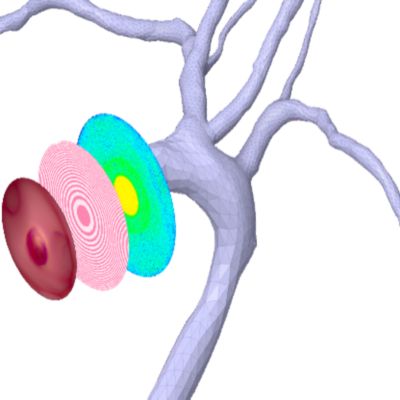
Optical heart rate monitoring using smartwatches
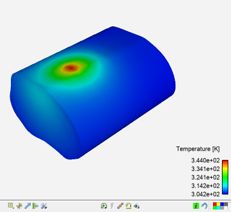
Thermal simulation of a smartwatch interacting with skin
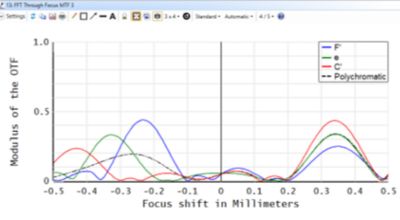
Multifocal diffractive lens design
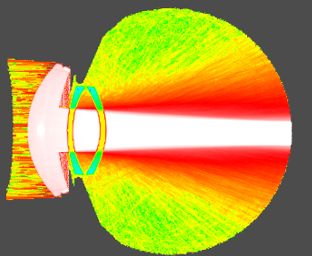
Intraocular scattering analysis
4. Ophthalmic Optics: Intraocular Lenses and Contact Lenses
Simulation is fundamental in the development of optical devices intended for direct implantation or contact with the human eye. Intraocular lenses (IOLs), especially those with diffractive structures designed for multifocal vision, require extremely accurate modeling to ensure optimal patient outcomes. OpticStudio software’s User‑Defined Surface DLLs allows for highly detailed modeling and optimization of relief‑type diffractive structures, enabling engineers to test how multiple diffraction orders behave simultaneously, and incorporate wavelength dispersion too to evaluate how the lens will perform under real‑world lighting conditions.
These simulations can be validated using ISO 11979‑2–compliant eye models, which serve as standardized baselines for regulatory testing. By evaluating lens performance virtually, manufacturers can identify potential halo, glare, or contrast issues before creating any physical lens prototypes.
Contact lens design — including multifocal lenses for presbyopia-correction— also benefits from simulation-driven workflows. Engineers can optimize lens geometry, surface structures, and various positions while testing how these designs interact with realistic eye models. By simulating intraocular scattering, optical aberrations, and visual performance in dynamic, real‑world scenes, teams can predict how patients will experience vision quality with the lens. This enables personalized lens development and increases the likelihood of successful visual outcomes. Virtual prototyping reduces the need for repeated patient trials, manufacturing runs, and clinical adjustments, ultimately speeding time to market.
Seeing Into the Future With Simulation
From endoscopes to IR thermal detectors, from intraocular lenses to tumor‑detection systems, simulation-driven prototyping is transforming how healthcare optics are designed, optimized, validated, and approved. By combining physics‑based modeling, AI‑assisted workflows, and in silico experimentation, the healthcare industry can deliver safer, more effective medical devices.
As healthcare continues shifting toward personalized, minimally invasive, and data‑driven care, simulation will remain the backbone enabling innovation at scale — ensuring compliance, reliability, and patient safety every step of the way.

Just for you. We have some additional resources you may enjoy.



The Advantage Blog
The Ansys Advantage blog, featuring contributions from Ansys and other technology experts, keeps you updated on how Ansys simulation is powering innovation that drives human advancement.