-
-
Software gratuito per studenti
Ansys potenzia la nuova generazione di ingegneri
Gli studenti hanno accesso gratuito a software di simulazione di livello mondiale.
-
Connettiti subito con Ansys!
Progetta il tuo futuro
Connettiti a Ansys per scoprire come la simulazione può potenziare la tua prossima innovazione.
Paesi e regioni
Customer Center
Supporto
Partner Community
Contatta l'ufficio vendite
Per Stati Uniti e Canada
Accedi
Prove Gratuite
Prodotti & Servizi
Scopri
Chi Siamo
Back
Prodotti & Servizi
Back
Scopri
Ansys potenzia la nuova generazione di ingegneri
Gli studenti hanno accesso gratuito a software di simulazione di livello mondiale.
Back
Chi Siamo
Progetta il tuo futuro
Connettiti a Ansys per scoprire come la simulazione può potenziare la tua prossima innovazione.
Customer Center
Supporto
Partner Community
Contatta l'ufficio vendite
Per Stati Uniti e Canada
Accedi
Prove Gratuite

Never has technology moved so quickly or demanded so much transformation. These technological advancements are revamping how companies design products and systems. Manufacturers must embrace new ways of working to remain competitive while continuing to deliver the most advanced, unique, and safe products. At the same time, they are contending with shrinking design timelines, finite domain expertise, and limited budgets. In an era of technological advancements and rising consumer expectations, companies that fail to adapt risk falling behind.
Watch this short animation to understand how simulation-powered digital engineering helps conquer product and system complexity.
Digital engineering offers a solution by integrating advanced technologies into an ecosystem that supports more efficient processes for product and system engineering. At its core, digital engineering is about transitioning from traditional siloed methods to interconnected, digital-first workflows that optimize every stage of product and system development.
It's an ecosystem that is sorely needed to help manage product complexity. According to the IDC study “Transform Product Innovation with Multiphysics Simulation for Digital Engineering,” which was sponsored by Ansys, 71% of manufactured products will be smart/connected within 36 months.
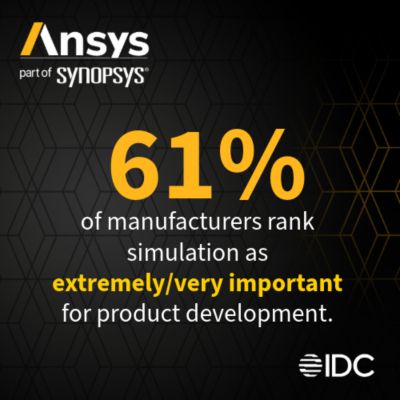
Using multiphysics simulation and collaboration tools accelerated by artificial intelligence (AI) and high-performance computing (HPC), digital engineering empowers manufacturers to virtually explore design possibilities and refine products and systems before production begins. The IDC study found that 61% of manufacturers rank simulation as extremely/very important for product development. These technologies not only minimize errors but support seamless collaboration across teams.
The Role of Multiphysics Simulation
Multiphysics simulation plays a central role in digital engineering, enabling manufacturers to analyze how various physical forces and interactions impact product performance. Considering multiple factors — such as thermal, mechanical, and electrical properties — simultaneously provides a more comprehensive understanding of a design's behavior. Similarly, advanced simulations enable manufacturers to validate software-driven features within complex hardware systems, ensuring performance across a range of operating conditions. By simulating real-world conditions virtually, teams can identify potential issues early and make informed decisions before investing in physical prototypes or manufacturing.
Incorporating multiphysics simulation not only accelerates the development process and reduces costs associated with late-stage redesigns or unanticipated failures — it fosters collaboration by integrating insights from various engineering domains, enabling teams to work toward shared goals. As product complexity increases, the ability to simulate intricate systems with precision becomes indispensable for meeting both technical and business objectives.
Challenges in Implementing Digital Engineering
Transform Product Innovation With Multiphysics Simulation for Digital Engineering
Discover the top corporate strategic priorities, key engineering business initiatives, and the importance of simulation to global product life cycle management (PLM) decision makers in this IDC study.
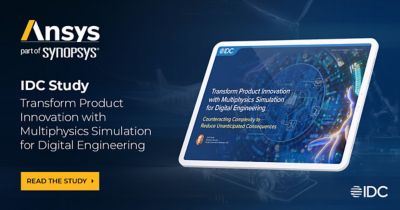
In the study, IDC, an international market research and consulting firm, examines the need for multiphysics simulation in digital engineering to fundamentally change product innovation and system development, providing the necessary insights for manufacturers to improve cost, quality, and customer satisfaction.
Digital engineering promises significant advantages, but its adoption is not without challenges. Teams often face difficulties integrating advanced digital tools into legacy systems, which can create inefficiencies and slow progress.
The shift to digital engineering frequently requires a cultural transformation within organizations. Teams accustomed to traditional workflows may resist adopting new technologies while leadership may underestimate the resources needed for successful implementation. Cost concerns further compound these issues, as investments in training, software, and infrastructure can appear daunting upfront, even though they yield long-term gains.
Additionally, tight project deadlines and resource constraints can create internal bottlenecks, making it difficult for teams to fully explore and leverage the potential of digital engineering. Without proper alignment and prioritization, these constraints can delay the adoption of critical practices, such as simulation process and data management (SPDM) and model-based systems engineering (MBSE) — more on that later.
Manufacturers also face the challenge of ensuring scalability in their digital engineering practices, particularly as product designs grow more complex and interconnected. The computational demands required to simulate complicated systems can exceed the capacity of traditional on-premises workstations, requiring upgrades or the adoption of HPC and hybrid cloud solutions. Addressing these issues is essential for maximizing the benefits of digital engineering.
Strategies for Successful Digital Engineering Adoption
Adopting digital engineering requires a thoughtful approach. One important step is communication from leadership about the goals and benefits of transitioning to digital engineering.
The use of simulation automation and AI can help address the cultural challenges of digital engineering by democratizing complex processes into purpose-built applications. The applications can tap into advanced analyses from simulation and be used by people who aren’t experts.
AI is transforming how simulation is used in the digital engineering environment in many ways, from dramatically accelerating predictions to leveraging it for in-tool support and training with a virtual assistant. AI-enabled Ansys software can also be used for automated workflows, including exploration of new design spaces, parameter optimization, and predictive simulation.
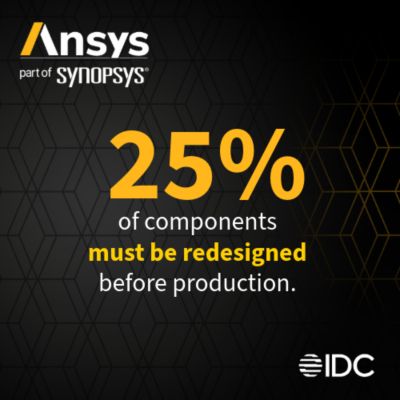
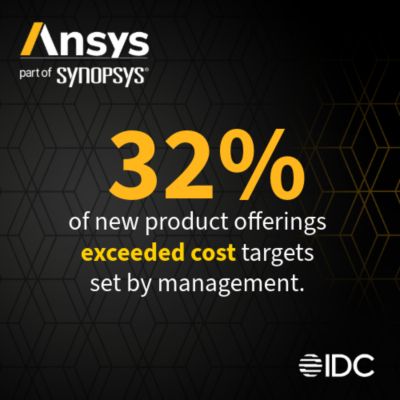
It’s important to break down silos between departments to foster cross-functional collaboration. Digital engineering thrives when teams from different domains, such as software and hardware, work together to solve challenges. Encouraging collaboration ensures that all aspects of product design are considered, reducing the likelihood of oversights and rework. A lack of collaboration and insight causes real issues. According to IDC, 32% of new product offerings exceeded costs, 31% were late to market, and 29% missed quality targets. In fact, a fourth of components must be redesigned before production.
Lastly, investing in hybrid cloud solutions can address the computational demands of advanced simulations while offering flexibility. These solutions enable organizations to scale resources as needed, which is crucial for handling larger workloads without overburdening existing systems.
Complexity Requires Digital Engineering

Download the IDC study “Transform Product Innovation with Multiphysics Simulation for Digital Engineering,” which was sponsored by Ansys, part of Synopsys.
Leveraging Model-Based Systems Engineering
MBSE provides a structured approach to managing complex product system development by using interconnected models instead of traditional, often siloed, documentation. This method simplifies how teams handle intricate designs by creating a unified framework that links requirements, system architecture, and analysis. Through MBSE, manufacturers gain the ability to trade off multiple, sometimes conflicting, design variables efficiently while ensuring alignment across different engineering teams.
One of the key advantages of MBSE is its use of a centralized system architecture model, which acts as a single reference point for all stakeholders. This model outlines the system’s structure, behavior, and functional requirements, helping teams understand how individual components interact within the broader system. With this shared framework, cross-domain collaboration becomes more effective, reducing the risk of miscommunication and design inconsistencies.
By enabling seamless information sharing and streamlined workflows, MBSE provides the foundation for efficient, connected product and system development processes.
Future-Proofing With an Open Ecosystem
An open ecosystem architecture enables manufacturers to integrate various engineering software, new technologies, and workflows in a scalable and adaptable manner. As product designs become increasingly intricate, having an ecosystem of tools that communicate seamlessly is crucial to managing complexity and maintaining efficiency. This approach supports interoperability, enabling teams to use their preferred tools while ensuring that all components work as part of their legacy ecosystem.
The flexibility of an open ecosystem makes it easier to adopt emerging technologies like AI. These advancements can enhance simulation capabilities, streamline processes, and accelerate innovation without overhauling existing infrastructures. It also helps businesses respond to evolving regulatory requirements or market demands by quickly implementing necessary adjustments.
Open ecosystems also mitigate the risks associated with vendor lock-in, providing the flexibility to replace or upgrade tools as needed. This adaptability is particularly beneficial as new technologies and methodologies emerge, enabling organizations to continuously refine their processes and stay competitive.
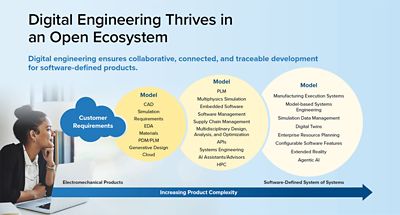
As complexity increases, a digital engineering methodology evolves with new tools, all connected to model-based systems engineering (MBSE). Image credit: IDC.
Digital Engineering Is No Longer an Option
By integrating tools like multiphysics simulation and leveraging MBSE, organizations can adopt a digital engineering approach to streamline their workflows, reduce costs, and deliver better products faster. However, successfully adopting these strategies requires commitment, collaboration, and the right technological infrastructure. To stay competitive, now is the time to assess your current processes and identify opportunities to embrace digital engineering.
Take the first step by examining the need for multiphysics simulation in digital engineering. Download the IDC study “Transform Product Innovation with Multiphysics Simulation for Digital Engineering,” which was sponsored by Ansys, part of Synopsys.




The Advantage Blog
The Ansys Advantage blog, featuring contributions from Ansys and other technology experts, keeps you updated on how Ansys simulation is powering innovation that drives human advancement.