Synopsys and Ansys power the future of innovation—connecting silicon to systems.
-
-
Accédez au logiciel étudiant gratuit
Ansys donne les moyens à la prochaine génération d'ingénieurs
Les étudiants ont accès gratuitement à un logiciel de simulation de classe mondiale.
-
Connectez-vous avec Ansys maintenant !
Concevez votre avenir
Connectez-vous à Ansys pour découvrir comment la simulation peut alimenter votre prochaine percée.
Espace client
Support
Communautés partenaires
Contacter le service commercial
Pour les États-Unis et le Canada
S'inscrire
Essais gratuits
Produits & Services
Apprendre
À propos d'Ansys
Back
Produits & Services
Back
Apprendre
Ansys donne les moyens à la prochaine génération d'ingénieurs
Les étudiants ont accès gratuitement à un logiciel de simulation de classe mondiale.
Back
À propos d'Ansys
Concevez votre avenir
Connectez-vous à Ansys pour découvrir comment la simulation peut alimenter votre prochaine percée.
Espace client
Support
Communautés partenaires
Contacter le service commercial
Pour les États-Unis et le Canada
S'inscrire
Essais gratuits

The availability, accuracy, and reliability of materials information can make or break simulation. Choosing an optimal material over a merely adequate one can prevent poor performance, failure, recalls, excess weight, increased carbon dioxide (CO2) emissions, and design and time-to-market delays.
Finding the Correct Material Properties
To find reliable, accurate information, simulation engineers often have to scour the web, paper data sheets, old databases, manuals, and other scattered sources to locate the properties they need. That is productive time spent unproductively. It is time that could be used to run more design iterations, improve product performance, and optimize critical parameters, such as weight, durability, and efficiency.
After hours of searching, engineers face a second problem: formatting the data for use in their preferred simulation tool. Material properties are not always simple single values, such as room-temperature, Young’s modulus, or Poisson’s ratio. Many are more complex — temperature-dependent, frequency-dependent, tabular, or tied to specific material models. Getting that data into the correct format is time-consuming and error-prone, and it’s a process that can consume many cumulative hours that could have been spent more productively. Making it easy to find, format, download, and import material properties in the correct format or models can make the life of simulation engineers much simpler.
A final challenge is trust. Materials data can change as new supplier information is received or updated testing results are obtained. Engineers need a data source they can rely on — one that is curated, up to date, and usable in the context of simulation. That means easier access to accurate materials data, better ways to search it, and a faster path from data discovery to simulation-ready use.
Why Traditional Searching for Materials Slows Simulation
Simulation provides value to an engineering organization when engineers can evaluate alternatives quickly, test ideas early, and make confident decisions based on consistent inputs. When materials data is difficult to find or prepare, those decisions slow down. Engineers may settle for whatever values they already have on hand. They may avoid exploring better alternatives because the search effort is too high. Or they may spend valuable time checking and rechecking data instead of solving the problem in front of them.
This is where easier access to materials data matters, not because “search” is the goal but because better access removes a bottleneck. If engineers can find the right materials faster, filter by the properties and models that matter, and bring those results directly into the tools they already use, they can spend less time assembling inputs and more time engineering.
How Connected Materials Changes the Workflow
The Ansys Granta Connected Materials tool is designed to reduce this exact source of friction: finding and preparing the right materials data. It streamlines the process of finding, acquiring, and preparing materials data by providing it through a unified source of trusted data. The Connected Materials tool eliminates the need to scour disparate sources by offering immediate access to validated and up-to-date materials information, ensuring that engineers have reliable data at their fingertips. It is equipped with intuitive search and filtering capabilities, enabling users to refine results based on specific property ranges or model requirements, such as temperature-dependent behaviors or complex, simulation-ready formats.
Additionally, the solution minimizes the risk of data entry errors by automating the transfer of formatted materials data directly into supported simulation tools. Engineers can directly fetch materials data ready for use in simulations without needing to manually reformat or verify compatibility, which reduces the likelihood of inaccuracies disrupting their workflows. The integrated nature of the Connected Materials tool ensures that all team members are working with the same source of materials data, promoting consistency and reducing discrepancies in multidisciplinary projects.
With its ability to provide detailed data sheets, including properties not immediately required for a specific simulation, the Connected Materials tool empowers engineers to comprehensively evaluate material suitability. This feature is particularly valuable for complex applications where factors like environmental impact, manufacturability, or material cost need to be weighed alongside technical performance. By reducing the time and effort spent on material data preparation, the platform enables engineers to focus on innovation and problem-solving in their design and simulation tasks.
In 2026 R1, the Connected Materials tool is available from Ansys Discovery 3D product simulation software, Ansys Sherlock electronics reliability prediction software, and Ansys Zemax OpticStudio optical system design and analysis software, with access to materials data for tens of thousands of materials, including the Ansys MaterialUniverse database of materials, electromagnetics data, polymers data, optics design data, and a free starter pack.
Compare Candidate Materials Earlier With Discovery Software
Early-stage design is where materials decisions can have an outsized effect on performance, cost, sustainability, and manufacturability. Engineers working in Discovery software often need to evaluate trade-offs quickly, compare material alternatives, and understand how those alternatives affect product behavior before the design is locked in. Early-stage work needs to progress quickly, though searching for appropriate materials information can slow down the process.
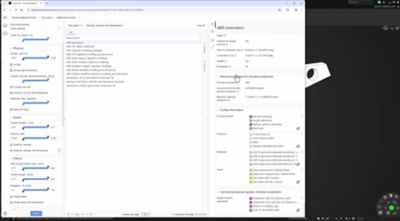
The Ansys Granta Connected Materials tool in Ansys Discovery 3D product simulation software
The Connected Materials tool makes that early-stage workflow more fluid. Instead of turning material comparison into a separate research task, it helps engineers stay focused on the design question in front of them: Which materials are worth evaluating, and which are most likely to support the target performance? In Discovery software, that means less disruption between comparing options and simulating them, so material evaluation becomes a more natural part of design exploration rather than a bottleneck around it.
For Discovery users, the result is better decision-making earlier in the process. If engineers can narrow choices sooner and test alternatives more confidently, they can move faster toward designs that balance performance, weight, cost, and sustainability with less manual effort.
Improve Reliability Sooner With Sherlock Software
Electronics reliability teams often work under intense time pressure. When a printed circuit board (PCB) or component fails under vibration, shock, or thermal loading, the cost of finding the problem late can be high. Physical testing is essential, but it is also slow and expensive when teams have to repeat builds, investigate failures, and test mitigation strategies one by one. That makes fast, reliable simulation especially valuable in electronics design.
Sherlock software integrates seamlessly with the Connected Materials tool to deliver precise, simulation-ready materials data critical for evaluating electronic component reliability. The platform's centralized database includes material properties specific to electronics, which aligns with the unique requirements of Sherlock software's reliability prediction workflows. This ensures that engineers have access to the most relevant material properties, such as fatigue resistance, thermal expansion, and mechanical durability, which are essential for simulating the lifespan of electronic hardware under varying operational conditions.
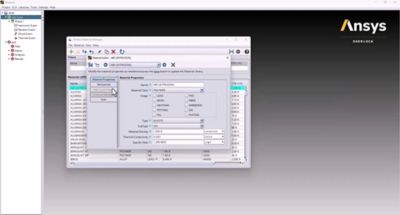
The Connected Materials tool in Ansys Sherlock electronics reliability prediction software
The intuitive material picking interface enables users to quickly filter materials based on property ranges or specific model compatibility, streamlining the setup process for simulations like vibration and shock analysis. For instance, simulation of fatigue failures in PCBs can directly leverage this data without the need for extensive manual formatting or additional data validation steps. Additionally, engineers can access detailed data sheets to examine supplementary attributes that might influence component behavior under stress, ensuring accurate predictions of performance and durability.
For applications requiring iterative testing, the platform minimizes delays by automating the transfer of material data into Sherlock software's environment, enabling quicker assessments of design changes or mitigation strategies. This level of integration supports more robust evaluations of components like field-programmable gate arrays (FPGAs), where critical materials data can dictate the success of reliability predictions and subsequent design improvements. By reducing time spent on material preparation, Sherlock users can focus their efforts on refining system reliability and addressing potential points of failure.
Keep Optical Design Moving With OpticStudio Software
Optical design depends on getting the material right early. In a heads-up display workflow, for example, engineers use OpticStudio software to define the system, optimize the optics, and evaluate performance before moving into downstream analysis and visualization. Materials play a key role in that work because optical behavior depends on properties like refractive index, transmission, and how those properties change with wavelength or temperature. When that information is hard to find or compare, optical design slows down.
The Connected Materials tool seamlessly integrates with OpticStudio software, enabling optical engineers to enhance their workflows with direct access to curated, simulation-ready materials data. The integration facilitates precise material data search for complex optical systems by providing an intuitive interface that supports advanced filtering based on optical properties and model compatibility. Users can explore detailed material characteristics, such as refractive indices, transmission spectra, and coatings, tailored to their optical design requirements.
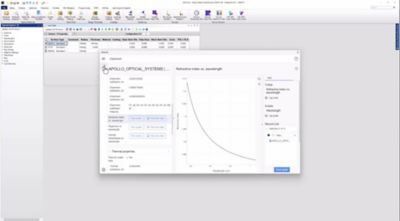
The Connected Materials tool in Ansys Zemax OpticStudio optical system design and analysis software
With centralized access to a broad range of materials data, including optics-specific datasets, engineers can easily incorporate validated materials into their optical models. This ensures that the designs account for crucial factors like light transmission efficiency, aberration corrections, and durability under operational conditions. The ability to access additional material details, such as environmental resistance or manufacturability, further aids in refining design decisions.
Better Materials Access Means Better Use of Simulation Time
Simulation engineers should not have to spend so much time hunting for material properties, checking scattered sources, and manually formatting data before analysis can begin. These steps are often necessary today, but they are not where engineering teams create the most value. The real value comes from iterating, improving performance, reducing risk, and making better decisions faster.
The Connected Materials tool streamlines simulation workflows by providing a unified platform for easy access to extensive, reliable materials data and direct import into simulations. Discovery, Sherlock, and OpticStudio users save time on searching and formatting, enabling greater focus on engineering challenges.
Learn more about the Connected Materials tool and how it helps simulation engineers find, select, and use trusted materials data more efficiently.

Just for you. We have some additional resources you may enjoy.
Learn More
Explore the Ansys Granta Connected Materials tool.



The Advantage Blog
The Ansys Advantage blog, featuring contributions from Ansys and other technology experts, keeps you updated on how Ansys simulation is powering innovation that drives human advancement.