Synopsys and Ansys power the future of innovation—connecting silicon to systems.
-
-
Accédez au logiciel étudiant gratuit
Ansys donne les moyens à la prochaine génération d'ingénieurs
Les étudiants ont accès gratuitement à un logiciel de simulation de classe mondiale.
-
Connectez-vous avec Ansys maintenant !
Concevez votre avenir
Connectez-vous à Ansys pour découvrir comment la simulation peut alimenter votre prochaine percée.
Espace client
Support
Communautés partenaires
Contacter le service commercial
Pour les États-Unis et le Canada
S'inscrire
Essais gratuits
Produits & Services
Apprendre
À propos d'Ansys
Back
Produits & Services
Back
Apprendre
Ansys donne les moyens à la prochaine génération d'ingénieurs
Les étudiants ont accès gratuitement à un logiciel de simulation de classe mondiale.
Back
À propos d'Ansys
Concevez votre avenir
Connectez-vous à Ansys pour découvrir comment la simulation peut alimenter votre prochaine percée.
Espace client
Support
Communautés partenaires
Contacter le service commercial
Pour les États-Unis et le Canada
S'inscrire
Essais gratuits

Industry 5.0 represents a significant evolution in industrial processes, focusing on integrating human-centric approaches with advanced technologies. Unlike Industry 4.0, which emphasizes automation and digitalization, Industry 5.0 prioritizes collaboration between humans and technology. This approach broadens the scope of industrial advancements to include societal contributions alongside productivity and operational gains.
Central to this shift is the integration of digital engineering solutions with human input, enabling enhanced decision-making and innovation. Industry 5.0 introduces a more inclusive framework that not only incorporates digital tools like simulation, digital twins, and artificial intelligence (AI) but aligns these innovations with environmental and societal objectives. By focusing on interconnectedness, it elevates the importance of digital threads that connect every stage of a product’s life cycle, from ideation to maintenance, promising seamless collaboration among technologies, departments, and stakeholders.

Scott Parent, VP chief technologist field sales, Ansys, part of Synopsys
Enhancing Efficiency With Advanced Technologies
By integrating advanced technologies, organizations can streamline workflows, reduce material waste, and minimize production downtime.
Digital twins, in particular, have proven instrumental in enabling real-time monitoring and predictive maintenance, allowing for proactive adjustments that improve performance while lowering operational costs. Combining physics-based simulation with real-world data ensures optimal resource allocation and increases the overall reliability of systems. By incorporating real-time monitoring capabilities, digital twins provide comprehensive insights into system performance under varying conditions. These insights enable engineers to anticipate potential failures, optimize maintenance schedules, and address inefficiencies before they escalate into costly disruptions. This minimizes unplanned downtime, reduces repair costs, and extends the lifespan of critical machinery. In turn, the ability to implement timely interventions not only safeguards productivity but ensures efficient resource utilization.
In addition, AI techniques simplify complex simulations — accelerating them and making them accessible to a wider range of team members, including those without extensive technical expertise. This democratization of technology fosters better collaboration across departments, helping to bridge the engineering and industrial skills gap. The integration of such technologies lays the groundwork for a more adaptable, responsive, and cost-efficient industrial ecosystem, in alignment with Industry 5.0 principles.
Interconnect To Overcome Industry Challenges
TOP INDUSTRIAL CHALLENGES
- Sustainability
- Supply Chain Instability
- Regulations and Compliance
- Materials Data Management
- Cybersecurity Risks
- Engineering and Industrial Skills Gap
By linking processes, systems, sensors, and teams through the Internet of Things (IoT) and digital engineering methodology, you gain visibility and controls that were previously out of reach. These connections enable seamless data sharing across departments, allowing teams to anticipate risks and respond more quickly. This not only helps secure supply chains and prepare manufacturers for unexpected disruptions but helps ensure real-time traceability, making regulatory compliance less of a headache and more of an integrated part of operations.
Cybersecurity is another area where interconnectedness shines. The ability to monitor systems holistically means identifying vulnerabilities before they escalate, which is crucial as cyberthreats grow more sophisticated. It’s remarkable how connected systems reduce blind spots, ensuring that sensitive data and critical equipment remain protected.
Even sustainability initiatives benefit from this approach. Interconnected systems help identify inefficiencies, optimize resource use, and cut down waste. Whether it’s integrating sensors for energy monitoring or leveraging digital twins to simulate greener operations, these tools make sustainable practices actionable. Interconnectedness isn’t just about creating smarter systems — it’s about transforming how we approach and solve the toughest challenges in manufacturing and industrial processes.
Predictive Insights and Operational Reliability
Further supporting operational reliability, digital threads create a seamless flow of information throughout the product life cycle. From design and development to operations and maintenance, these interconnected systems allow for informed decision-making at every stage. For instance, role-based dashboards in simulation process and data management (SPDM) platforms provide instant access to key metrics and work statuses, regardless of personnel location. This level of accessibility enhances collaboration and maintains consistent workflows, even in dynamic or remote working environments.
The integration of predictive insights into daily operations not only optimizes performance but addresses critical challenges, such as sustainability and cost efficiency. By aligning technological capabilities with the principles of Industry 5.0, industrial processes achieve greater reliability, operational fluidity, and resilience in an increasingly interconnected landscape.
Simulation-powered digital engineering plays a fundamental role in driving digital transformation in industrial processes by enabling smarter design, analysis, and optimization across the product life cycle.
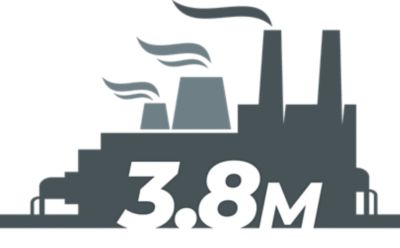
According to The Manufacturing Institute and Deloitte’s report “Taking charge: Manufacturers support growth with active workforce strategies,” the U.S. manufacturing industry could need 3.8 million jobs between 2024 and 2033. However, half of these jobs could go unfilled if workforce challenges are not addressed.
Simulation Accelerates Transformation
Using simulation earlier and more often helps engineers and designers accelerate timelines and become more efficient. By introducing simulation as an active part of design and development rather than just a late-stage verification tool, development teams gain critical insights sooner to inform their designs, significantly reduce research and development (R&D) time, and improve product quality. At the same time, simulation tools enable engineers to test and validate designs virtually, reducing the dependency on costly physical prototypes.
Simulation also simplifies the analysis of multiple variables at once. For instance, when optimizing a design, you can explore different configurations and instantly see how changes might impact performance or durability. This reduces guesswork and allows you to focus on refining solutions that truly work. Advanced platforms support the management of vast datasets, ensuring that critical simulation results are accessible and interconnected, fostering collaboration among teams.
What’s even more impressive is how these tools support long-term operational goals. Whether it’s ensuring compliance with regulations or predicting how equipment will perform under varying conditions, simulation-powered digital engineering provides the insights needed to stay ahead in a competitive industry. This isn’t just about improving efficiency — it’s about fostering innovation and adaptability in a rapidly evolving landscape.
In alignment with Industry 5.0, simulation-powered digital engineering promotes a collaborative, human-centric approach that bridges technological advancements with industrial needs to support sustainable, resilient, and efficient processes.
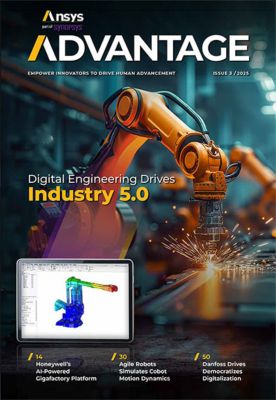
Read the latest issue of Ansys Advantage magazine to learn more about how simulation helps with Industry 5.0. technologies.

Just for you. We have some additional resources you may enjoy.

The Advantage Blog
The Ansys Advantage blog, featuring contributions from Ansys and other technology experts, keeps you updated on how Ansys simulation is powering innovation that drives human advancement.